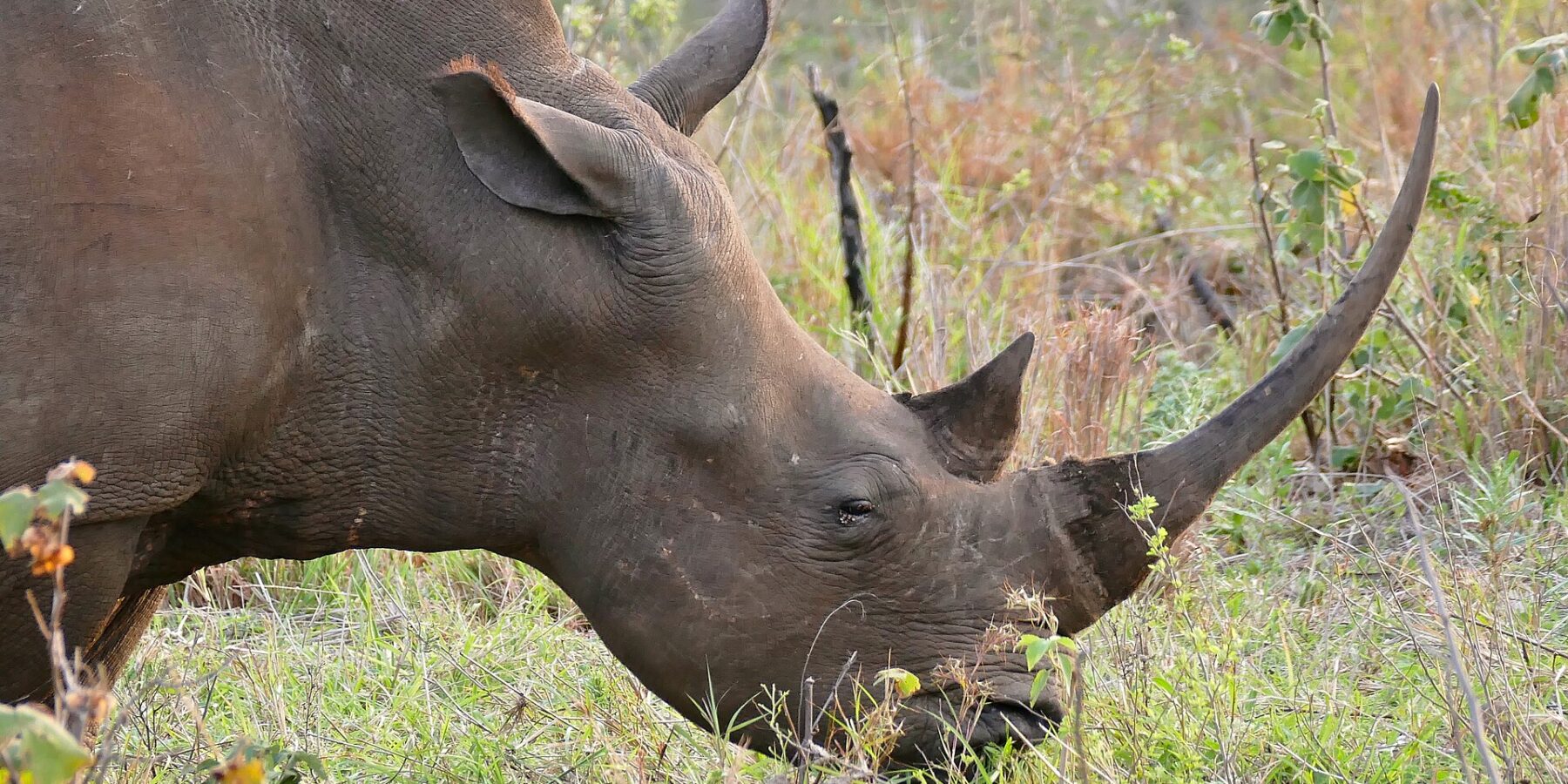
In Hluhluwe-iMfolozi, you see white rhinos on almost every drive, in the park that saved the species. Fewer than a hundred were left here in 1895, and the park now holds about 1,600, a tenth of all the white rhinos in the world. The Big Five and the nyala share the same green hills of Zululand.
Why go to Hluhluwe-iMfolozi?
- About 1,600 white rhinos, the population that has restocked the whole of Africa since the 1960s
- Africa's oldest game reserve, created in 1895 to protect the last white rhinos
- The Big Five across 960 km² of green hills, three hours' drive from Durban
- The nyala, Zululand's striped antelope, along the roads of the Hluhluwe section
- Multi-day walks with a ranger in the iMfolozi wilderness area, with no roads and no vehicles
Hluhluwe-iMfolozi in pictures
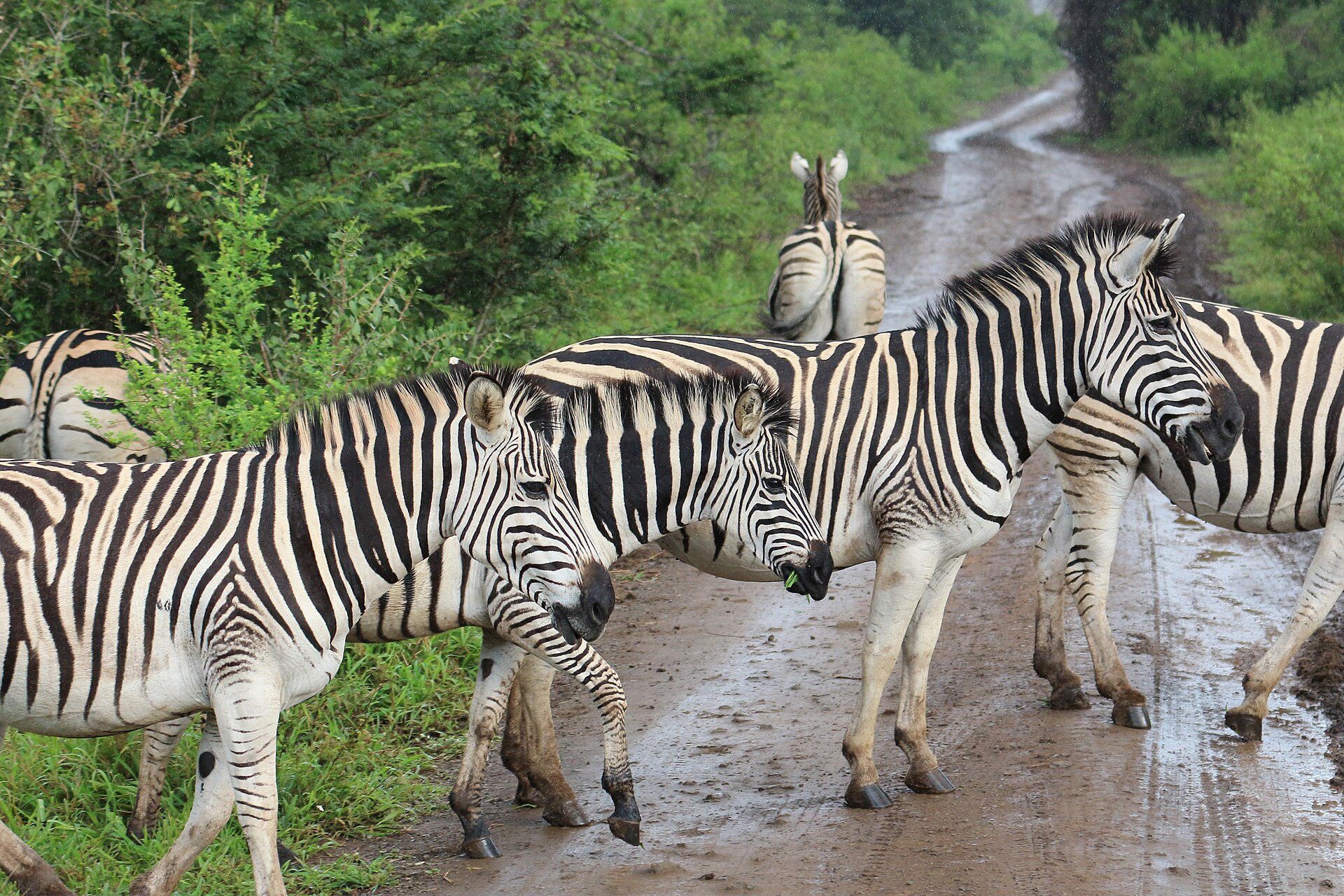
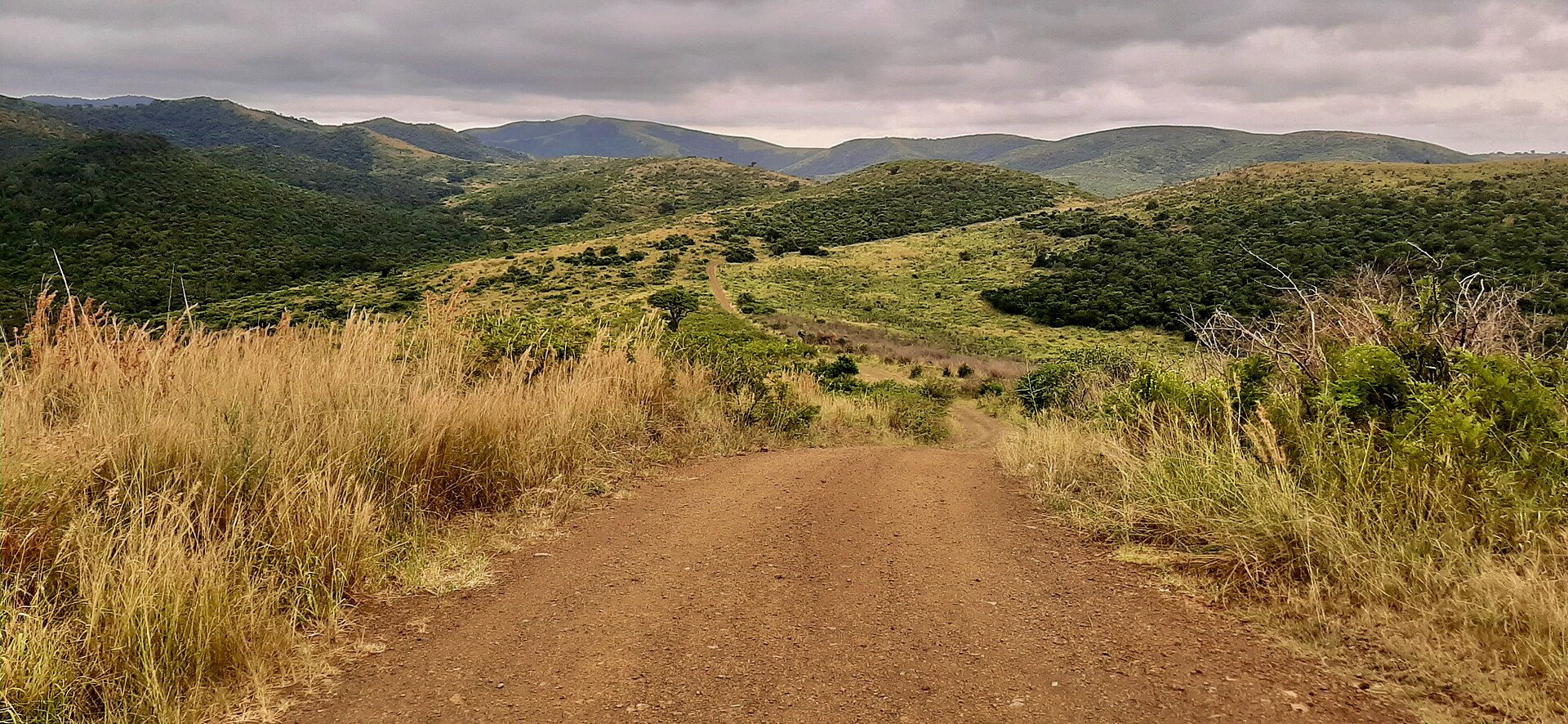
Which animals can you see in Hluhluwe-iMfolozi?
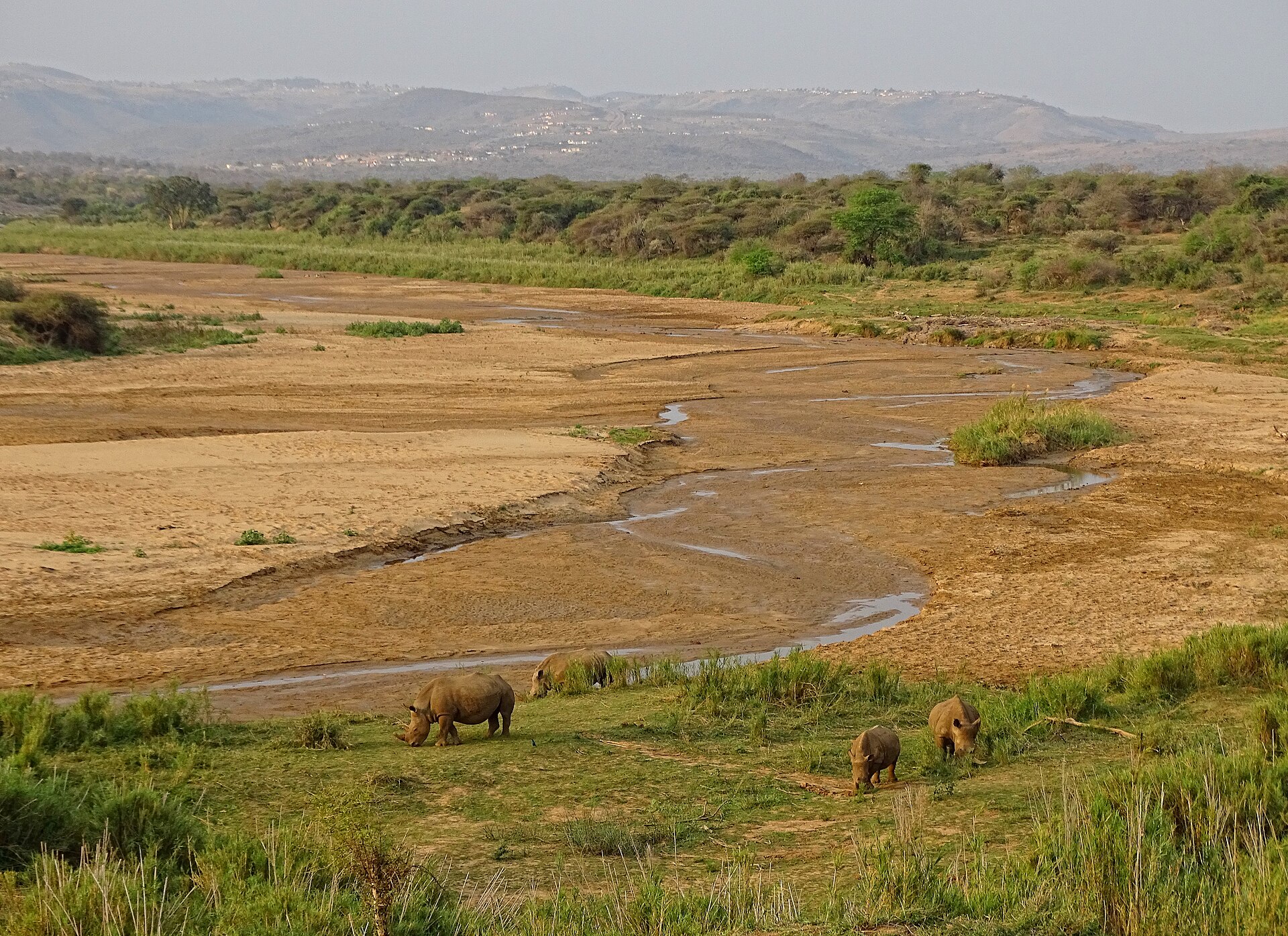
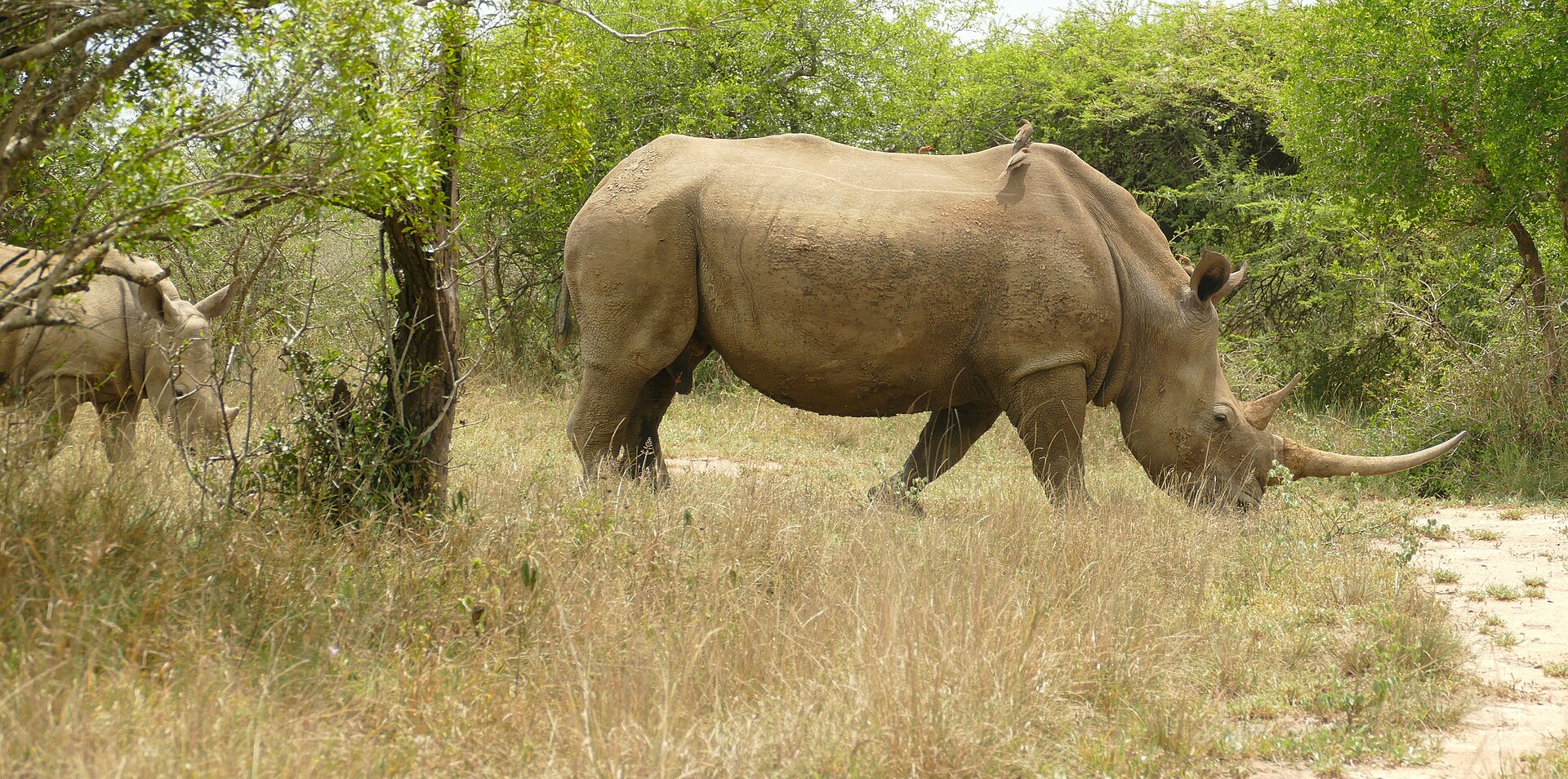
White rhinos are everywhere, about 1,600 animals across 960 km², and you come across them on the grasslands, at waterholes and in the middle of the roads. Black rhinos live in the park too, keeping out of sight in the thickets. Lions, elephants, buffalo and leopards complete the Big Five, and wild dogs and cheetahs turn up now and then on the open slopes.
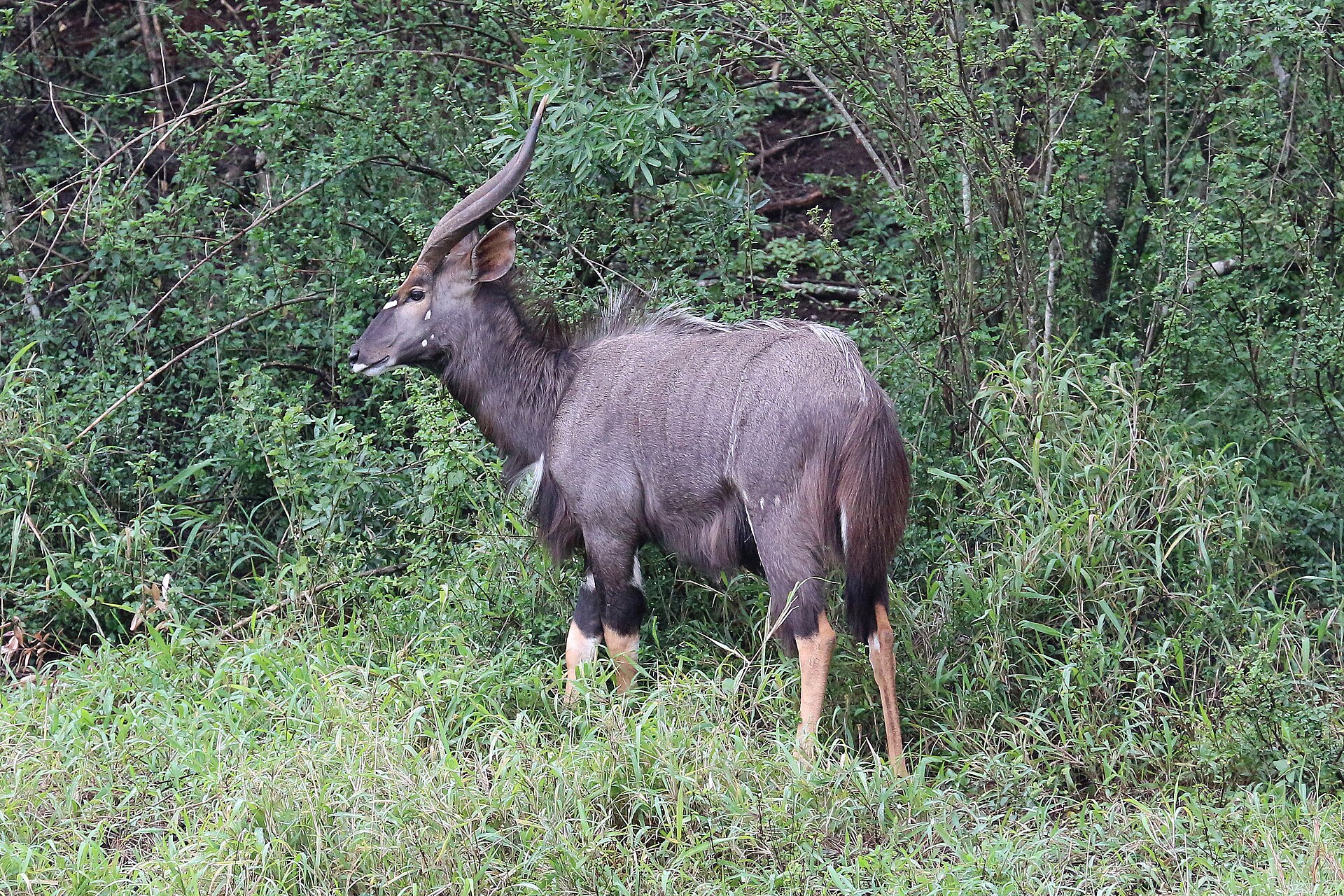
The park has 86 mammal species and 340 bird species. The nyala, a striped antelope of the Zululand thickets, is easier to see here than in any other park, and giraffes, zebras and wildebeest occupy the open slopes of iMfolozi.
| Species | J | F | M | A | M | J | J | A | S | O | N | D | Note |
|---|---|---|---|---|---|---|---|---|---|---|---|---|---|
 White rhinoceros | peak season | peak season | peak season | peak season | peak season | peak season | peak season | peak season | peak season | peak season | peak season | peak season | about 1,600 animals, iMfolozi grasslands and roadsides |
 Black rhinoceros | possible | possible | possible | possible | possible | possible | possible | possible | possible | possible | possible | possible | thickets, more elusive |
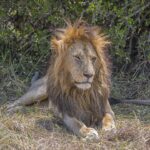 Lion | possible | possible | possible | possible | possible | possible | possible | possible | possible | possible | possible | possible | iMfolozi plains |
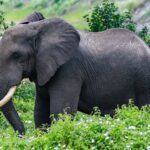 Elephant | peak season | peak season | peak season | peak season | peak season | peak season | peak season | peak season | peak season | peak season | peak season | peak season | herds in both sections of the park |
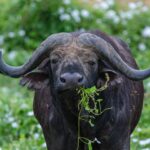 Buffalo | peak season | peak season | peak season | peak season | peak season | peak season | peak season | peak season | peak season | peak season | peak season | peak season | Mfolozi river valleys |
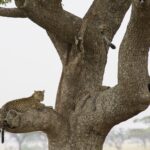 Leopard | rare | rare | rare | rare | rare | rare | rare | rare | rare | rare | rare | rare | Hluhluwe forests, rarely seen |
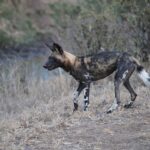 African wild dog | possible | possible | possible | possible | possible | possible | possible | possible | possible | possible | possible | possible | one pack monitored by the rangers, passing through |
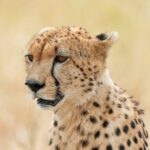 Cheetah | possible | possible | possible | possible | possible | possible | possible | possible | possible | possible | possible | possible | open slopes of iMfolozi |
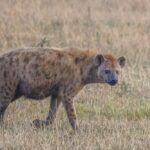 Spotted hyena | possible | possible | possible | possible | possible | possible | possible | possible | possible | possible | possible | possible | at first light and at night |
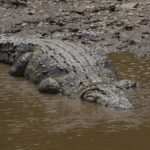 Nile crocodile | possible | possible | possible | possible | possible | possible | possible | possible | possible | possible | possible | possible | White and Black Mfolozi rivers |
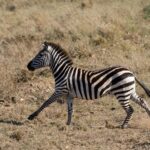 Plains zebra | peak season | peak season | peak season | peak season | peak season | peak season | peak season | peak season | peak season | peak season | peak season | peak season | open slopes and roadsides |
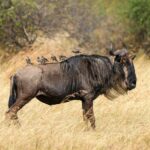 Wildebeest | peak season | peak season | peak season | peak season | peak season | peak season | peak season | peak season | peak season | peak season | peak season | peak season | iMfolozi plains |
| South African giraffe | peak season | peak season | peak season | peak season | peak season | peak season | peak season | peak season | peak season | peak season | peak season | peak season | wooded slopes |
| Nyala | peak season | peak season | peak season | peak season | peak season | peak season | peak season | peak season | peak season | peak season | peak season | peak season | Hluhluwe thickets and roadsides, the best park to see it |
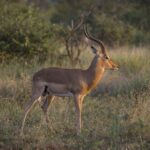 Impala | peak season | peak season | peak season | peak season | peak season | peak season | peak season | peak season | peak season | peak season | peak season | peak season | everywhere |
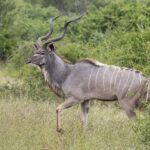 Greater kudu | peak season | peak season | peak season | peak season | peak season | peak season | peak season | peak season | peak season | peak season | peak season | peak season | wooded slopes |
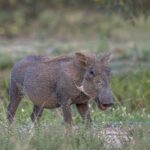 Warthog | peak season | peak season | peak season | peak season | peak season | peak season | peak season | peak season | peak season | peak season | peak season | peak season | grasslands and roadsides |
peak seasonpossiblerare
What is a safari like in Hluhluwe-iMfolozi?
You explore the park by car, on a 300 km network of paved roads and dirt tracks that a regular car can handle. It is split into two sections joined by a corridor road: Hluhluwe in the north, with humid wooded hills, and iMfolozi in the south, drier and more open around the White and Black Mfolozi rivers. You enter through Memorial Gate in the north or Nyalazi Gate in the east.
Two Ezemvelo camps house visitors: Hilltop, at the top of a hill in the Hluhluwe section, with a restaurant and chalets, and Mpila, in iMfolozi, with chalets and tents and no fence, so animals wander through at night. Both offer guided drives in open 4x4s, in the morning and at night. Multi-day walks in the iMfolozi wilderness area book up far in advance.
When to go to Hluhluwe-iMfolozi?
idealgoodnot recommended
Winter, from May to September, is the dry season and the best for wildlife: the grass is short, waterholes are few and mornings are cool on the hills. The skies stay clear and the days mild.
Summer, from October to March, brings heat, humidity and storms, and dense vegetation that hides the animals in the Hluhluwe section. Rhinos can be seen all year in the more open iMfolozi section. At that time of year, malaria is transmitted at low levels in northern KwaZulu-Natal, and the park is classed as a seasonal risk area: ask a doctor about preventive medication.
How to get to Hluhluwe-iMfolozi?
From Durban, the N2 takes you 240 km, about three hours, to Nyalazi Gate on the east side of the park. Memorial Gate, in the north, is near the village of Hluhluwe, and the beach town of St Lucia is an hour's drive from Nyalazi, so you can combine the park with the iSimangaliso wetlands.
By air, Airlink flies from Johannesburg to Richards Bay in 1 hour 10 minutes, and from there the N2 heads north to the park. Durban has flights from all over the country, FlySafair included, and car rental companies operate at both airports.
Stay in Hluhluwe
Where to stay near Hluhluwe-iMfolozi?
Hotels, apartments and rooms around Hluhluwe, with current prices.
How did Operation Rhino save the white rhino in the 1960s?
In 1895, between 20 and 100 southern white rhinos were left in the world, all of them here, between the two Mfolozi rivers. The reserve was created that year to protect them, and the population slowly recovered. In the 1960s, ranger Ian Player and his team developed capture by dart gun, and Operation Rhino sent hundreds of animals to restock other parks across Africa. Every southern white rhino alive today descends from those survivors.
Poaching still hits the park, though: 198 rhinos were killed here in 2024, then 63 in 2025 after the dehorning program launched in 2024. That is why you will see many animals without horns.
Frequently asked questions about Hluhluwe-iMfolozi
When is the best time to visit Hluhluwe-iMfolozi?
From May to September, during the dry winter: the grass is short, the animals stay near water and the weather is mild. Summer is hot, stormy and very green, but you still see rhinos in the iMfolozi section.
How much is the entry fee for Hluhluwe-iMfolozi?
R280 per international adult per day and R140 per child under 12, paid at the gate. South Africans and SADC nationals pay half price on showing ID.
Can you drive yourself around Hluhluwe-iMfolozi without a guide?
Yes. You explore the park in your own car on 300 km of roads, at no more than 40 km/h, and a regular car is all you need. Night drives, however, are done with the camp guides.
How do you get to Hluhluwe-iMfolozi from Durban?
Take the N2 north, 240 km and about three hours to Nyalazi Gate. From Johannesburg, Airlink lands at Richards Bay in 1 hour 10 minutes, and then the N2 takes you to the park.
Is there malaria in Hluhluwe-iMfolozi?
The risk is low and seasonal, mostly from September to May, because the park lies in northern KwaZulu-Natal, inside the transmission zone. Insect repellent and long sleeves in the evening are a must, and a doctor will tell you whether you need medication, given the season and your health.
Where can you see rhinos in Hluhluwe-iMfolozi?
In the more open iMfolozi section, in the south, where they graze the grasslands near the rivers at first light and late in the day. With about 1,600 white rhinos in the park, you are almost certain to see some on every drive.
Our tip
Stay at Hilltop, in the Hluhluwe section, for the hills and the nyala, and spend a day in the iMfolozi section via the corridor road. That section is more open, and it is where you will see the most rhinos, especially on the riverside grasslands at first light.
Other parks nearby
 South AfricaPrivate reserve
Sabi Sand Game Reserve
Northeastern South Africa South AfricaNational park
Kruger National Park
Northeastern South Africa South AfricaNational park