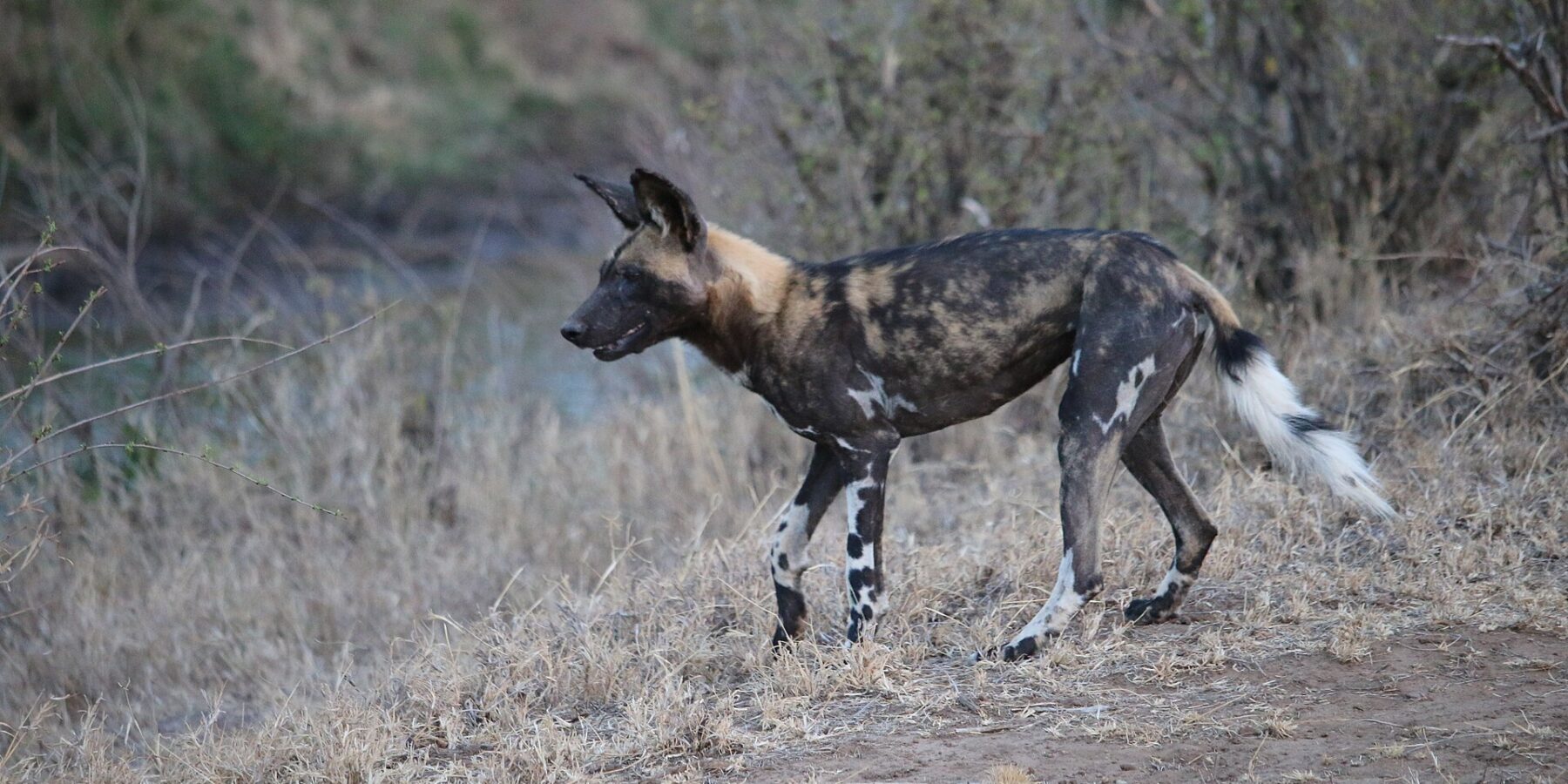
African wild dogs are always on the move, and a sighting is never certain except in Madikwe, South Africa, where guides follow the packs day after day and you watch them hunt near the 4x4 at dawn or dusk. In Kenya, the most stable packs live on the Laikipia Plateau, and Ol Pejeta sees them pass through.
Where to see the African wild dog on safari?
 South AfricaGame reserve
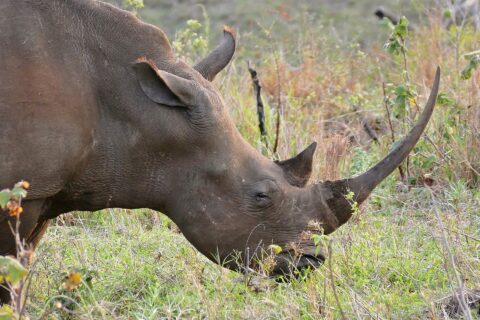
Hluhluwe-iMfolozi Park
KwaZulu-NatalCan be seen all year round: one pack monitored by the rangers, passing through
 South AfricaNational park
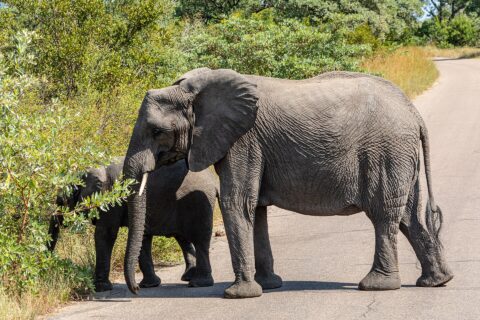
Kruger National Park
Northeastern South AfricaCan be seen all year round: a rare sighting, packs in the south and center
 South AfricaGame reserve
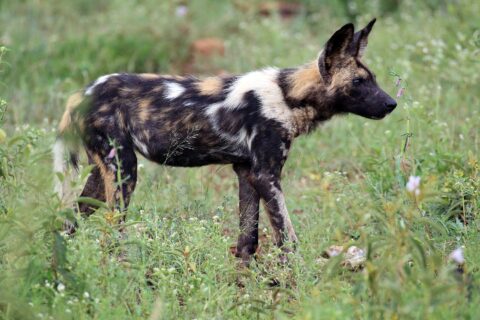
Madikwe Game Reserve
Northwestern South AfricaPeak season all year round: packs tracked by the guides, at dawn and dusk
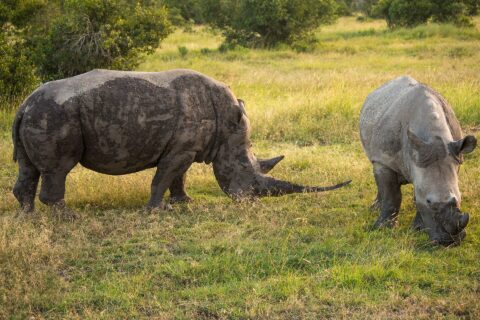
 KenyaPrivate reserve
Ol Pejeta Conservancy
Northern KenyaCan be seen all year round: packs passing through from the rest of Laikipia
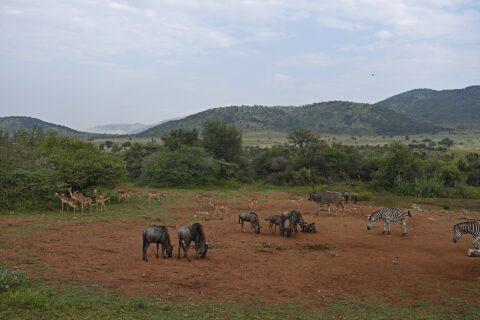 South AfricaNational park
Pilanesberg National Park
Northwestern South AfricaCan be seen all year round: one or two packs, passing through
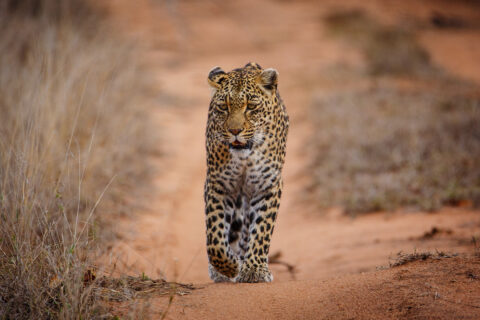 South AfricaPrivate reserve
Sabi Sand Game Reserve
Northeastern South AfricaCan be seen all year round: passing through, packs coming in from Kruger
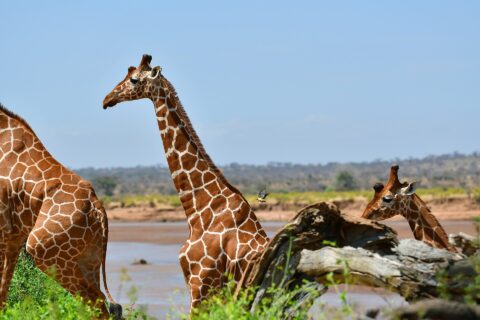 KenyaNational reserve
Samburu National Reserve
Northern KenyaCan be seen all year round: passing through from Laikipia
 KenyaNational park
Tsavo East National Park
Southern KenyaCan be seen all year round: passing through, rarely seen
How do you identify an African wild dog?
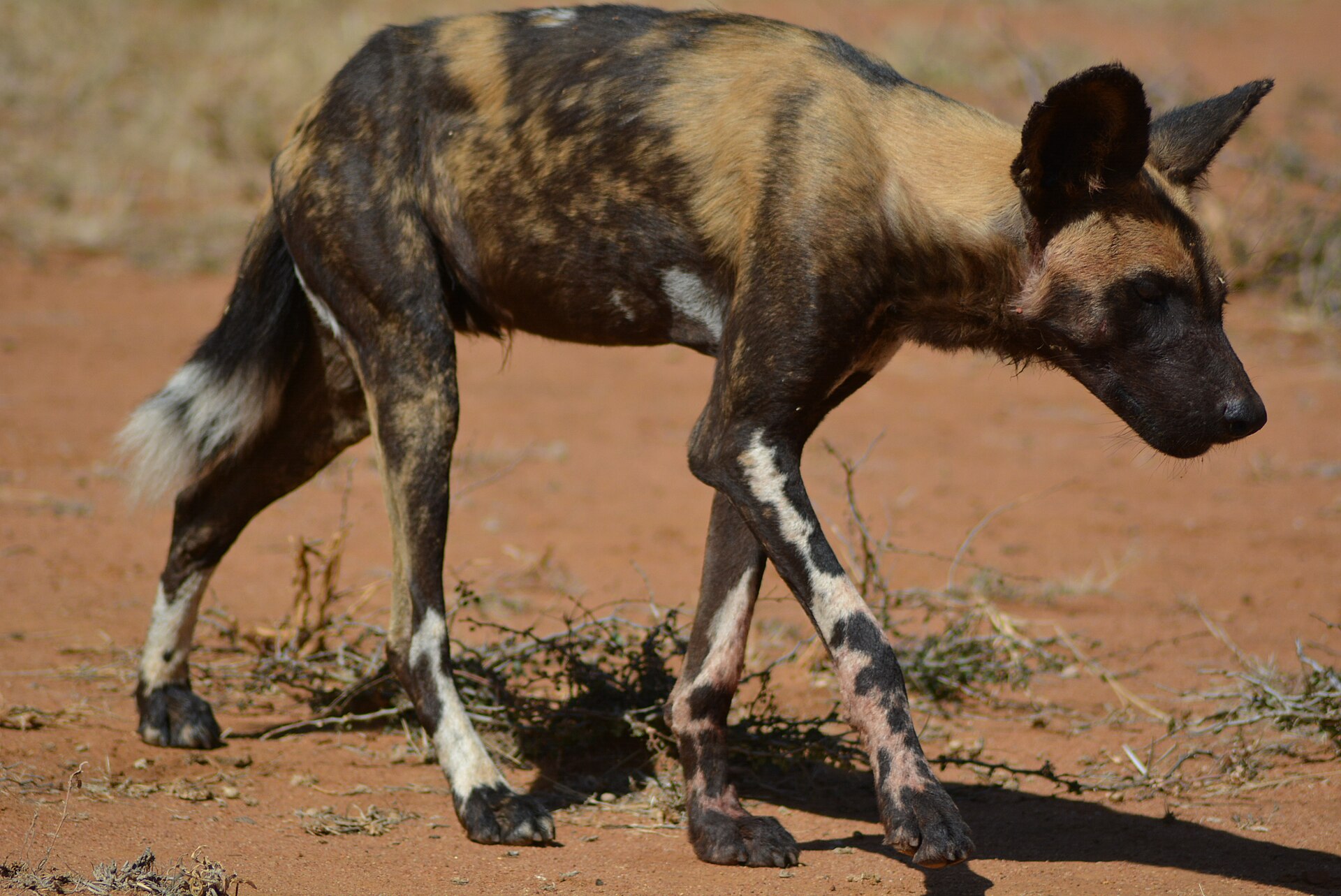
The African wild dog is a long-legged dog, 60 to 75 cm at the shoulder and 20 to 25 kg in East Africa. Its coat, blotched with black, tan and cream, differs from one animal to the next, and the tail ends in white. The ears are large, round and upright, and the muzzle is short and black. You can tell it from the spotted hyena, which is heavier, with a sloping back and brown spots on a sandy coat, and from the jackal, which is much smaller and plain. Each foot has only four toes, which you can see in its tracks.
African wild dog in pictures
How do African wild dogs live?
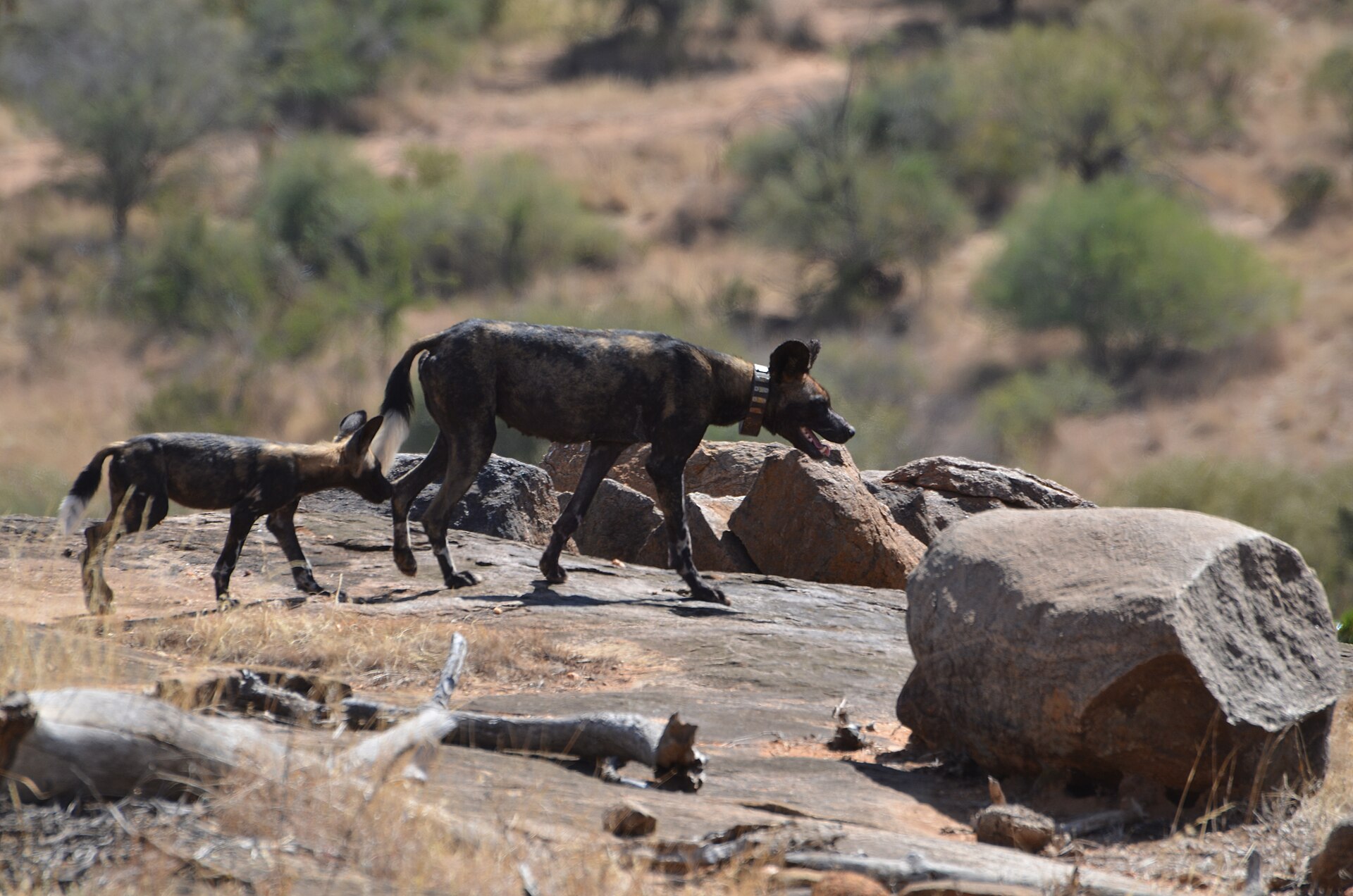
Wild dogs live in packs of a few adults up to about twenty animals, led by a dominant pair, the only one that breeds, and every member feeds the pups by regurgitating food. They hunt as a group at dawn and dusk, running down impalas and gazelles in endurance chases at 60 km/h. More than half of their chases succeed, sometimes nine out of ten. A pack ranges over several hundred square kilometers and only settles around a den, for as long as it takes to raise the pups. The rest of the year it keeps moving, which makes sightings hit-and-miss.
Where and when can you see African wild dogs on safari?
In Kenya, the most stable wild dog packs live on the Laikipia Plateau, north of Mount Kenya. Ol Pejeta sees them cross its plains, and Samburu, lower and drier, gets the occasional visit. In Tsavo East and the Masai Mara, wild dogs are only passing through and turn up once in a while. The best time is the first hour of the day, on the tracks across the open plains, when the pack is running. From a stationary vehicle, you may see it go by a few meters away.
In South Africa, outside Madikwe, sightings are rare and the packs are only passing through. In Sabi Sand, they come in from Kruger. During the denning period, guides often know where they are. Madikwe is the most reliable place, in every season. Its guides follow the packs from one day to the next, and you watch them hunt right beside the 4x4, at dawn and dusk.
Are African wild dogs endangered?
The IUCN has listed the African wild dog as Endangered since 1990. About 6,600 adults remain in Africa, in 39 separate populations, with fewer than 1,500 breeding animals. Kenya's national census counted 865 in 2021. The threats are fragmented land, diseases caught from domestic dogs (rabies and canine distemper), roads and conflict with herders. Laikipia, where ranches and conservancies share boundaries, is one of the few places in East Africa where its numbers are holding up.
Our tip
Head out when the gates open and stick to the tracks on the plains: the pack hunts in the first hour of daylight, then sleeps in the shade until evening. At Ol Pejeta, ask the rangers where the pack was seen the day before.