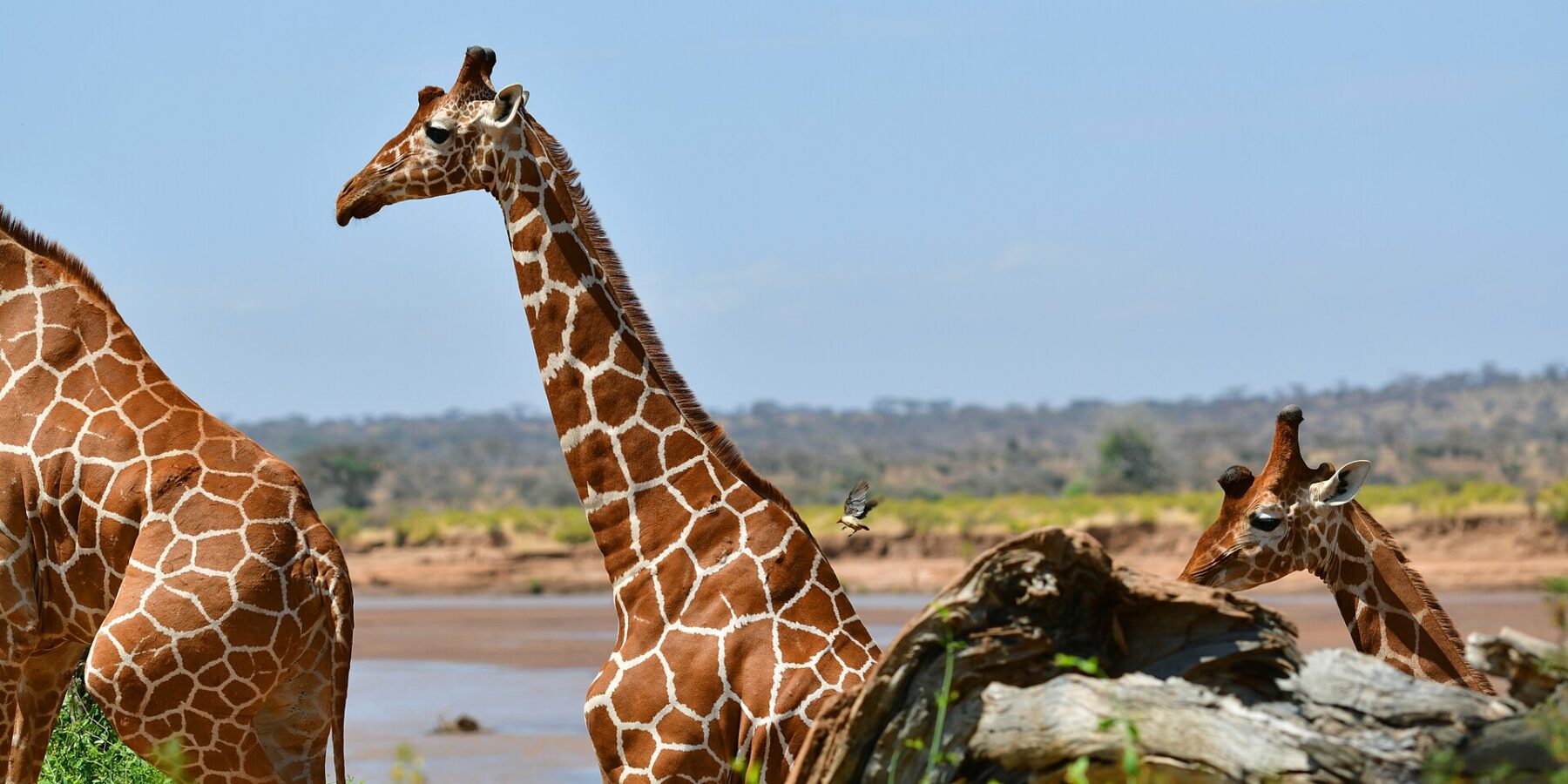
In Samburu, you drive along the Ewaso Ng'iro, the only river in this dry north, where elephants come to drink and leopards sleep in the acacias on the bank. The 165 km² reserve shows you five animals that southern Kenya does not have, from Grévy's zebra to the reticulated giraffe.
Why go to Samburu?
- The Samburu Special Five: Grévy's zebra, the reticulated giraffe, the beisa oryx, the gerenuk and the Somali ostrich
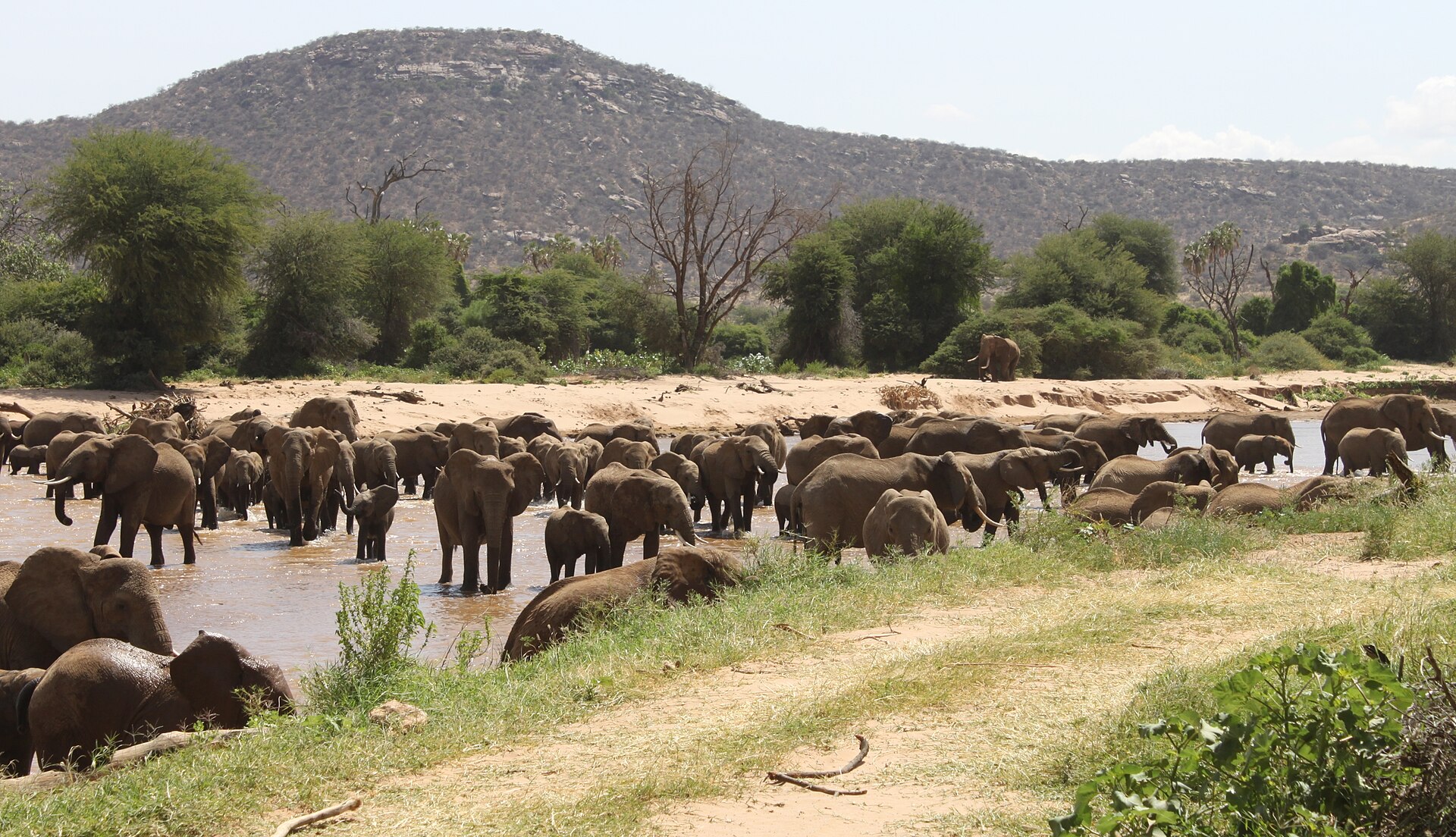
- Elephants crossing the Ewaso Ng'iro at midday, followed by Save the Elephants since 1993
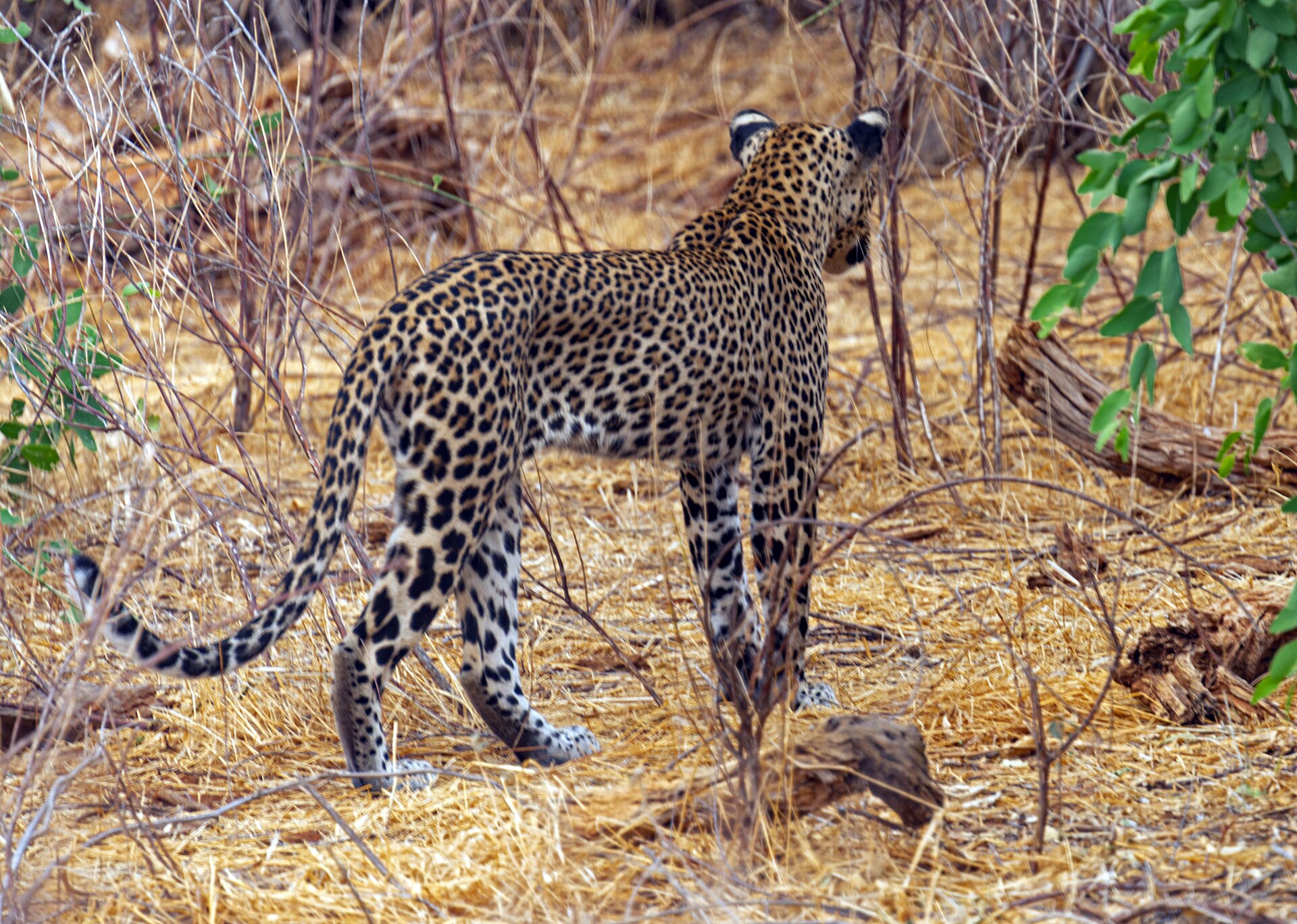
- The riverbank leopards, among the easiest to see in Kenya
- Doum palms and riverine forest in the middle of thornbush country
- Elsa, the Born Free lioness, raised here by George and Joy Adamson
Samburu in pictures
Which animals can you see in Samburu?
Everything revolves around the Ewaso Ng'iro. Elephants come down to drink at midday, often in whole families, and cross to Buffalo Springs, the reserve on the opposite bank. Save the Elephants has followed them since 1993 from a camp inside the reserve. Leopards sleep in the tall acacias on the bank, and you see them more easily here than almost anywhere else in Kenya.
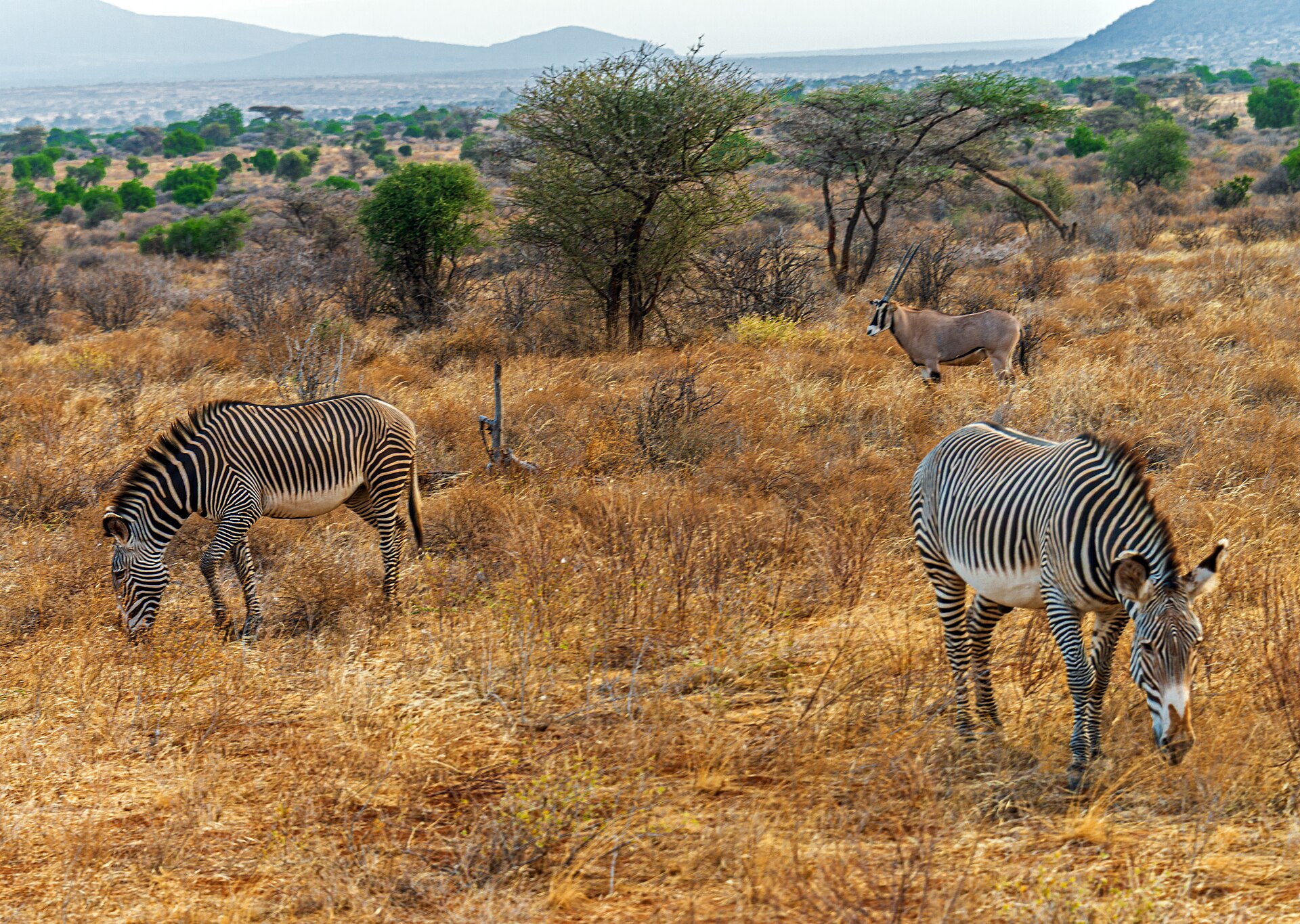
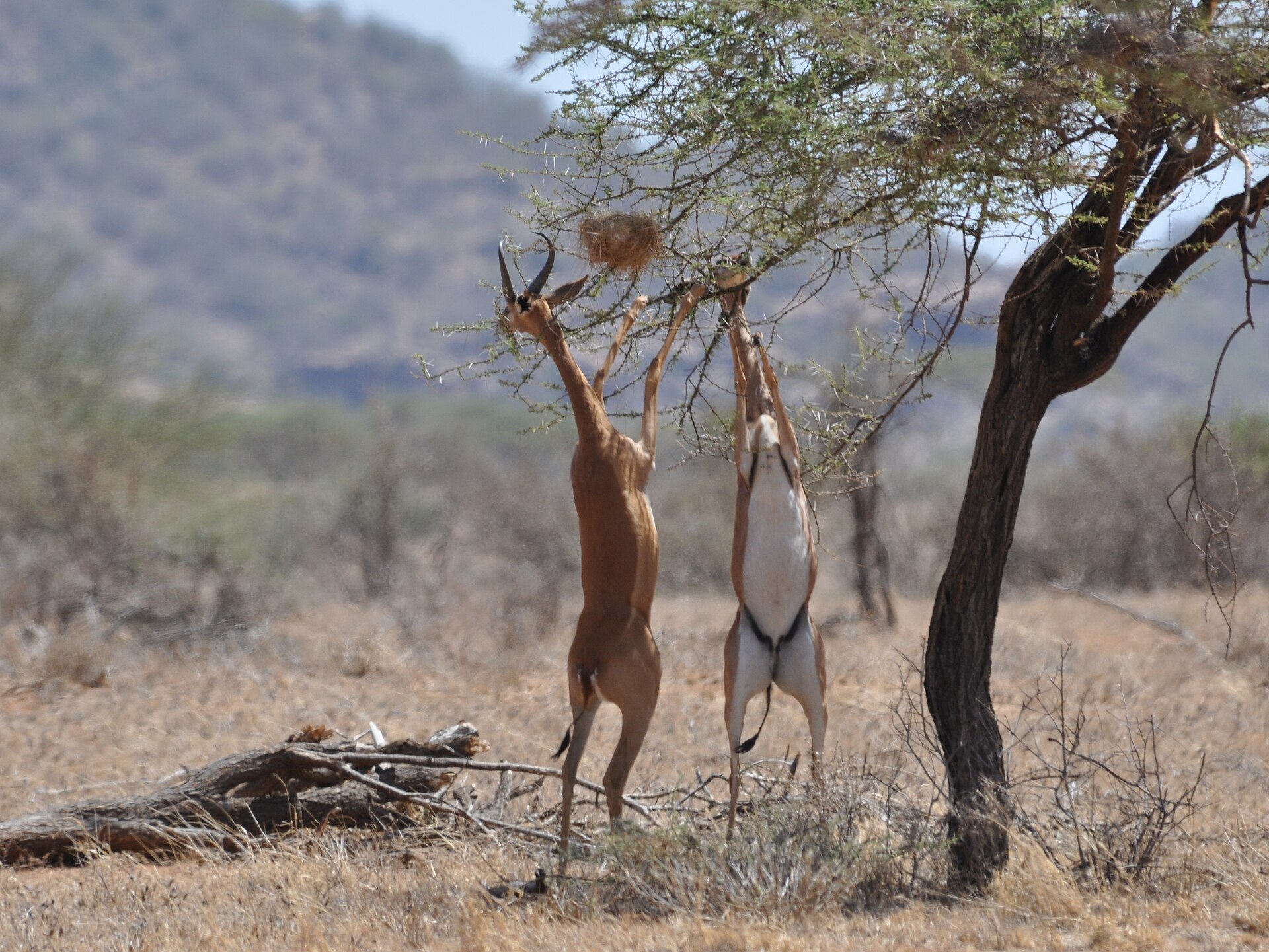
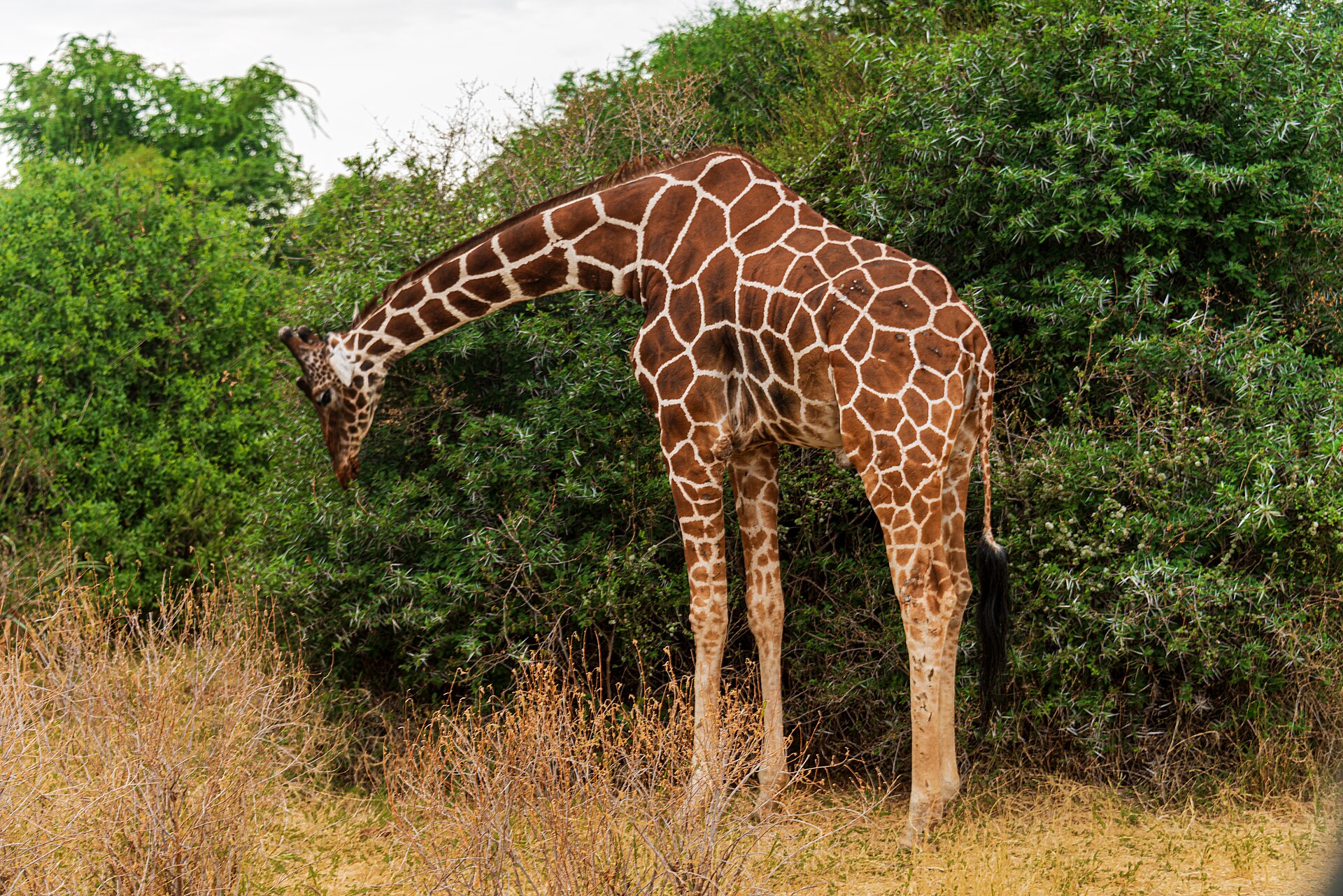
The scrub plains are home to the five animals of the north, Grévy's zebra, the reticulated giraffe, the beisa oryx, the gerenuk and the Somali ostrich, described below. Lions, cheetahs and a few passing wild dogs hunt on the same plains, crocodiles hold the river, and more than 350 bird species have been recorded.
| Species | J | F | M | A | M | J | J | A | S | O | N | D | Note |
|---|---|---|---|---|---|---|---|---|---|---|---|---|---|
 Elephant | peak season | peak season | peak season | possible | possible | peak season | peak season | peak season | peak season | peak season | possible | peak season | at the river at midday, especially in the dry season |
 Leopard | peak season | peak season | peak season | peak season | peak season | peak season | peak season | peak season | peak season | peak season | peak season | peak season | tall acacias on the riverbank |
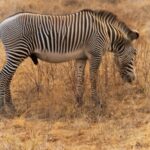 Grévy's zebra | peak season | peak season | peak season | peak season | peak season | peak season | peak season | peak season | peak season | peak season | peak season | peak season | scrub plains |
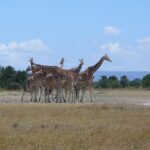 Reticulated giraffe | peak season | peak season | peak season | peak season | peak season | peak season | peak season | peak season | peak season | peak season | peak season | peak season | acacias, throughout the reserve |
| Beisa oryx | peak season | peak season | peak season | peak season | peak season | peak season | peak season | peak season | peak season | peak season | peak season | peak season | open plains |
| Gerenuk | peak season | peak season | peak season | peak season | peak season | peak season | peak season | peak season | peak season | peak season | peak season | peak season | bushes, standing on its hind legs |
| Somali ostrich | peak season | peak season | peak season | peak season | peak season | peak season | peak season | peak season | peak season | peak season | peak season | peak season | plains, the male with its blue neck |
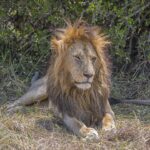 Lion | possible | possible | possible | possible | possible | possible | possible | possible | possible | possible | possible | possible | small prides, plains at dawn |
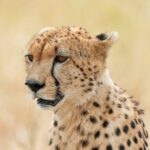 Cheetah | possible | possible | possible | possible | possible | possible | possible | possible | possible | possible | possible | possible | open plains |
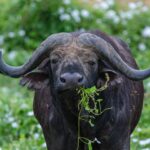 Buffalo | possible | possible | possible | possible | possible | possible | possible | possible | possible | possible | possible | possible | small groups near the river |
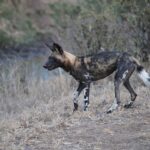 African wild dog | rare | rare | rare | rare | rare | rare | rare | rare | rare | rare | rare | rare | passing through from Laikipia |
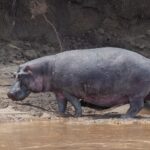 Hippopotamus | possible | possible | possible | possible | possible | possible | possible | possible | possible | possible | possible | possible | pools of the Ewaso Ng'iro |
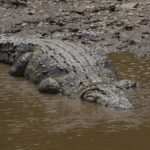 Nile crocodile | peak season | peak season | peak season | peak season | peak season | peak season | peak season | peak season | peak season | peak season | peak season | peak season | banks of the Ewaso Ng'iro |
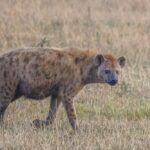 Spotted hyena | possible | possible | possible | possible | possible | possible | possible | possible | possible | possible | possible | possible | throughout the reserve, mostly at night |
peak seasonpossiblerare
What is a safari like in Samburu?
The reserve is small, 165 km², and you cover it in two drives a day. The first leaves at dawn for the plains and hills, the second follows the river in the late afternoon. In between, you stay at camp under the doum palms, in the dry heat.
A bridge links Samburu to Buffalo Springs, and the lodges are spread along both sides of the river, with a separate entry fee for each reserve. Self-driven 4x4s are allowed, and the sandy tracks are easy to drive, even after the rains. Walks and night drives take place in the neighboring conservancies, Kalama or West Gate, run by Samburu communities.
When to go to Samburu?
idealgoodnot recommended
Samburu is worth a visit all year, and the dry season, from June to October and again from December to March, concentrates the animals on the river. Elephants file down to it every day, and the short grass on the plains makes predators visible from far away.
The rains of April and May and of November are short and erratic in this semi-arid north. The Ewaso Ng'iro rises, the animals spread out toward the hills, and the bush turns green. Entry fees do not change with the season.
How to get to Samburu?
From Nairobi, the A2 runs through Nanyuki and Isiolo and reaches Archer's Post, at the entrance to the reserve, in five to six hours for 350 km. The main gate is just past the village. The drive combines well with Ol Pejeta and the Laikipia conservancies, two hours away by road.
By air, AirKenya and Safarilink fly from Wilson Airport to the Kalama and Buffalo Springs airstrips every morning, in about 1 hour 30 minutes. Safarilink adds a daily direct flight between Samburu and the Masai Mara, and connections to Nanyuki and Lewa.
Stay in Archer's Post
Where to find a guide in Samburu?
Guided tours you can book online, ranked by number of reviews. These are affiliate links: if you book, you support us at no extra cost.

 Viator
5 Days Maasai mara, Lake Nakuru, samburu private lodge safari
5.0 (96 reviews)View and book Viator
7-Days Kenya Safari Samburu, Aberdare, Lake Nakuru, & Maasai Mara
4.9 (83 reviews)View and book Viator
Samburu, Lake Nakuru & Masai Mara 6 Days Private 4x4 Jeep Safari
4.9 (69 reviews)View and book Viator
3-Day Samburu safari from Nairobi
5.0 (20 reviews)View and bookWhere to stay near Samburu?
Hotels, apartments and rooms around Archer's Post, with current prices.
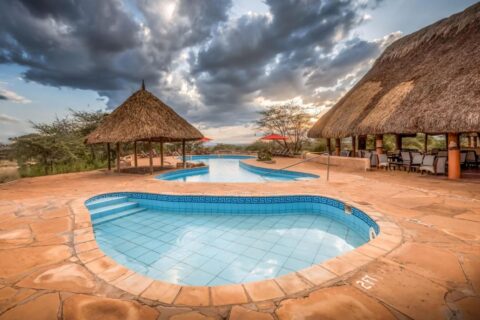
Which hotels to choose near Samburu?
What are the Samburu Special Five?
North of the equator, Kenya turns dry and low, and its animals change. Grévy's zebra, the largest of the zebras, has narrow stripes and a white belly. The reticulated giraffe has sharp polygon patches separated by white lines, like a net. The beisa oryx moves in herds, its horns straight. The gerenuk rises on its hind legs to browse acacias, and you recognize the Somali ostrich by the male's blue neck and thighs.
These five species range from Samburu to Ethiopia, and both Grévy's zebra and the reticulated giraffe are listed as endangered by the IUCN. Kenya counted 2,465 Grévy's zebras in 2024.
Who were Elsa and Kamunyak, the lionesses of Samburu?
George and Joy Adamson raised Elsa the lioness here in the late 1950s. She was returned to the wild, then her story was told in Born Free. In 2002, a lioness from the reserve, Kamunyak, adopted several oryx calves one after another instead of eating them, in front of guides and cameras.
Samburu's lions live in small prides and are harder to find than in the Masai Mara. Look for them at dawn on the plains tracks, then in the shade along the river.
Frequently asked questions about Samburu
When is the best time to visit Samburu?
June to October, then December to March, when the animals depend on the river. The rains of April, May and November scatter the herds, but the reserve stays open and the fees stay the same.
How much is the Samburu National Reserve entry fee?
US$85 per adult per 24 hours, US$50 per child, paid to Samburu County. A vehicle with fewer than six seats pays KSh 800 a day. Buffalo Springs, across the river, requires its own ticket.
Which animals can you see only in Samburu?
Grévy's zebra, the reticulated giraffe, the beisa oryx, the gerenuk and the Somali ostrich, the Special Five of the north. You will not find them in the Masai Mara or in Amboseli. Ol Pejeta has two of them, Grévy's zebra and the reticulated giraffe.
How do you get from Nairobi to Samburu?
By the A2, five to six hours to Archer's Post via Nanyuki and Isiolo. By air, AirKenya and Safarilink take 1 hour 30 minutes from Wilson, for US$267 one way in high season, taxes included.
How many days do you need in Samburu?
Two or three days. Two nights give you four game drives, enough for the Special Five and the elephants at the river. The third night is often spent in Buffalo Springs or a neighboring conservancy.
Is there malaria in Samburu?
Yes, the reserve lies at 800 m in a hot region. Ask your doctor about preventive treatment before you leave, and sleep under a mosquito net, especially by the river.
Our tip
Stay near the river in the hot hours: the animals come down to it between 11 a.m. and 3 p.m., when the plains are empty. Combine Samburu with Buffalo Springs, across the bridge, and be ready for the heat, as the reserve lies at 800 m.
Other parks nearby
 KenyaPrivate reserve
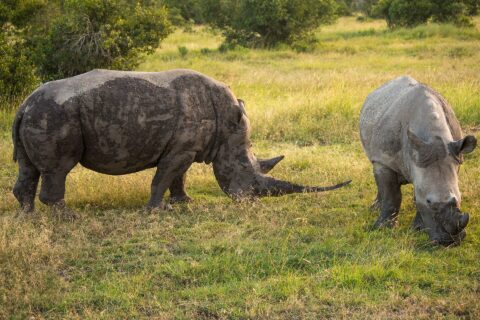
Ol Pejeta Conservancy
Northern Kenya KenyaNational park
Lake Nakuru National Park
Northern Kenya KenyaNational reserve