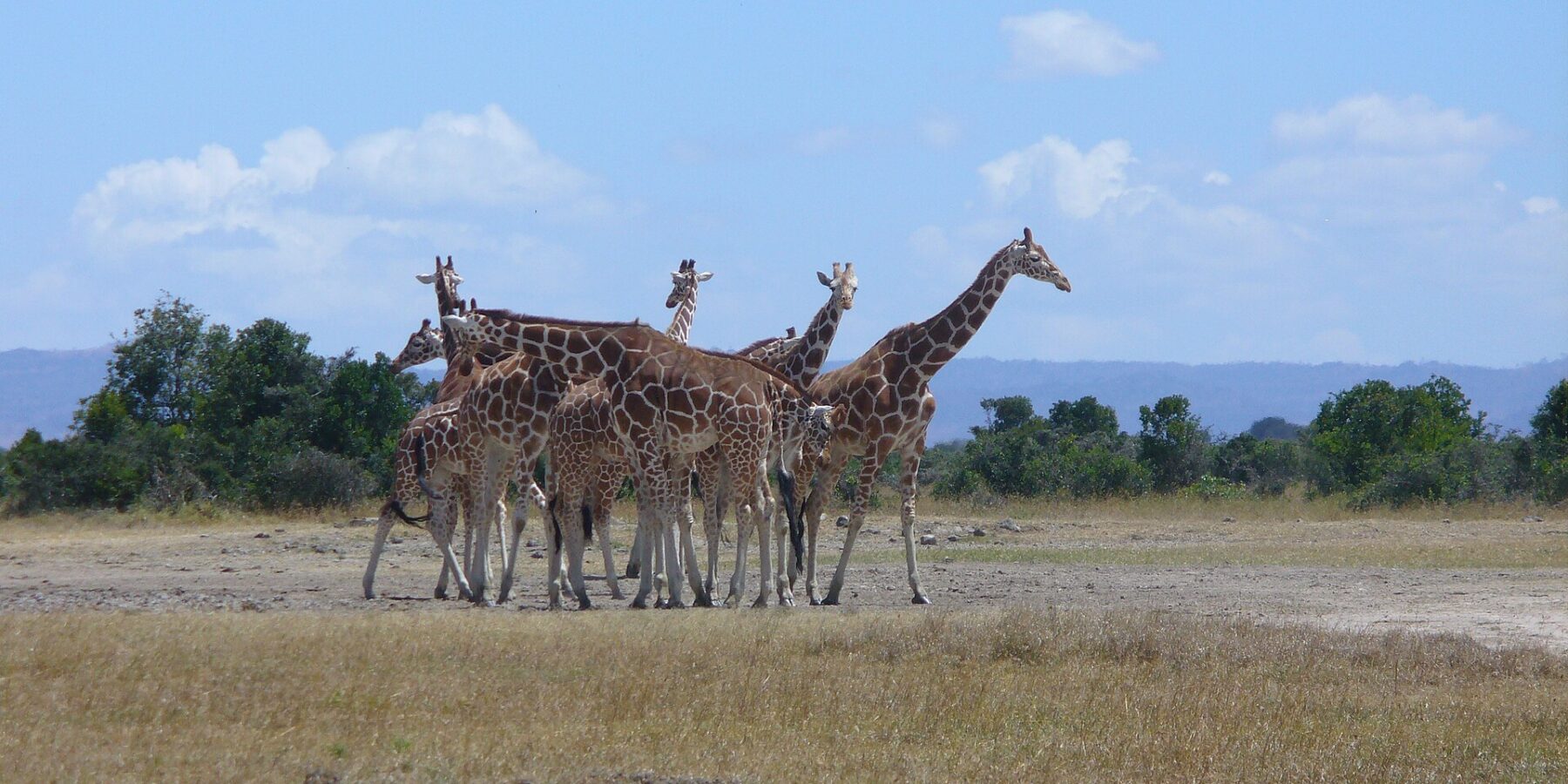
The reticulated giraffe wears clean polygonal patches separated by white lines like a net, which tell it apart at first glance from the Masai giraffe of the south. You find it in northern Kenya: in Samburu, where it crosses the Ewaso Ng'iro between doum palms, at Ol Pejeta and in the Laikipia conservancies. The IUCN has listed it as Endangered since 2018.
Where to see the reticulated giraffe on safari?
 Kenya
How do you identify a reticulated giraffe?
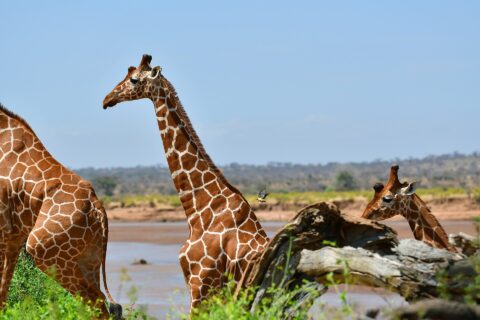
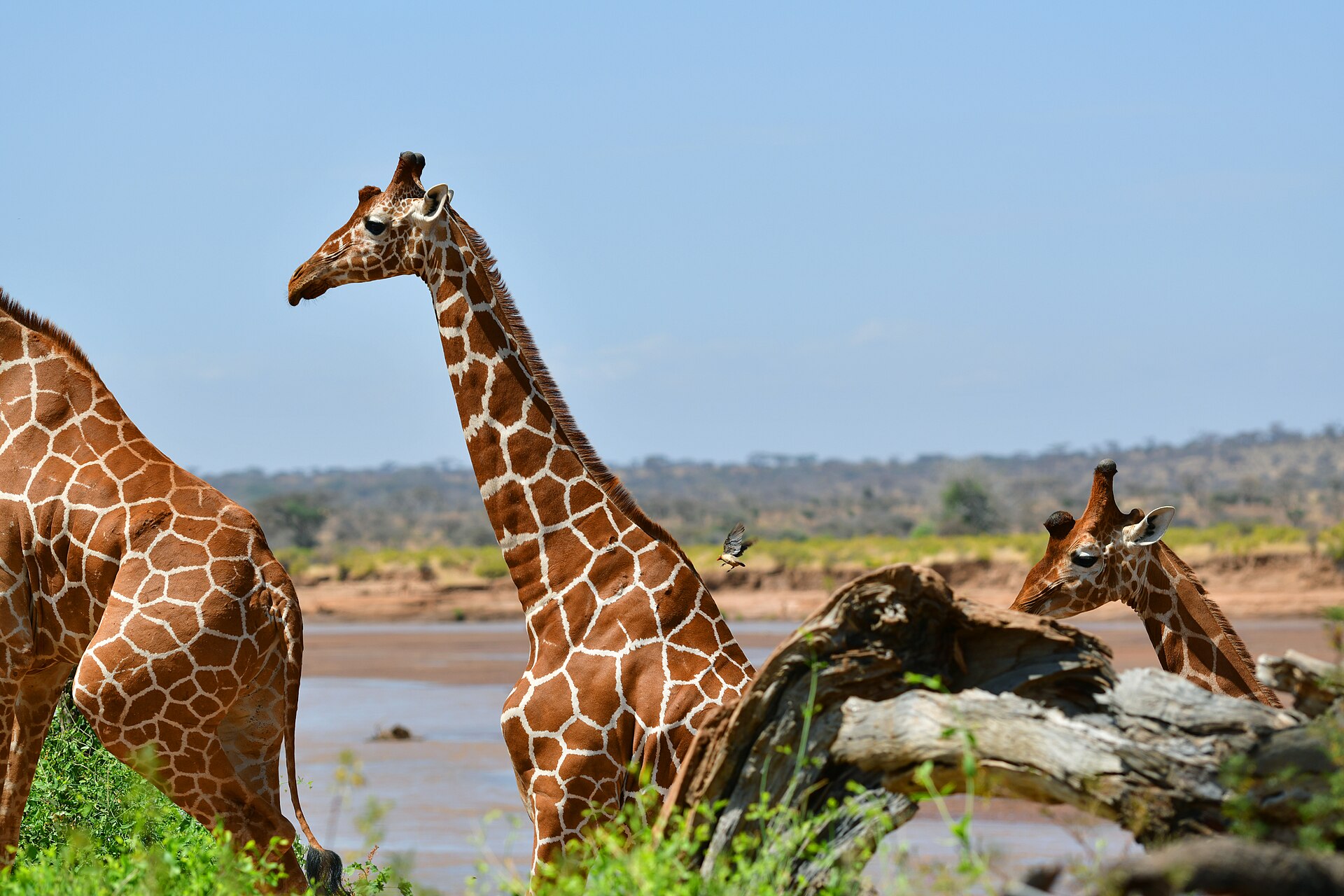
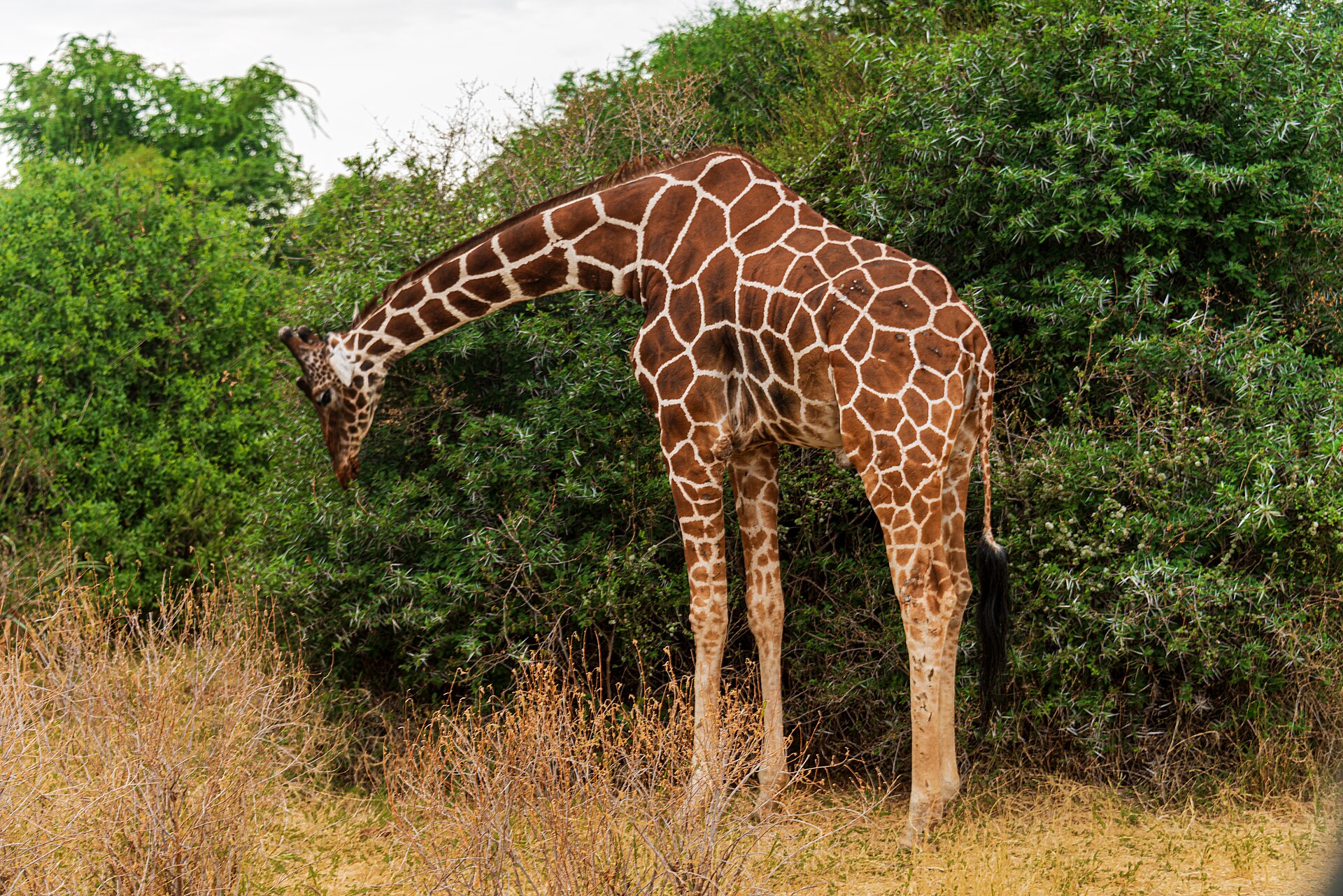
The reticulated giraffe has the crispest coat of all giraffes. Its large reddish-brown patches, almost orange in young animals, are cut into polygons and separated by thin, regular white lines, like a net thrown over the animal. The pattern runs all the way down to the hooves. A male reaches 5 to 5.7 meters. Kenya's two other giraffes are easy to tell apart at first glance. In the south, the Masai giraffe, found in the Mara, Amboseli and Tsavo, has irregular spots with jagged edges. Rothschild's giraffe, at Lake Nakuru, shows a paler pattern and white legs below the knee.
Reticulated giraffe in pictures
How does the reticulated giraffe live?
It browses acacias from head height to well above, wrapping its tongue around the thorny twigs. These leaves give it almost all its water, and it can go a day or two without drinking in the dry north. Groups are loose, around ten animals that come together and drift apart. Males size each other up by striking with their necks, a slow fight you can watch for minutes on end. It walks with a pacing gait and sleeps little, standing up or with its neck curled back over its rump. The calf is born while its mother stands, after fifteen months of gestation, and walks within the hour.
Where and when can you see reticulated giraffes on safari?
Samburu is the best place, with Buffalo Springs just opposite. Giraffes there cross the bed of the Ewaso Ng'iro between the doum palms and browse the acacias on the bank, a few meters from the track. Ol Pejeta, on the Laikipia Plateau, has them in its acacia woodland, and the neighboring conservancies, Lewa first among them, are home to large groups. Farther south, it disappears and the Masai giraffe takes its place. At midday, when it stands in the shade, you find it motionless and easy to photograph, and in late afternoon you see it walk toward the water.
Is the reticulated giraffe endangered?
The IUCN has listed the reticulated giraffe as Endangered since 2018. Its numbers fell by 60% between 1985 and 2015, from some 36,000 animals to about 16,000. Poaching, drought and the loss of land to livestock explain the decline. It lives in northern Kenya, Somalia and southern Ethiopia. Kenya's national census counted 19,725 in 2021 and 31,201 in 2025. Community conservancies in the north and GPS collar tracking carry most of the effort to protect it.
Our tip
Look for it in Samburu along the river in late afternoon, when groups come to drink and cross the sandy riverbed between the palms. Check the legs and the coat pattern before you decide which giraffe it is: at Lake Nakuru the giraffes are Rothschild's, in the Mara and Amboseli they are Masai.