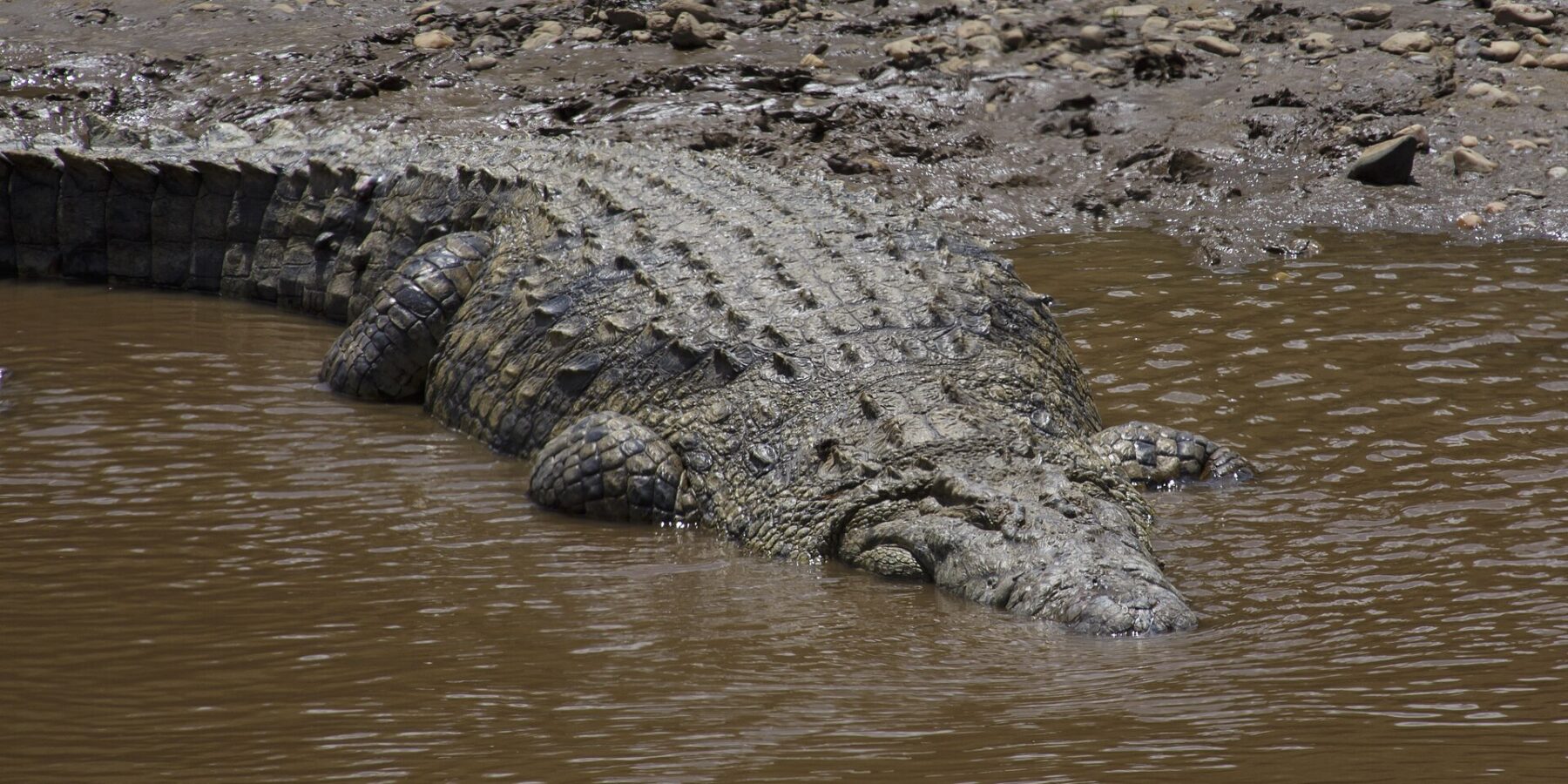
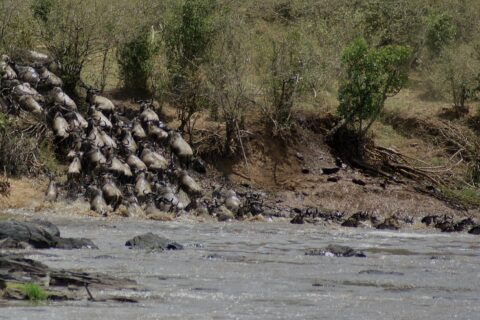
The Nile crocodile is best seen on the Mara River, in Kenya, when it waits for the wildebeest at the crossings from July to October. In Samburu, you will see it in every season below the lodges, along the Ewaso Ng'iro. In South Africa, look for it in Kruger, for example at Sunset Dam, near Lower Sabie.
Where to see the Nile crocodile on safari?
 South AfricaGame reserve
Hluhluwe-iMfolozi Park
KwaZulu-NatalCan be seen all year round: White and Black Mfolozi rivers
 South AfricaNational park
Kruger National Park
Northeastern South AfricaPeak season all year round: rivers and dams, Sunset Dam near Lower Sabie
 KenyaNational reserve
Masai Mara National Reserve
Southwestern KenyaPeak season from July to October: Mara River, at the migration crossing points
 South AfricaNational park
Pilanesberg National Park
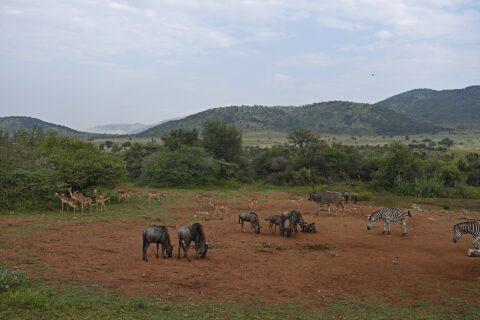
Northwestern South AfricaCan be seen all year round: Mankwe Dam
 KenyaNational reserve
Samburu National Reserve
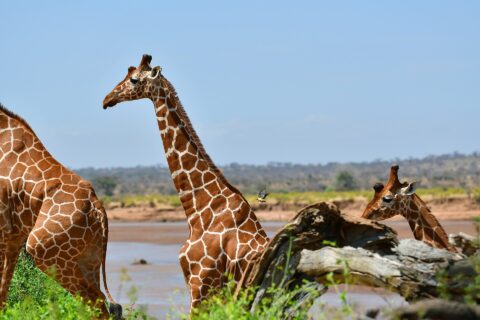
Northern KenyaPeak season all year round: banks of the Ewaso Ng'iro
 KenyaNational park
Tsavo East National Park
Southern KenyaPeak season all year round: Galana, downstream of Lugard Falls
How do you identify a Nile crocodile?
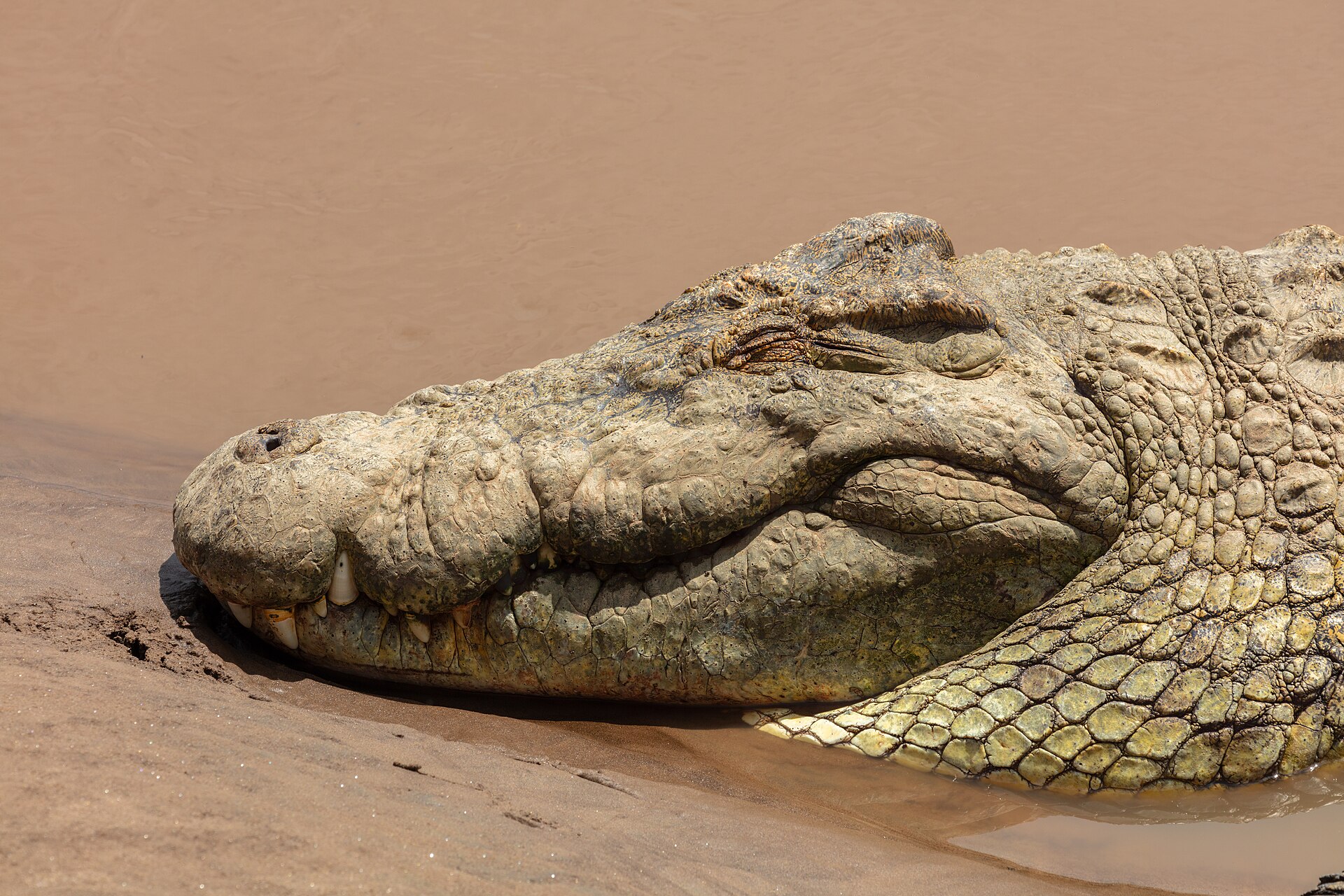
It is the only crocodile in the rivers and lakes of Kenya, and you won't mistake it for anything except a floating log. An adult measures 3.5 to 5 meters, and the oldest males exceed 6 meters and weigh more than a metric ton. The back is olive-green to bronze, lined with ridged scales, the belly is yellow, and the tail is as long as the body. In the water, only the eyes and nostrils show. The Nile monitor, which shares the same banks, is much smaller and scurries off on all fours.
Nile crocodile in pictures
How does the Nile crocodile live?
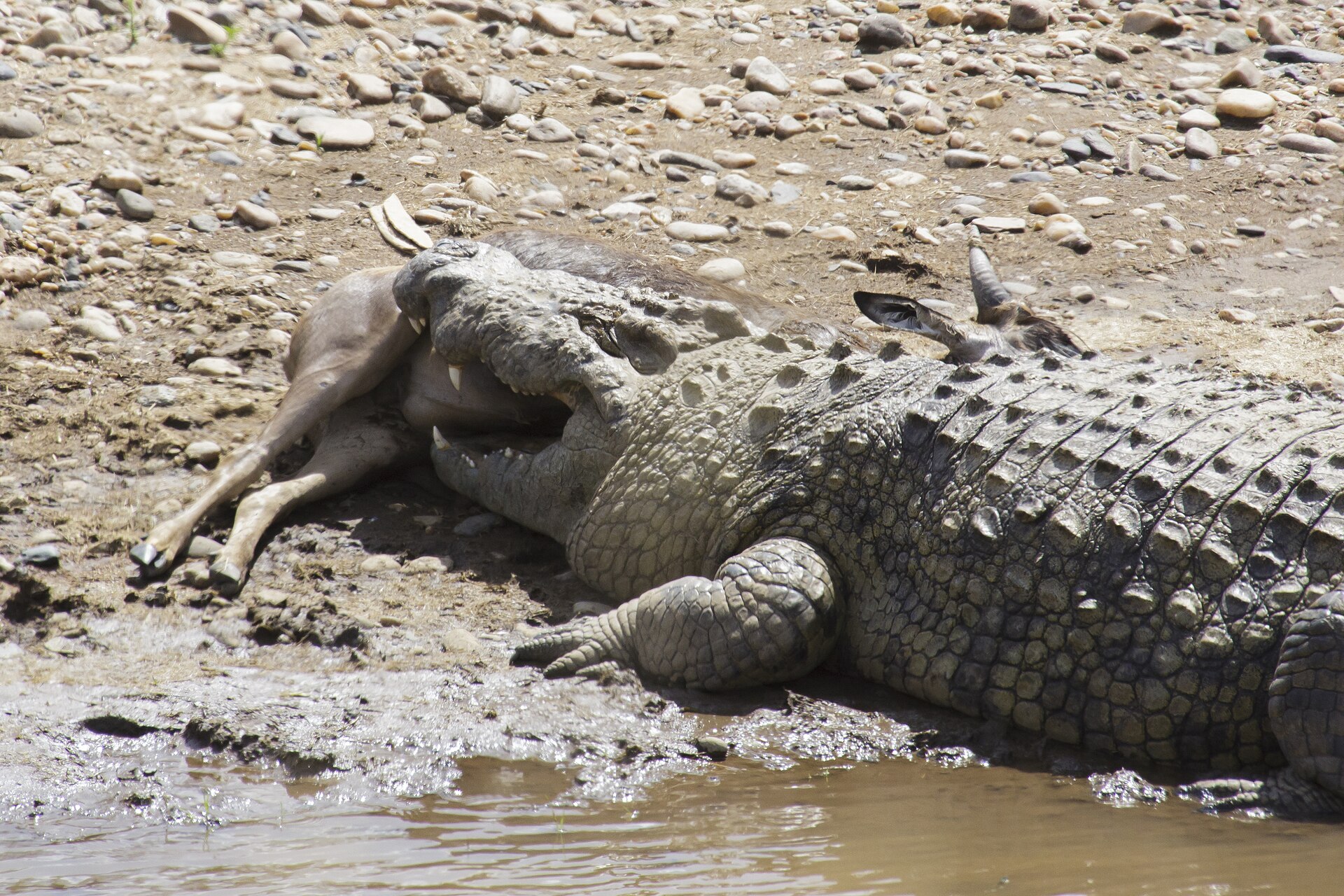
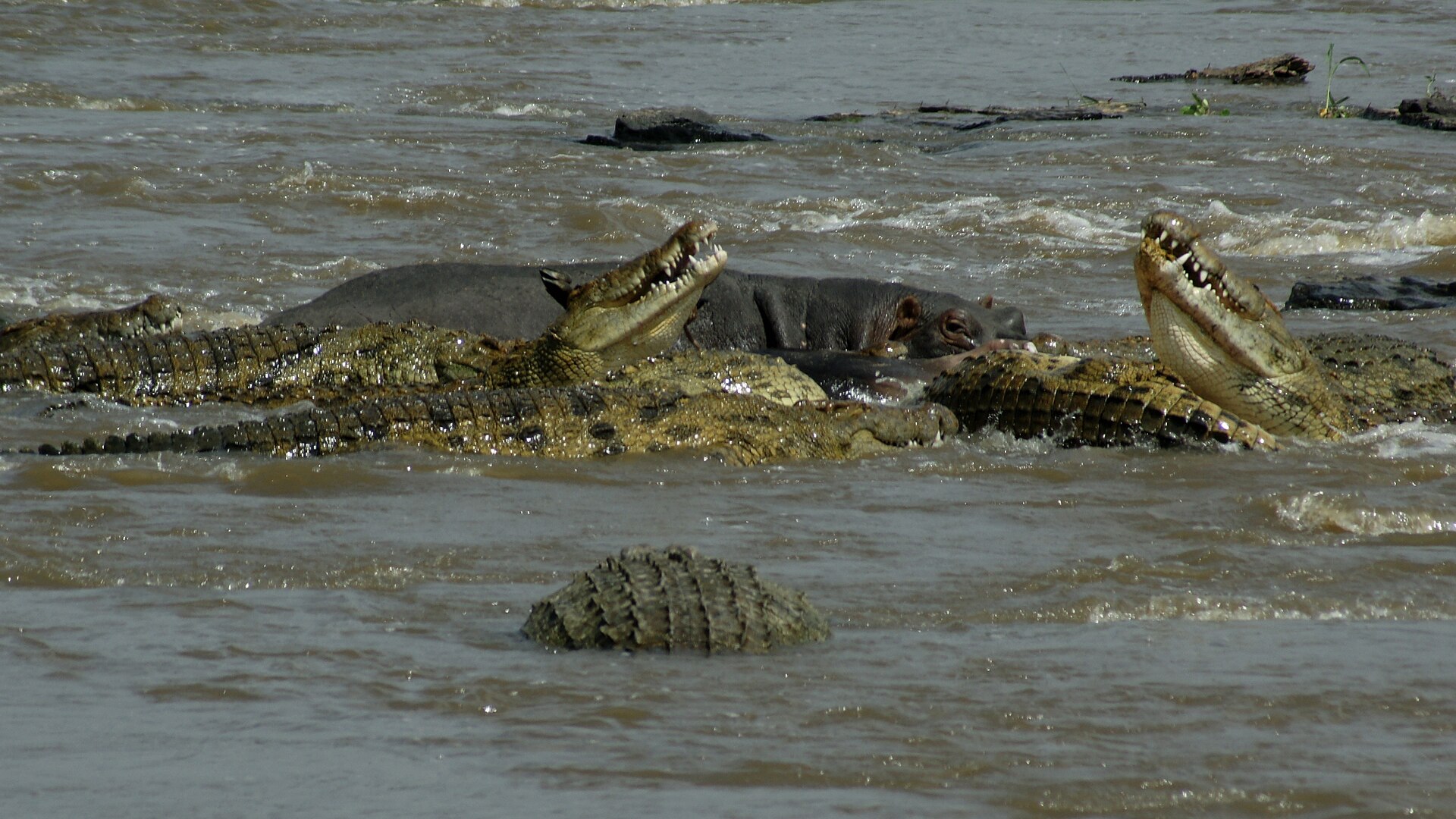
It hunts by ambush. Motionless in the current, it waits for an antelope, a zebra or a wildebeest to come and drink or cross, grabs the prey and drags it underwater. The rest of the time, it basks on the bank with its jaws open, because it does not produce its own body heat. The female buries her eggs in the sand in the dry season and guards the nest until they hatch, then carries the hatchlings, 30 cm long, to the water. A crocodile keeps growing all its life.
Where and when can you see Nile crocodiles on safari?
In Kenya, the Mara River is the best place, especially from July to October. The crocodiles then gather at the migration crossings, where the guides wait for the herds to cross. The rest of the year, look for them in mid-morning on the sandbanks of the Mara and Talek rivers. Samburu shows them in every season on the banks of the Ewaso Ng'iro, below the lodges. In Tsavo East, they live in the Galana River, downstream of Lugard Falls. Soda lakes like Nakuru and the Amboseli swamps have none.
In South Africa, you see them in every season in the rivers and dams of Kruger, such as Sunset Dam, near Lower Sabie. In Pilanesberg, they live in Mankwe Dam, with the hippos, but a sighting there is less certain.
Is the Nile crocodile endangered?
The IUCN lists the Nile crocodile as Least Concern, with 250,000 to 500,000 animals in Africa. Hunting for leather had almost wiped it out of the big rivers by the middle of the 20th century. It is still killed for its skin and by herders, and dams and irrigation shrink its rivers. In Kenya, the Mara, Samburu and Tsavo parks, Lake Turkana and the Tana River hold strong populations. Between 2010 and 2014, 480 attacks on humans were recorded in Africa, 123 of them fatal.
Our tip
Scan the sandbanks and flat rocks in mid-morning, when it comes out to bask, and the Mara crossings between July and October. With binoculars, count the crocodiles lined up underwater before a crossing: there are often more than you think.