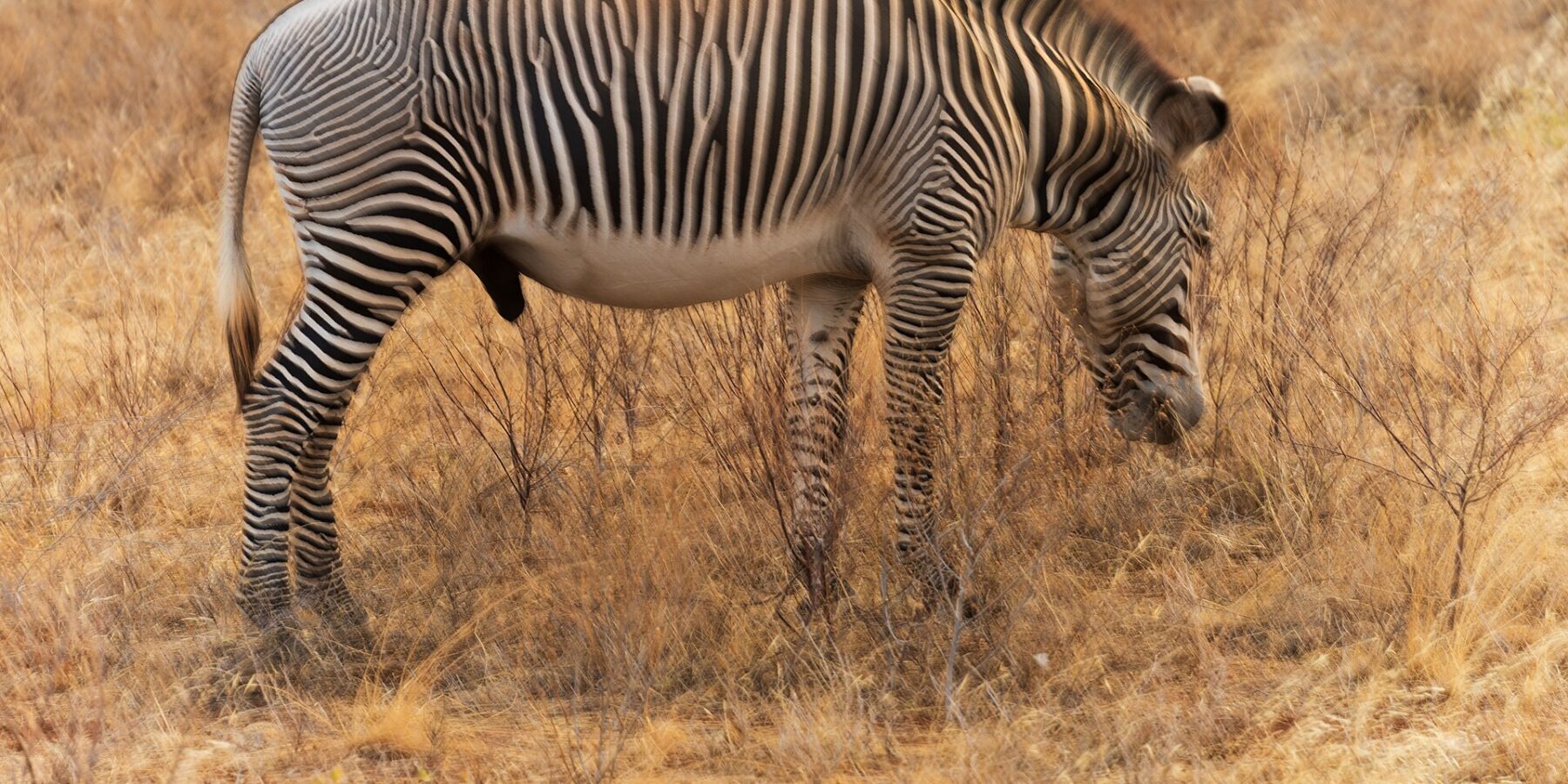
Grévy's zebra now lives almost only in Kenya, home to nearly the entire species: 2,465 animals counted in 2024, against 15,000 in the 1970s. Look for it in the north, first in Samburu and Buffalo Springs, then on the Laikipia Plateau and at Ol Pejeta, where it often grazes among plains zebras.
Where to see the Grévy's zebra on safari?
 Kenya
How do you identify a Grévy's zebra?
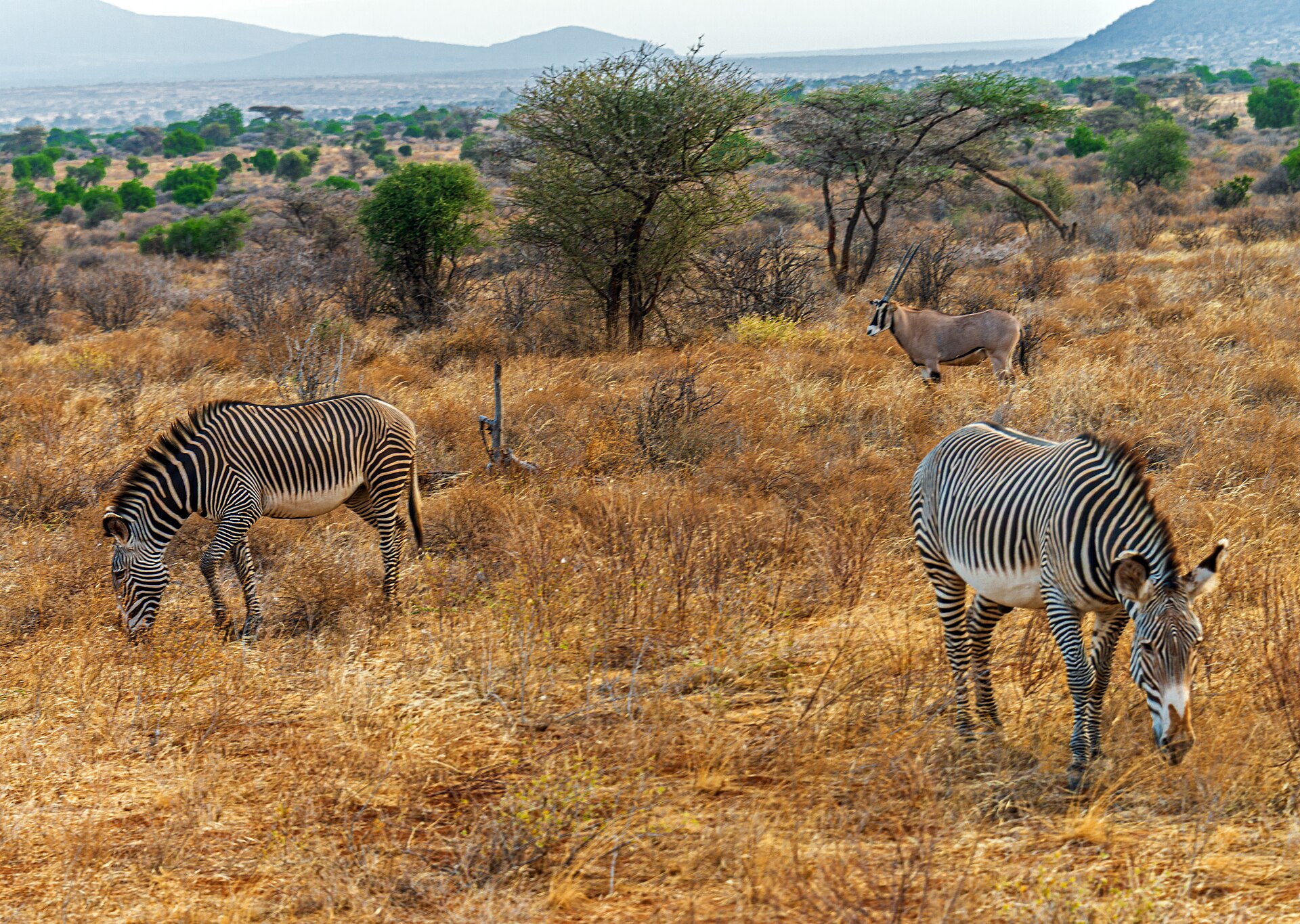
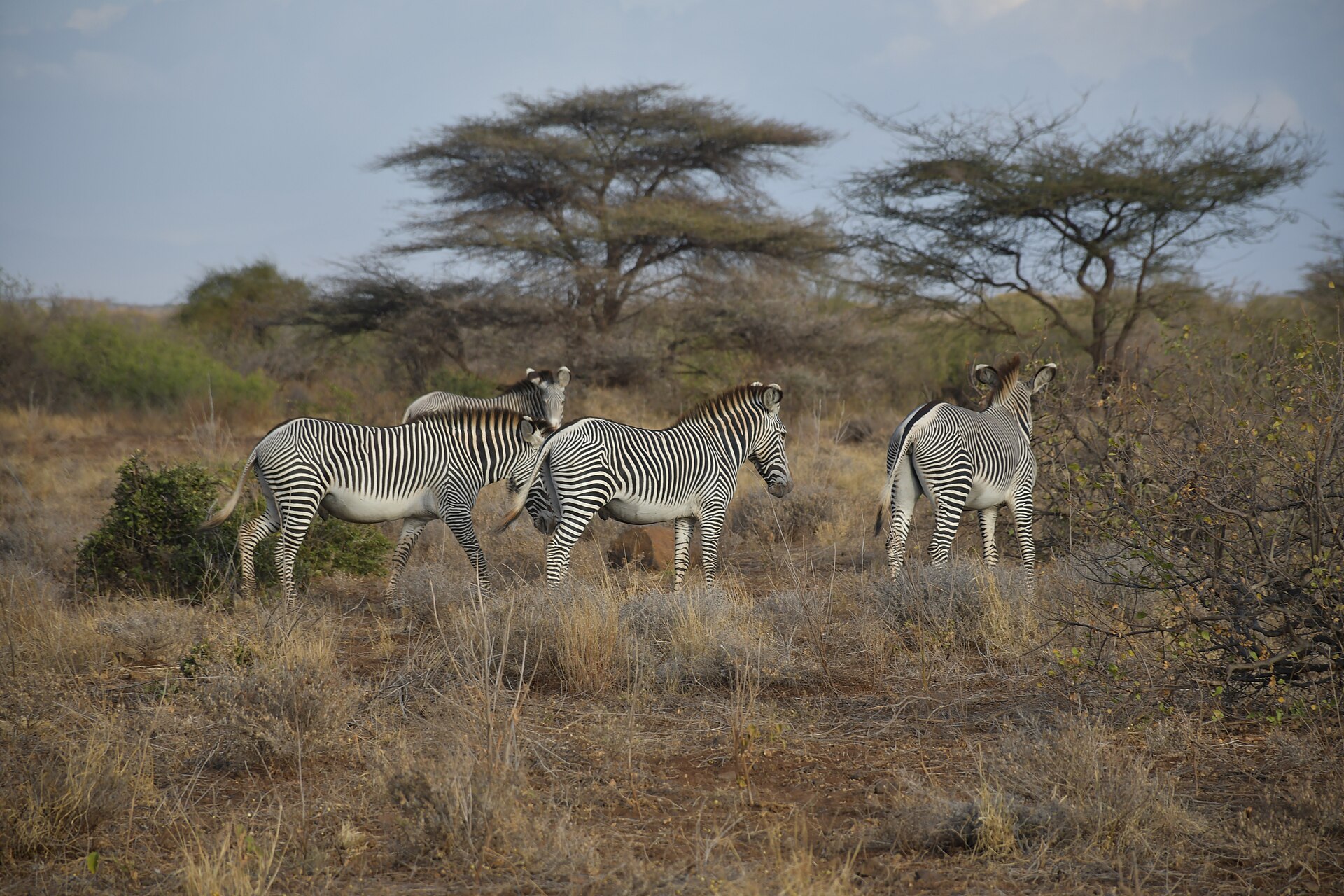
Grévy's zebra is the largest of the wild equids, 1.45 to 1.6 meters at the shoulder and 350 to 450 kg. Its long head, brown muzzle and large round ears give it a mule-like look. Its stripes are the narrowest of any zebra, black and closely set, and they stop on the flanks, leaving the belly and the base of the tail white. The mane is tall and upright. The plains zebra, which often lives alongside it, is smaller and rounder, and striped all the way under the belly. Its stripes are broad, sometimes with brown shadow stripes between them.
Grévy's zebra in pictures
How do Grévy's zebras live?
Grévy's zebras do not form harems. Stallions hold territories of several square kilometers around a waterhole, and the females pass through with their foals, without forming lasting bonds. The species copes with dry country better than the plains zebra and can go several days without drinking, but a nursing mother returns to water far more often. It grazes the tough grasses of the bushy plains and shares its pastures with herders' livestock, which is its biggest problem. The foal is born after more than a year of gestation.
Where and when can you see Grévy's zebras on safari?
Samburu and Buffalo Springs, on either side of the Ewaso Ng'iro River, are still the reserves where you are most likely to see one. Grévy's zebras live there in the bush, often in small groups with plains zebras and oryx. The Laikipia Plateau holds the largest share, in conservancies such as Lewa, and Ol Pejeta keeps a few dozen mixed in with its plains zebras. Laikipia County held 38% of Kenya's Grévy's zebras in 2021, and Isiolo 27%. The south of the country, the Masai Mara, Amboseli and Tsavo, has none.
Are Grévy's zebras endangered?
The IUCN lists Grévy's zebra as Endangered. The species numbered 15,000 animals in the late 1970s, in Ethiopia, Somalia and Kenya, and fell below 2,500 around 2008. The 2024 national census counted 2,465 in Kenya, against 2,649 in 2021, and a small population survives in Ethiopia. The threats are competition with livestock for grass and water, droughts and an invasive plant, prosopis, which is replacing the grasses in the north. The community conservancies of Samburu and Laikipia do most of the work of protecting it.
Our tip
In Samburu, look for it in the bush away from the river in the early morning, and compare it with the plains zebras grazing nearby. The white belly and round ears give it away from a distance. At Ol Pejeta, ask the rangers where the conservancy's small group is staying.