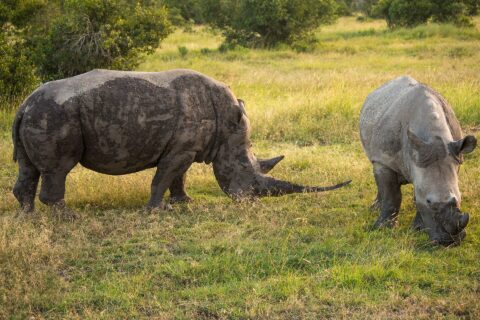
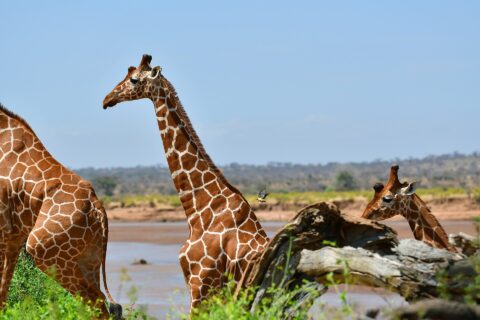
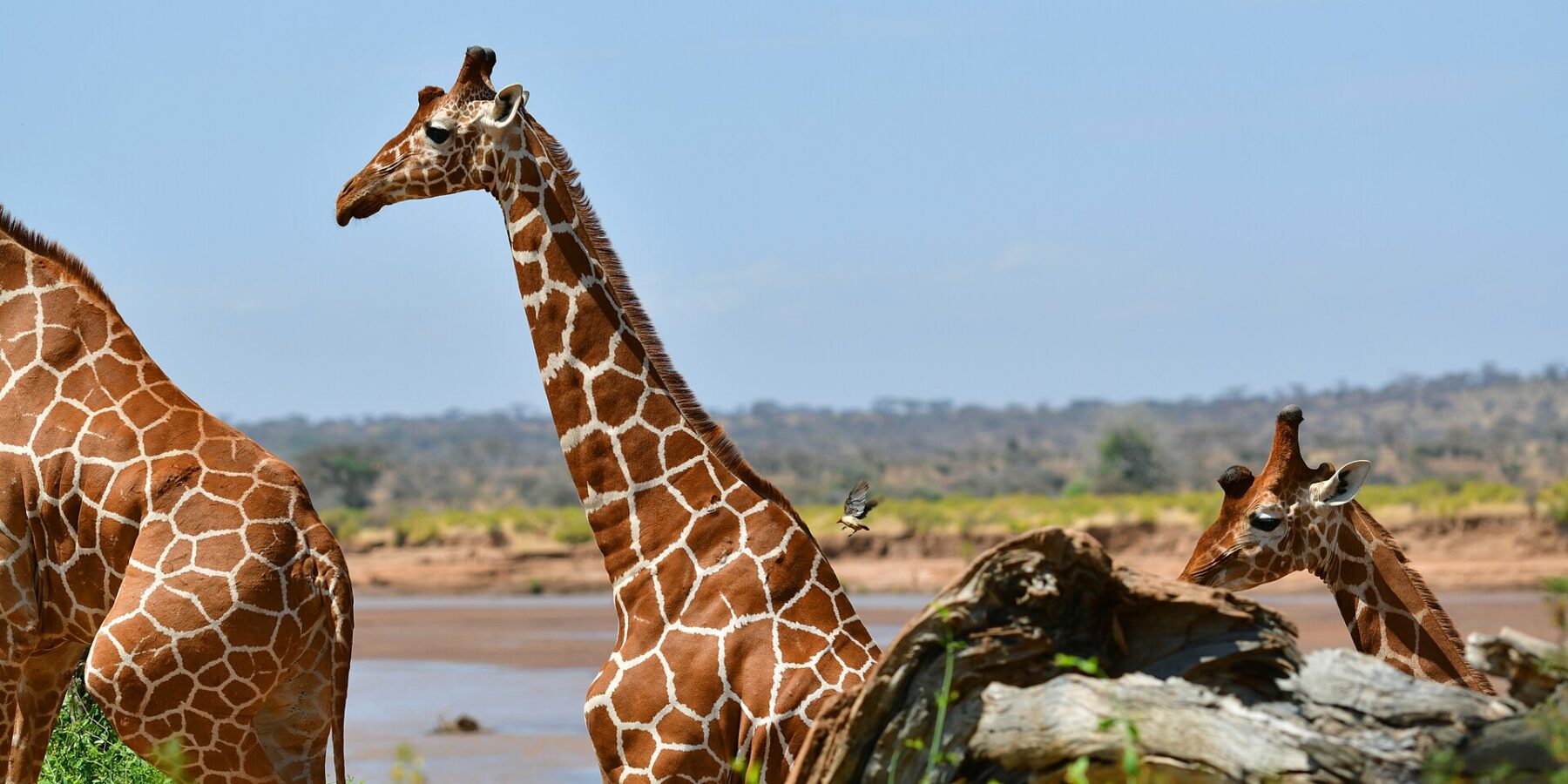
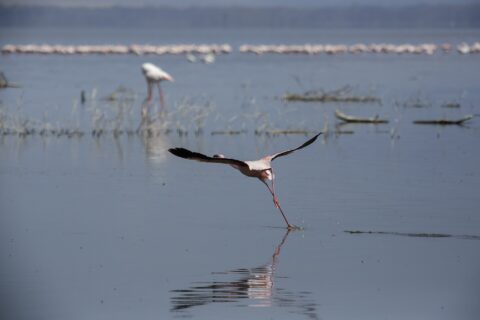
In northern Kenya, you leave the classic savanna for three encounters the south can't offer. Samburu shows the Special Five, from Grévy's zebra to the reticulated giraffe. Ol Pejeta keeps the last two northern white rhinos, and Lake Nakuru, the country's first sanctuary, adds its flamingos.
Season
Visit Samburu mainly in the dry season, June to October and then December to March, when the elephants depend on the Ewaso Ng'iro. Ol Pejeta and Lake Nakuru, both fenced, show their rhinos in any month. The April and May rains scatter Samburu's herds and turn Laikipia green.
Budget
Fees range from US$85 per adult per 24 hours in Samburu to US$110 at Ol Pejeta, with Lake Nakuru at US$90. Each Ol Pejeta activity adds US$70. The AirKenya flight from Wilson to Samburu costs US$267 one way in high season.
Getting there
Nanyuki, about 200 km from Nairobi on the A2, opens up Laikipia and Ol Pejeta, and the same road continues to Samburu, five or six hours from the capital. Lake Nakuru is 156 km away on the A104 highway. Safarilink and AirKenya serve Nanyuki and Samburu from Wilson Airport.
Northern Kenya begins at Mount Kenya, and the three parks covered here sit around it. Samburu, 350 km from Nairobi, is the dry country of the Ewaso Ng'iro. There you find the Samburu Special Five: Grévy's zebra, reticulated giraffe, beisa oryx, gerenuk and Somali ostrich. The elephants cross the river in the middle of the day. Ol Pejeta, on the Laikipia Plateau near Nanyuki, is a fenced private reserve of 360 km². It keeps more than 165 black rhinos, the last two northern white rhinos and the country's only chimpanzees. Lake Nakuru, in the Rift Valley 156 km from Nairobi, was Kenya's first rhino sanctuary. It remains a flamingo park, when the water isn't too high.
In what order should you visit northern Kenya's parks?
Two circuits take shape. The first heads from Nairobi to Nanyuki and Ol Pejeta, three and a half hours by road, then continues to Samburu via Isiolo, two hours farther. You fly back from the Kalama or Buffalo Springs airstrip. The second follows the Rift Valley by way of Lake Nakuru, three hours from the capital, then joins the Masai Mara via Narok or heads north to Bogoria and Baringo. Allow one night at Ol Pejeta, two or three in Samburu and one at Lake Nakuru. Lodges in Nanyuki and Nakuru let you break up the drives.
How much does a northern Kenya safari cost?
Samburu, run by its county, charges US$85 per adult per 24 hours, and Lake Nakuru, a KWS park, US$90. Ol Pejeta charges US$110 a day, with mandatory online booking, plus US$70 per activity, such as meeting Najin and Fatu or a night drive. Vehicles pay KSh 600 to KSh 1,000 a day depending on the park. By air, AirKenya charges US$267 one way from Wilson to Samburu in high season, and Safarilink also serves Nanyuki.
When is the best time to visit northern Kenya?
Samburu depends on the dry season, June to October and then December to March, when the animals concentrate on the river. The April and May rains scatter the herds toward the hills. Ol Pejeta and Lake Nakuru, both fenced, show their rhinos in any month, and Mount Kenya mostly clears at dawn in the dry season. The flamingos follow the lake level and come and go between Nakuru, Elmenteita and Bogoria, with no reliable calendar.
Where to stay in northern Kenya?
Hotels, apartments and rooms around Lake Nakuru Main Gate, the starting point for safaris in Lake Nakuru, with current prices.
 KenyaNational park