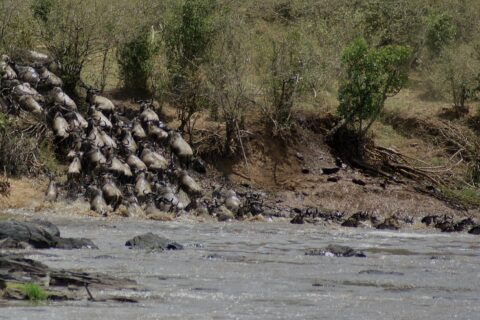
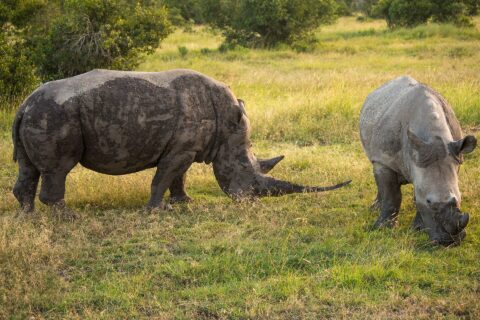
Kenya is the country where one safari brings together the wildebeest migration, the elephants of Kilimanjaro and the last northern white rhinos. In the Masai Mara, the wildebeest cross the Mara River before your eyes from July to October. In Amboseli, 1,903 elephants walk in front of the mountain, and Ol Pejeta keeps Najin and Fatu, the last two.
Why go on safari in Kenya?
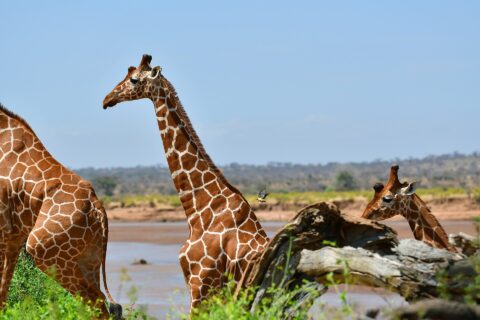
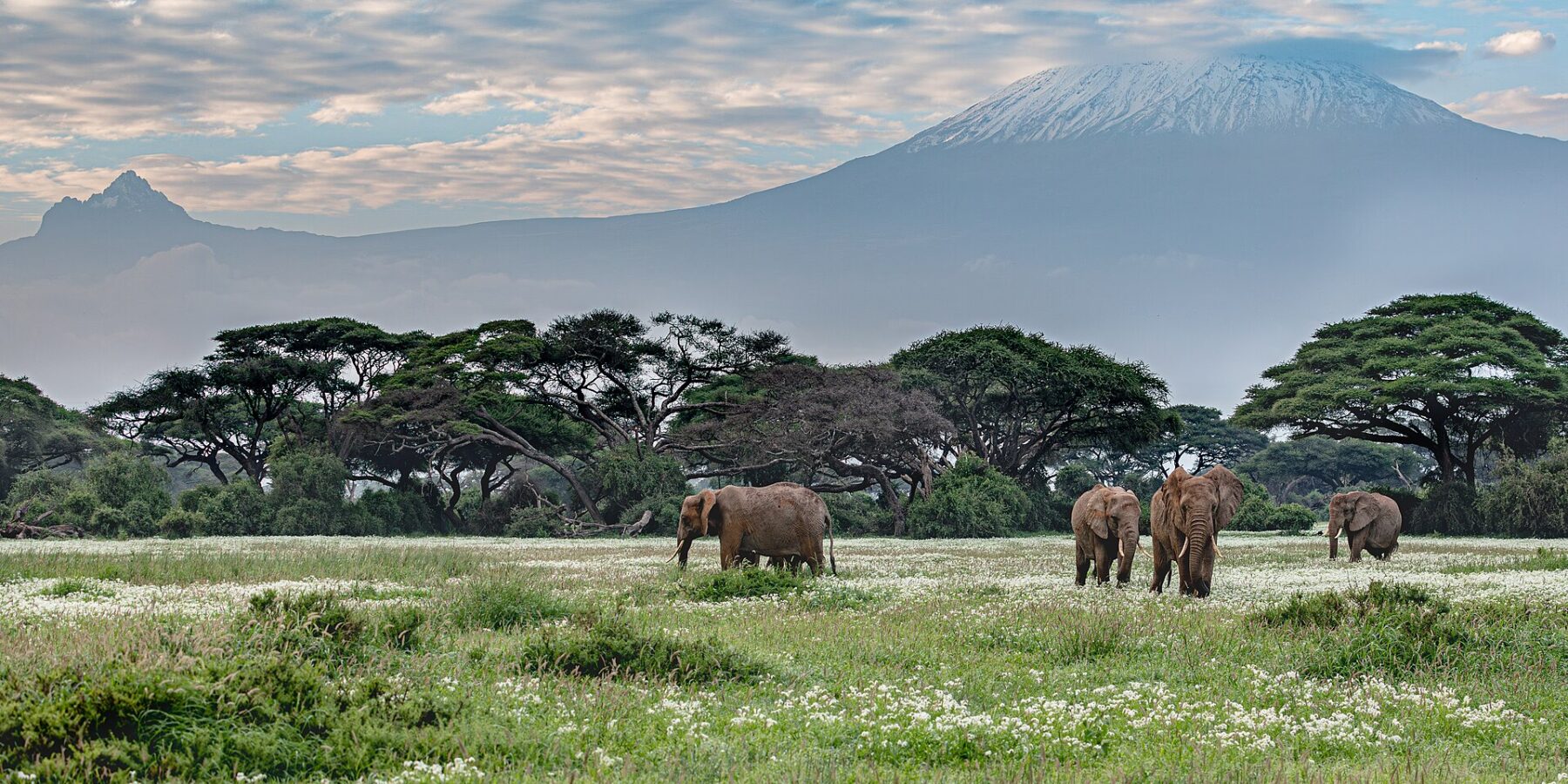
Kenya packs into one country what its neighbors share among themselves. The wildebeest migration crosses the Mara River before your eyes between July and October. The Masai Mara keeps a higher density of lions than most parks in Africa. Amboseli puts 1,903 elephants in front of Kilimanjaro, each one followed individually since 1972. The north adds animals the south of the country doesn't have, Grévy's zebra and reticulated giraffe in Samburu. Ol Pejeta keeps the last two female northern white rhinos. All of it is quick to reach from Nairobi, in under an hour and a half by plane or a day by road.
Where to go on safari in Kenya?
Three regions share the safaris, and a first trip covers two of them. The southwest comes down to the Masai Mara and its conservancies, the land of migrating wildebeest and lions. You spend three nights there, split between the river and a quieter conservancy.
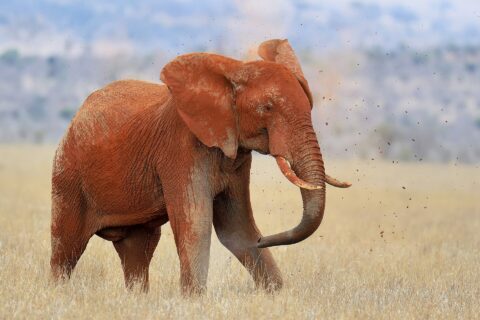
The south, on the road to Mombasa, lines up Amboseli, a small elephant park at the foot of Kilimanjaro, and Tsavo East, the largest park in the country. Tsavo's elephants, coated in red laterite, roam an almost empty bush, and the coast is two hours away.
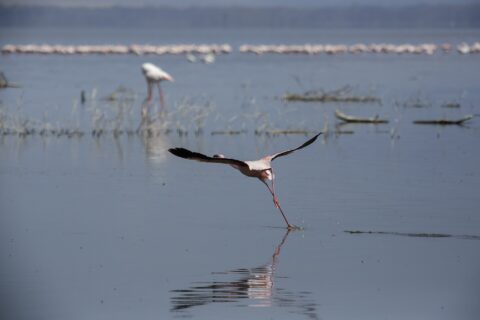
The north brings different animals. Samburu shows the Samburu Special Five, led by Grévy's zebra and the reticulated giraffe, along the Ewaso Ng'iro. Ol Pejeta, near Nanyuki, protects more than 165 black rhinos, as well as Najin and Fatu, the last of their subspecies. Lake Nakuru takes a day on the road north, for its rhinos and flamingos. A direct flight links the Mara and the north, while the Mara and Amboseli connect through Wilson.
When is the best time to go on safari in Kenya?
Two dry seasons set the rhythm. From June to October, the grass is short, the herds stay near water, and the wildebeest fill the Mara. January and February give you the same conditions with fewer people, and the Masai Mara then costs half price. April and May bring the long rains, November the short rains, and the Mara's black mud and Tsavo's laterite both stick to the wheels. Each sighting has its month. The wildebeest cross the Mara River from July to October, and Kilimanjaro shows itself at sunrise in the dry season. Lake Nakuru's flamingos follow the water level more than the calendar. Samburu's elephants come down to the river every day from June to October.
How much does a safari in Kenya cost?
The budget breaks down into four costs. Entry fees weigh the most, per person and per day or per 24-hour period depending on the park. Allow US$80 in Tsavo East, US$85 in Samburu, US$90 in Amboseli and at Lake Nakuru alike, and US$110 at Ol Pejeta. The Masai Mara asks US$200 from July to December and half that the rest of the year. The 4x4 with a driver-guide is rented by the day from Nairobi and shared. Lodging ranges from the public campsite in Tsavo East, US$20 a night, to conservancy camps, conservation fee included. Domestic flights from Wilson are the last cost. A one-way ticket in high season costs US$183 to Amboseli, US$246 to the Mara and US$267 to Samburu. A hot-air balloon flight over the Mara adds about US$450.
What do you need before a safari in Kenya?
Entry requires an electronic travel authorization, the eTA, for US$30. You get it on the official Kenyan website at least three days before departure, with a passport valid for six months. The yellow fever vaccine is strongly recommended, and required if you arrive from a country where the disease circulates. Malaria is present in every park on this page, at a low level at Lake Nakuru and Ol Pejeta, which sit at altitude. Bring preventive treatment and a mosquito net, plus repellent. In a park, you only leave the vehicle at designated areas, at least 20 meters from the animals. Gates close at 6 p.m. Travel advisories warn against all travel to the Somali border and mainland Lamu County, and against all but essential travel to the far north: Turkana, Marsabit, Isiolo. None of these parks lies in those areas, and driving at night is still not advised.
 KenyaNational park