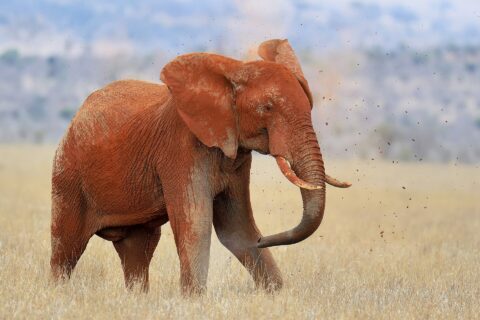
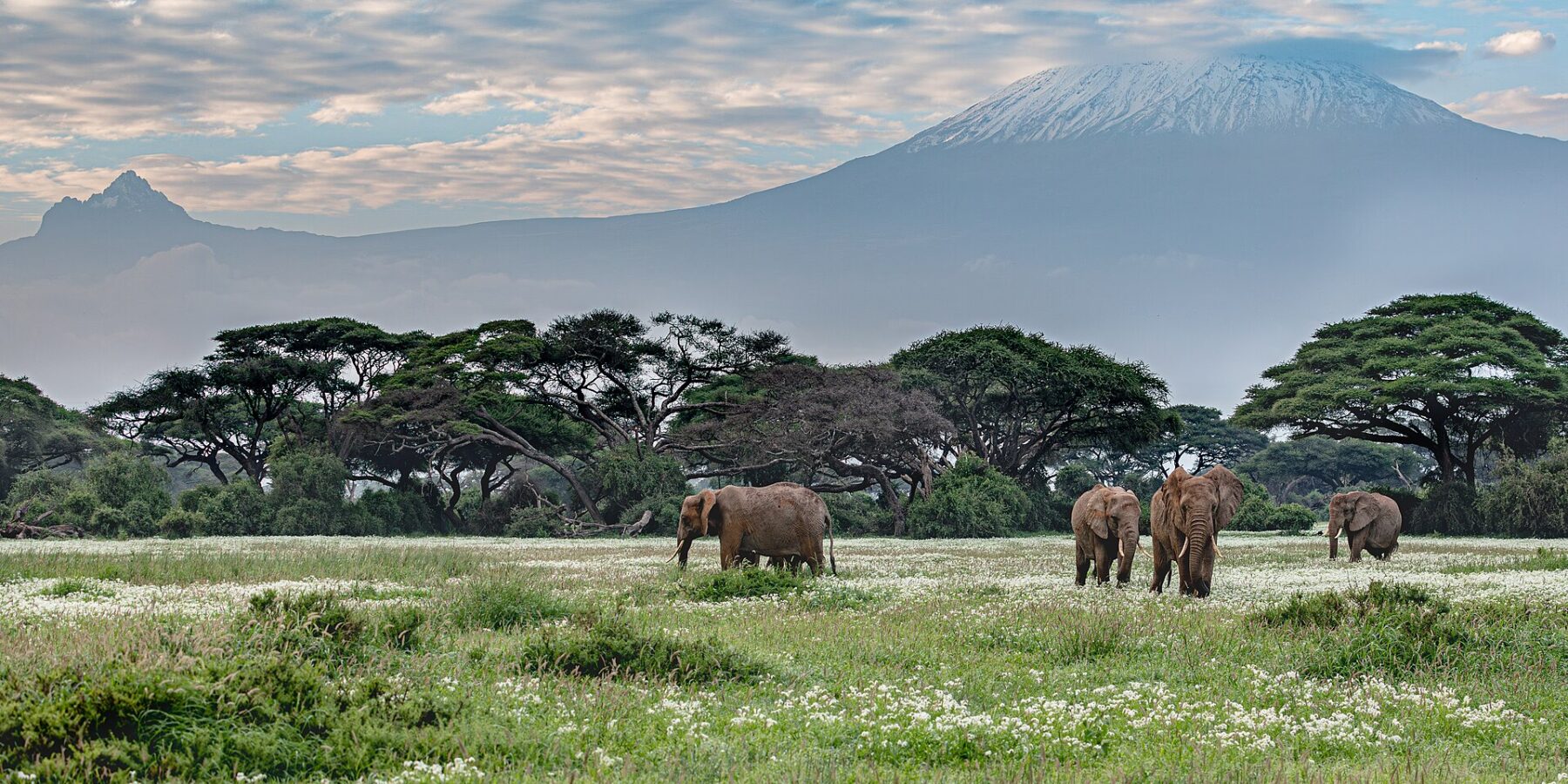
In southern Kenya, you link two elephant parks that could not be more different. Amboseli is small and green at the foot of Kilimanjaro, Tsavo East vast and red on the road to Mombasa. The first shows 1,903 elephants known one by one, the second counts 17,266 in its ecosystem, and the Mombasa road connects them.
How different are Amboseli and Tsavo East?
Amboseli fits into 392 km² at the foot of Kilimanjaro, and its swamps, fed by the mountain, draw the elephants every morning across a plain of white dust. Tsavo East covers 13,747 km² of rust-colored bush, the largest park in Kenya, and its laterite-coated elephants head down to the Galana River and Aruba Dam. You can see the first in a day from a lodge in the middle, while the second means long distances and a single big game drive a day. Both lie on the Nairobi-Mombasa axis, and many travelers combine them with the coast, Diani or Watamu.
In what order should you visit Amboseli and Tsavo East?
From Nairobi, Amboseli comes first, four hours by road via Emali or 40 minutes by plane. A track then links Amboseli to Tsavo West via Kimana, and the road reaches Tsavo East via Voi. From Mombasa, the order is reversed, with Tsavo East two hours from the coast through Bachuma Gate or Voi Gate. Allow two nights in Amboseli, for dawn over Kilimanjaro, and two in Tsavo East, between Voi, Aruba and Lugard Falls. The KWS package for Tsavo East, Tsavo West and Amboseli, US$215 per adult, covers all three parks.
What wildlife can you see in Amboseli and Tsavo East?
Elephants first, in both parks, and with them buffalo, zebras, wildebeest and Masai giraffes. Amboseli adds the hippos of its swamps, more than 400 bird species and flamingos on its lake after the rains, but no rhinos. Tsavo East has its near-maneless lions, the crocodiles of the Galana, and the oryx and gerenuk of the dry bush. It also keeps a small population of hirola, a critically endangered antelope. Leopards remain rare in both parks, and cheetahs show up on the short grass.
When is the best time to visit southern Kenya?
The dry seasons, June to October and then January to February, gather the animals at the water. Mornings are clear over Kilimanjaro, whose summit hides from late morning. The long rains of April and May turn both parks green, scatter the herds and make Tsavo's laterite tracks slippery. KWS fees stay the same in every season. The October 2025 fee schedule sets Amboseli at US$90 and Tsavo East at US$80 per adult per 24-hour period.
 KenyaNational park