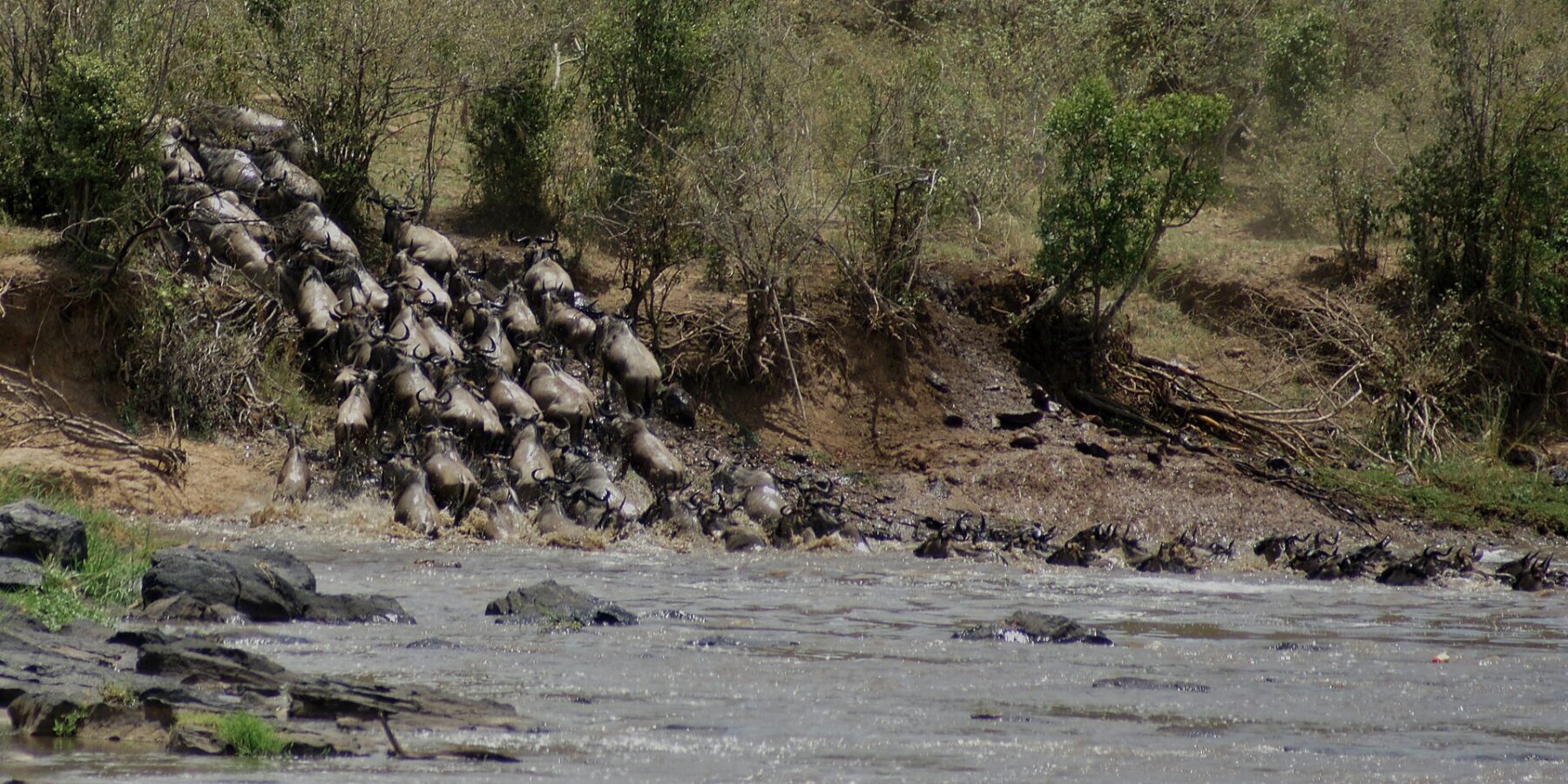
In southwestern Kenya, the migration crosses the border: the Serengeti's wildebeest reach the Masai Mara around July and stay until October. The reserve and the fifteen or so conservancies around it form a single ecosystem. The lions ignore its boundaries, and you choose between the river and the quiet.
What is the difference between the Masai Mara reserve and its conservancies?
Southwestern Kenya comes down to one reserve, the Masai Mara, and its conservancies. The national reserve covers 1,510 km² under the authority of Narok County, and some fifteen conservancies extend it to the north and east. You visit the two differently. In the reserve, you drive the tracks from 6 a.m. to 6 p.m., on a 12-hour ticket. You share the big moments, the Mara River crossings and the lions of Musiara Marsh, with many other vehicles in high season. In a conservancy, such as Mara North, Naboisho, Olare Motorogi or Ol Kinyei, only the camps based there can bring in their guests. Off-road driving is allowed, as are night drives and walks, and the number of vehicles around an animal is capped.
The animals don't know the boundary. Lions, cheetahs and elephants move between the reserve and the conservancies. The 2021 census found 83% of the Mara's wildlife on these lands leased from Maasai herders.
How do you plan a Masai Mara safari?
A first safari in Kenya almost always goes through the Mara, and three nights is the usual format. Between July and October, take two nights near the river, in the Mara Triangle or around Musiara and Talek, for the crossings. Add one or two nights in a northern conservancy, for lions without the crowds. The rest of the year, the order flips and the conservancy takes up more of the stay. Lodging ranges from the reserve's public campsite, US$30 a night, to conservancy camps. Their price includes the conservation fee, game drives and meals.
The Mara pairs with Lake Nakuru on the way back, or with Samburu on Safarilink's direct flight. A hot-air balloon flight at sunrise, about US$450, remains the most requested outing.
When is the best time to visit the Masai Mara?
The wildebeest enter the Mara around July and head back to Tanzania with the short rains of November. River crossings happen in both directions throughout their stay, on no schedule, and entry fees double from July 1 to December 31. January and February are dry, with short grass and prices cut in half. April and May, the months of the long rains, close some black-soil tracks, but the camps stay open and the lions don't leave.
 KenyaNational reserve