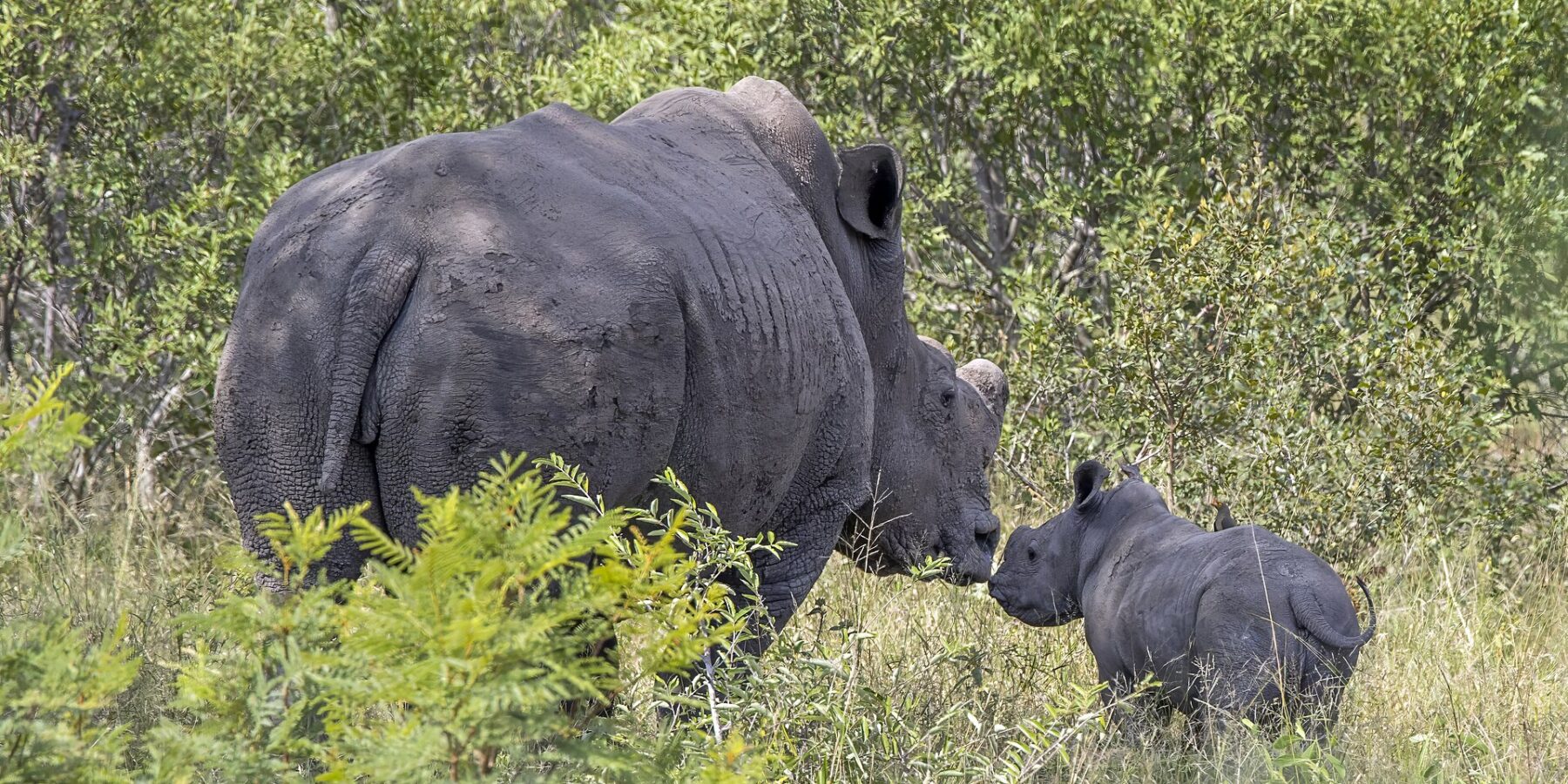
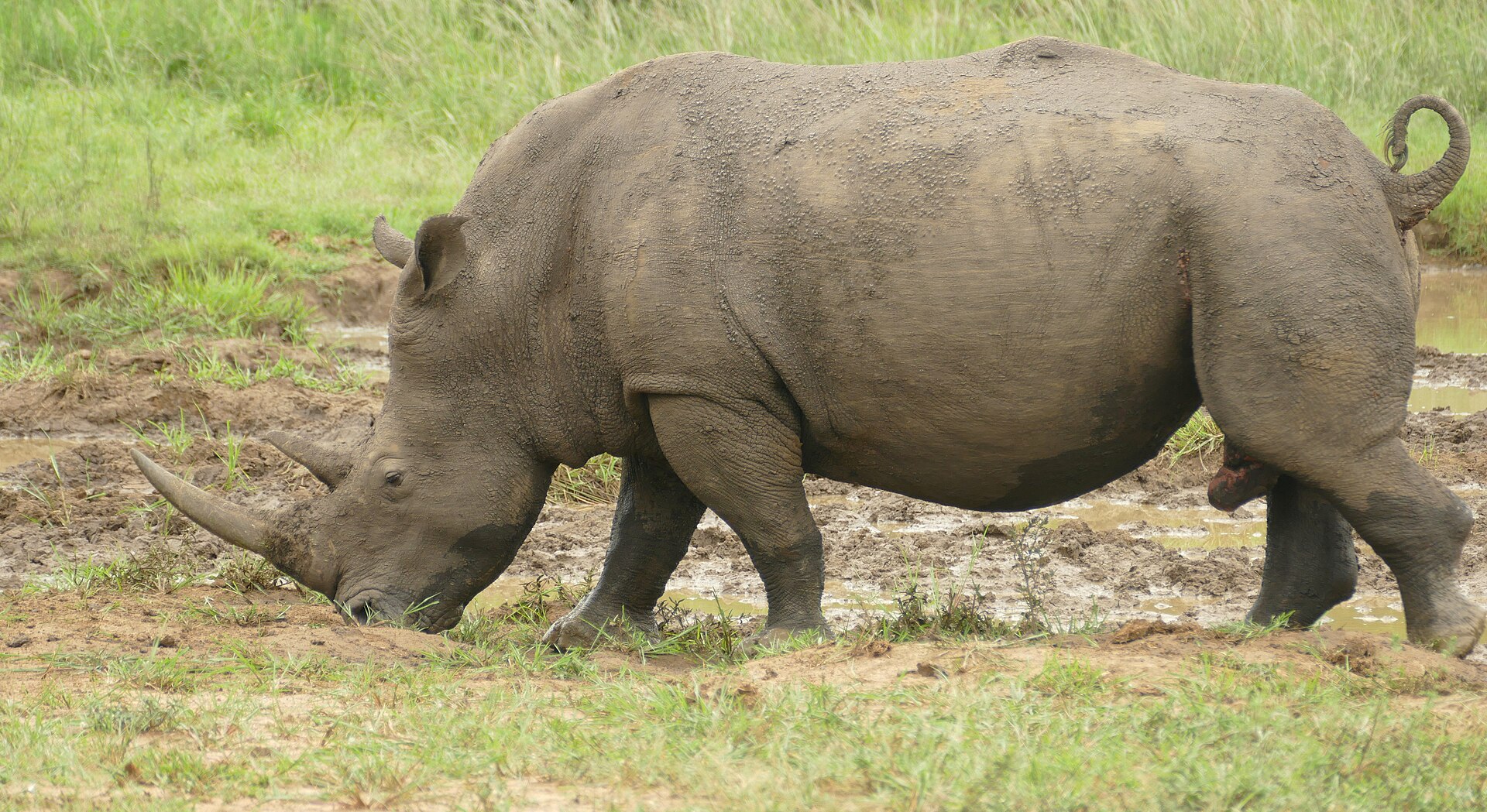
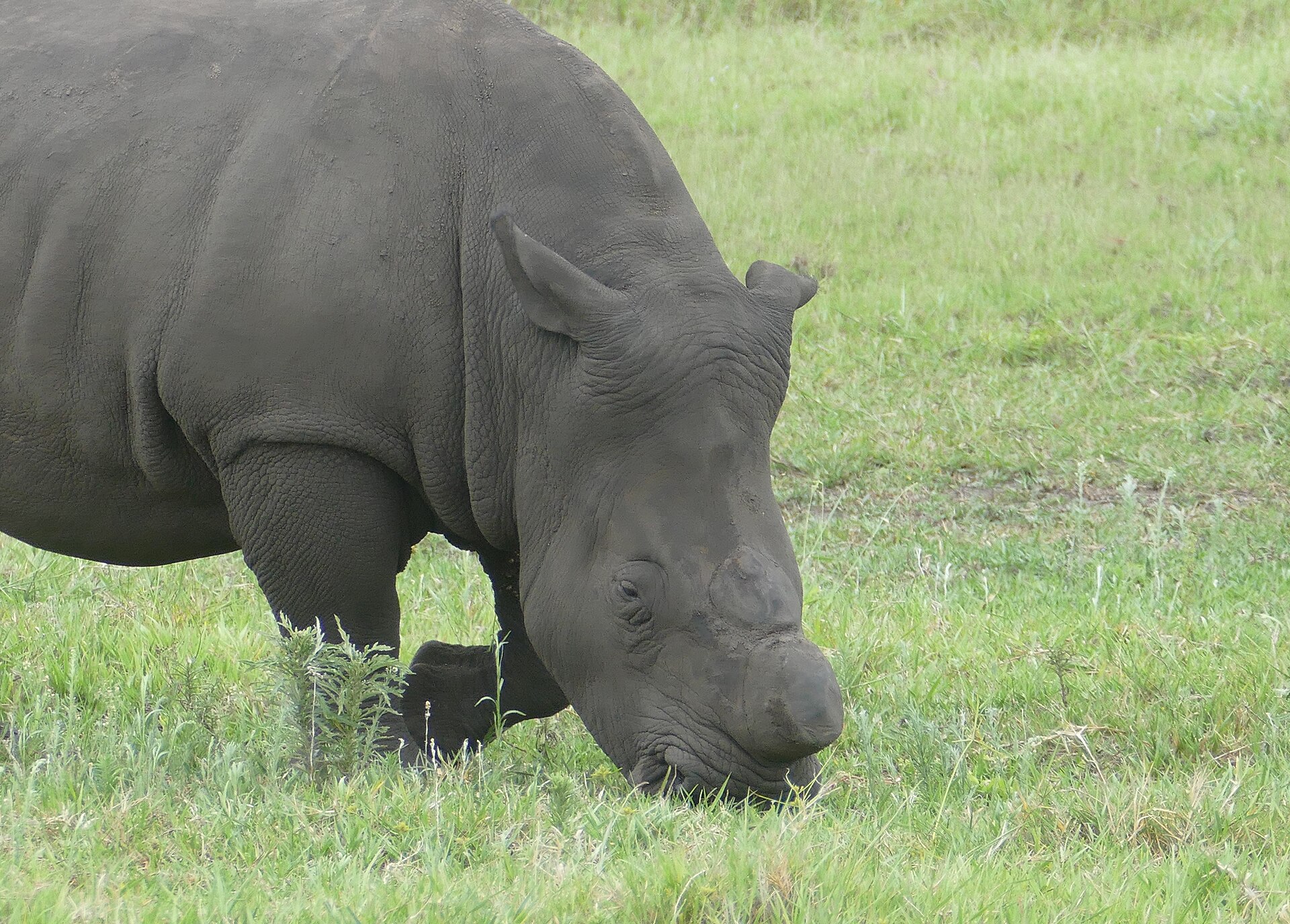
A white rhino grazes head down a few meters from the track and does not even look up when the 4x4 stops. Few animals this size let you get so close: look for it on the grazing lawns of Hluhluwe-iMfolozi, in southern Kruger or in Pilanesberg, early in the morning and in the late afternoon.
Where to see the white rhinoceros on safari?
 South AfricaGame reserve
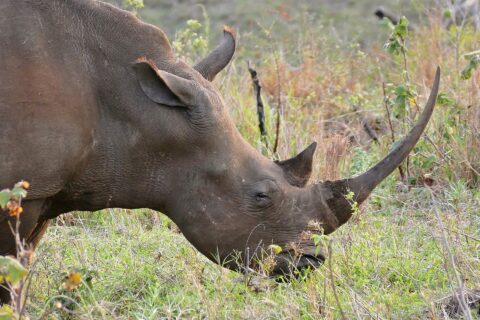
Hluhluwe-iMfolozi Park
KwaZulu-NatalPeak season all year round: about 1,600 animals, iMfolozi grasslands and roadsides
 South AfricaNational park
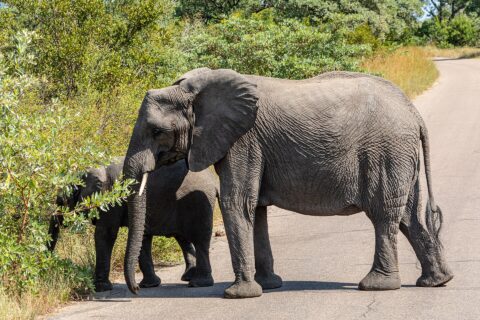
Kruger National Park
Northeastern South AfricaCan be seen all year round: south of the park, seen less and less
 South AfricaGame reserve
Madikwe Game Reserve
Northwestern South AfricaPeak season all year round: grassy plains
 South AfricaNational park
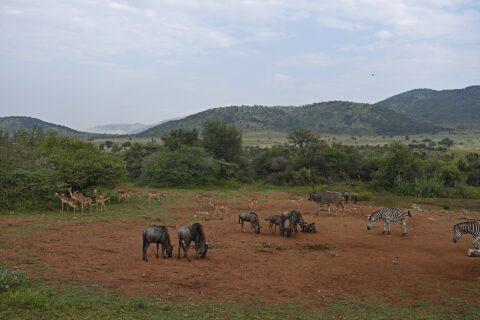
Pilanesberg National Park
Northwestern South AfricaPeak season all year round: grassy valley floors, often dehorned
 South AfricaPrivate reserve
Sabi Sand Game Reserve
Northeastern South AfricaCan be seen all year round: fewer and fewer, often dehorned
How do you identify a white rhino?
The white rhino is the largest of the rhinoceroses: 1.7 to 1.9 m at the shoulder, 3.7 to 4 m long, 2 to 2.3 metric tons for a male and 1.6 to 1.7 metric tons for a female. Its skin is gray. Its wide, square lip, built for mowing grass, sets it apart from the black rhino, whose pointed lip plucks leaves. Two other features are unmistakable: the muscular hump on the neck and the head carried low, almost at ground level. The front horn averages 60 cm and can reach 1.66 m on a female, and many animals in South Africa are now dehorned to deter poachers.
White rhinoceros in pictures
How do white rhinos live?
The white rhino grazes short grass for several hours in the morning and late afternoon, and rests through the heat of the day in the shade or in a mud wallow that protects it from the sun and parasites. Unlike the solitary black rhino, it lives in groups of up to 14 animals, mostly females and young. Dominant males defend territories that they mark with dung piles and sprays of urine, while the females move from one territory to the next. A female gives birth to a single calf after sixteen months of gestation, every two or three years, and a rhino lives 40 to 50 years.
Where and when can you see white rhinos on safari?
Hluhluwe-iMfolozi, in KwaZulu-Natal, is the most reliable place: about 1,600 white rhinos live there, and you see them on almost every game drive on the grazing lawns of the iMfolozi section. Kruger still has them in the south of the park, but poaching has made them far less common. Pilanesberg and Madikwe often show them on their grassy plains, and Addo is home to the black rhino rather than the white. The best times are dawn and late afternoon, when they graze in the open. In the middle of the day, look for a gray shape lying in the shade or in a wallow.
Are white rhinos endangered?
The IUCN lists the southern white rhino as Near Threatened. The species has come back from the brink: only 50 to 100 survived in the early 1900s, all in Hluhluwe-iMfolozi, before Operation Rhino in the 1960s restocked southern Africa. At the end of 2024, Africa had 15,752, down 11% since 2023 because of poaching for horn. In South Africa, poaching killed 352 rhinos in 2025, white and black combined, 175 of them in Kruger. The northern subspecies is extinct in the wild: only two females remain, Najin and Fatu, in Kenya.
Our tip
Look for it on the short grass of valley floors and near waterholes in the cool hours, because it spends the middle of the day lying in the shade or in a mud wallow. A stopped vehicle with its engine off does not bother it: its eyesight is poor, and it relies on its hearing and sense of smell.