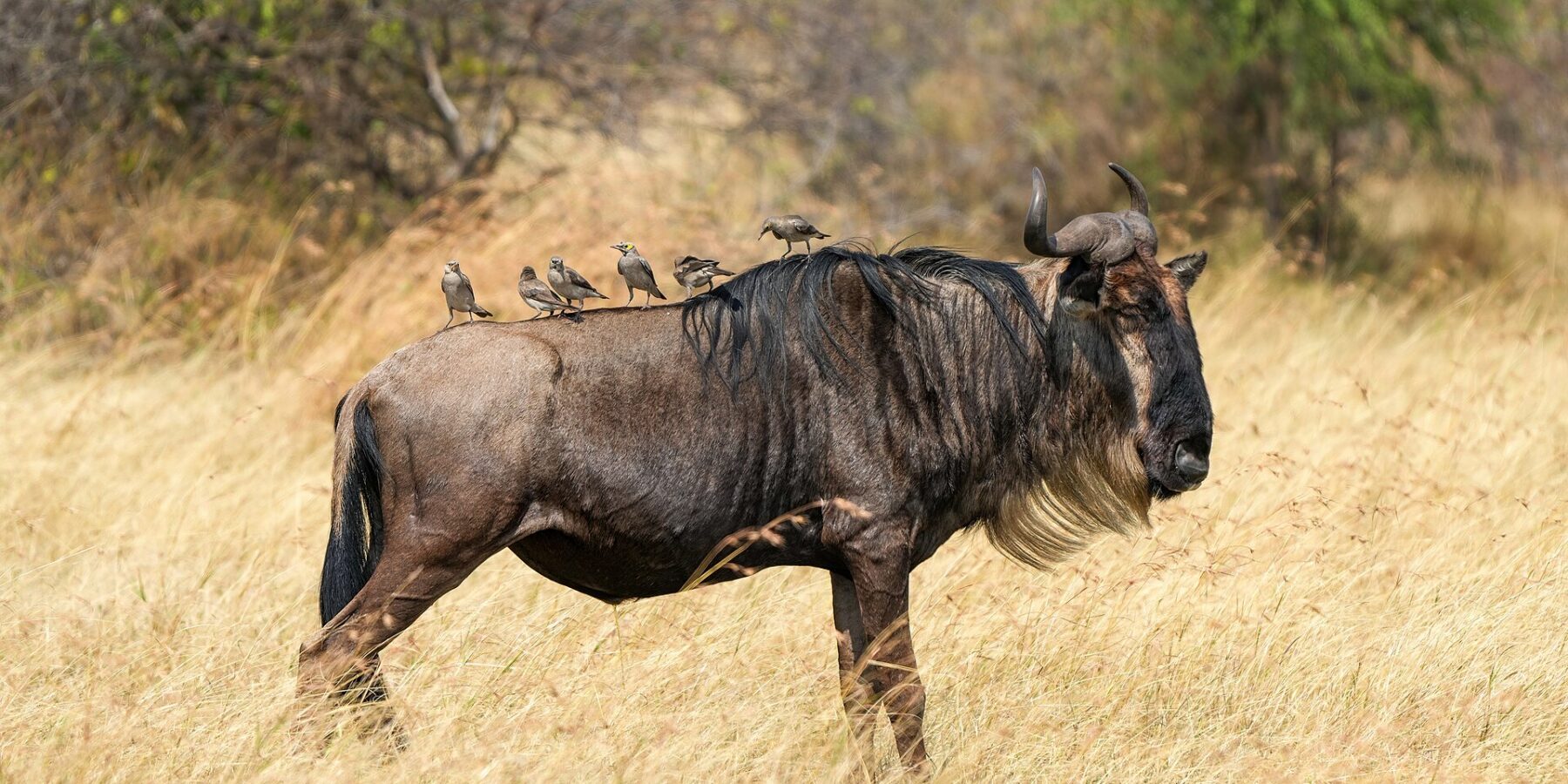
The wildebeest makes up the Great Migration of the Serengeti, 1.5 million animals circling between Tanzania and Kenya. The calves are born at Ndutu from January to March, and the Mara River crossings take place from July to October. In Kruger, in South Africa, wildebeest stay around Satara in every season.
Where to see the blue wildebeest on safari?
 KenyaNational park
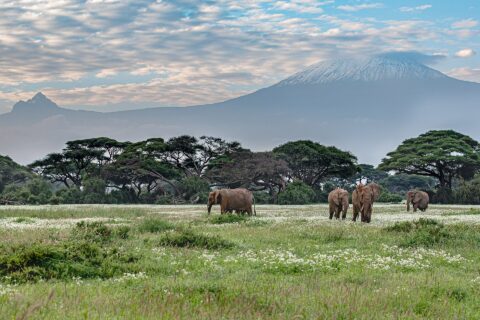
Amboseli National Park
Southern KenyaPeak season all year round: plains, around the dry lake
 South AfricaGame reserve
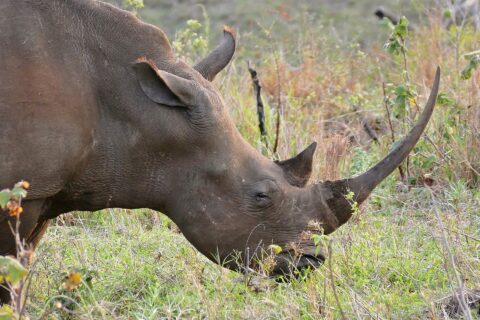
Hluhluwe-iMfolozi Park
KwaZulu-NatalPeak season all year round: iMfolozi plains
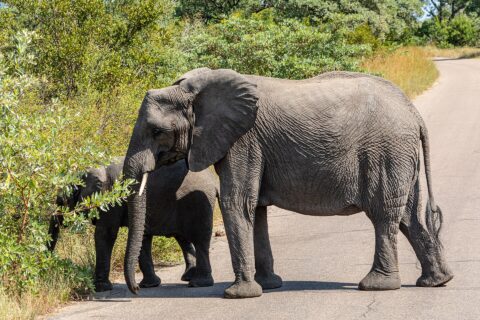 South AfricaNational park
Kruger National Park
Northeastern South AfricaPeak season all year round: plains of the center and southeast
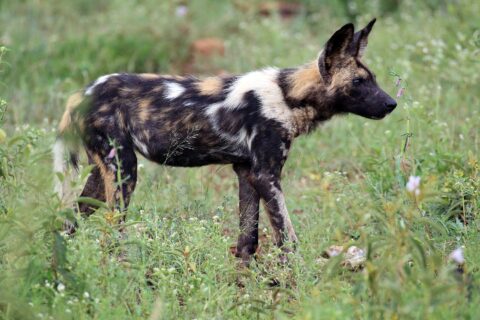 South AfricaGame reserve
Madikwe Game Reserve
Northwestern South AfricaPeak season all year round: open plains
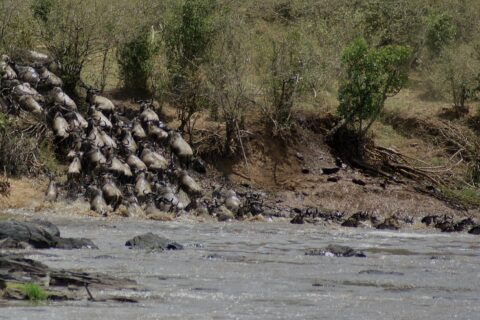 KenyaNational reserve
Masai Mara National Reserve
Southwestern KenyaPeak season from July to October: arrive from the Serengeti around July, head back to Tanzania in October
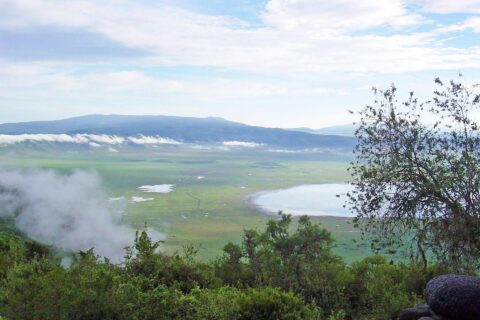
 TanzaniaConservation area
Ngorongoro Conservation Area
Northern TanzaniaPeak season all year round: in the crater year-round, calving at Ndutu from January to March
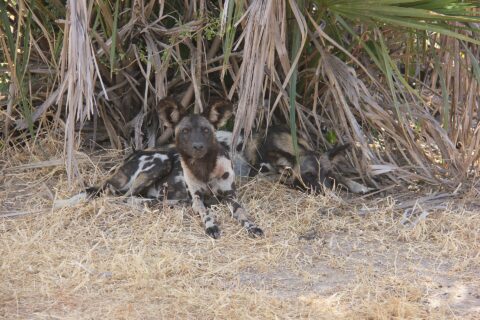 TanzaniaNational park
Nyerere National Park
Southern TanzaniaPeak season all year round: in herds on the plains
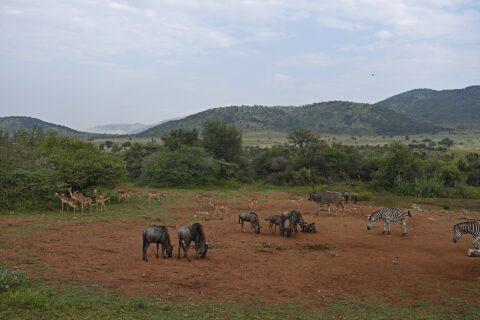 South AfricaNational park
Pilanesberg National Park
Northwestern South AfricaPeak season all year round: central plains
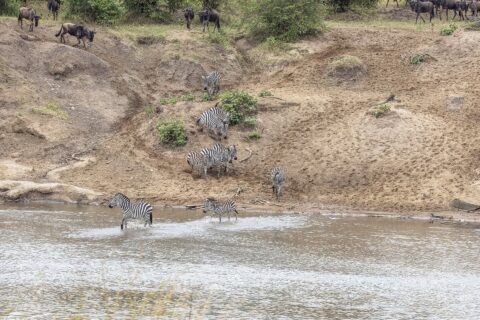 TanzaniaNational park
Serengeti National Park
Northern TanzaniaPeak season from January to February: southern plains, around Ndutu
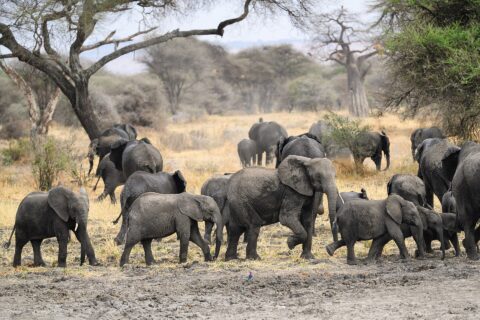 TanzaniaNational park
Tarangire National Park
Northern TanzaniaPeak season from June to October: returns from the surrounding plains in the dry season
How do you identify a wildebeest?
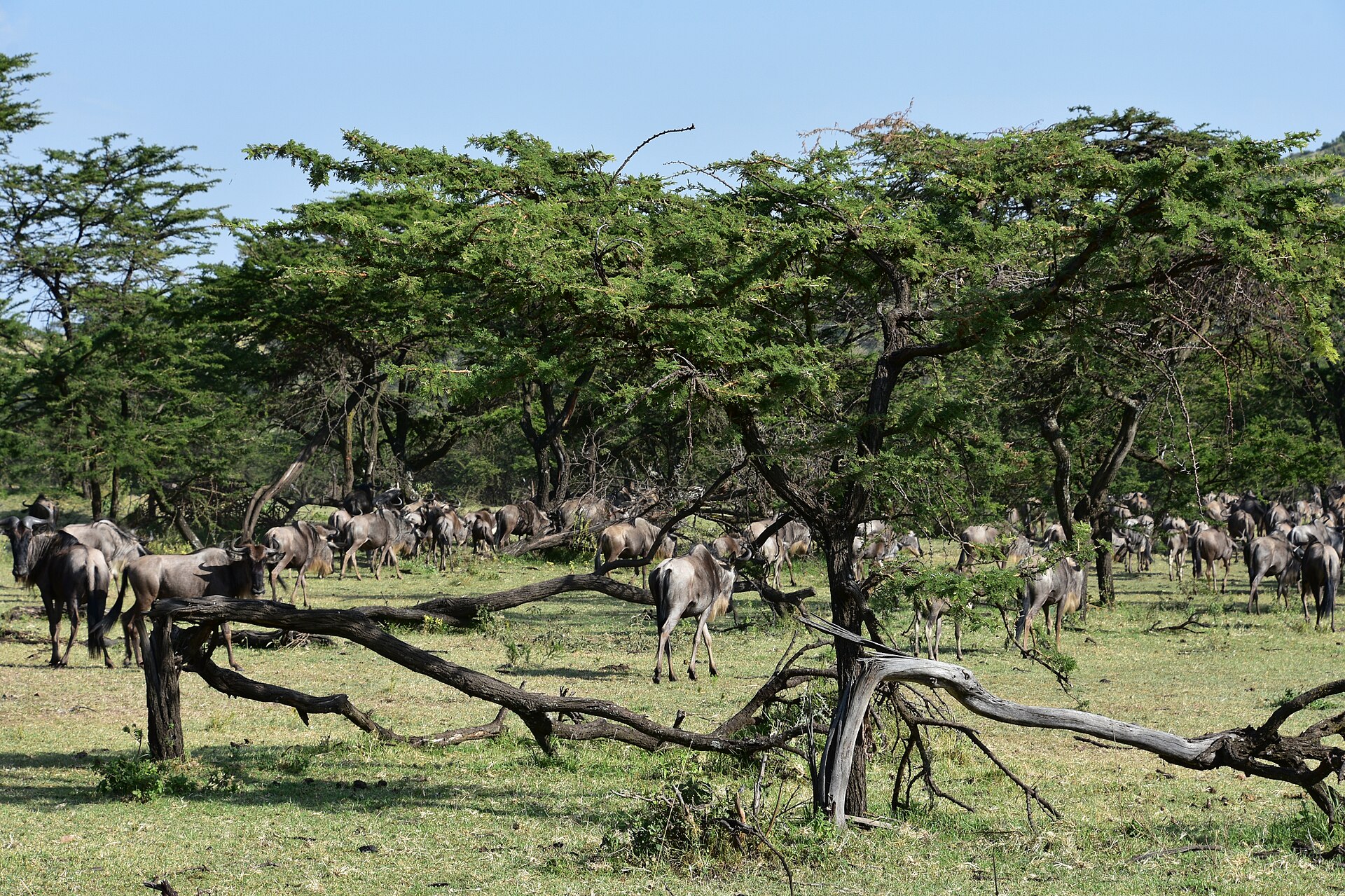
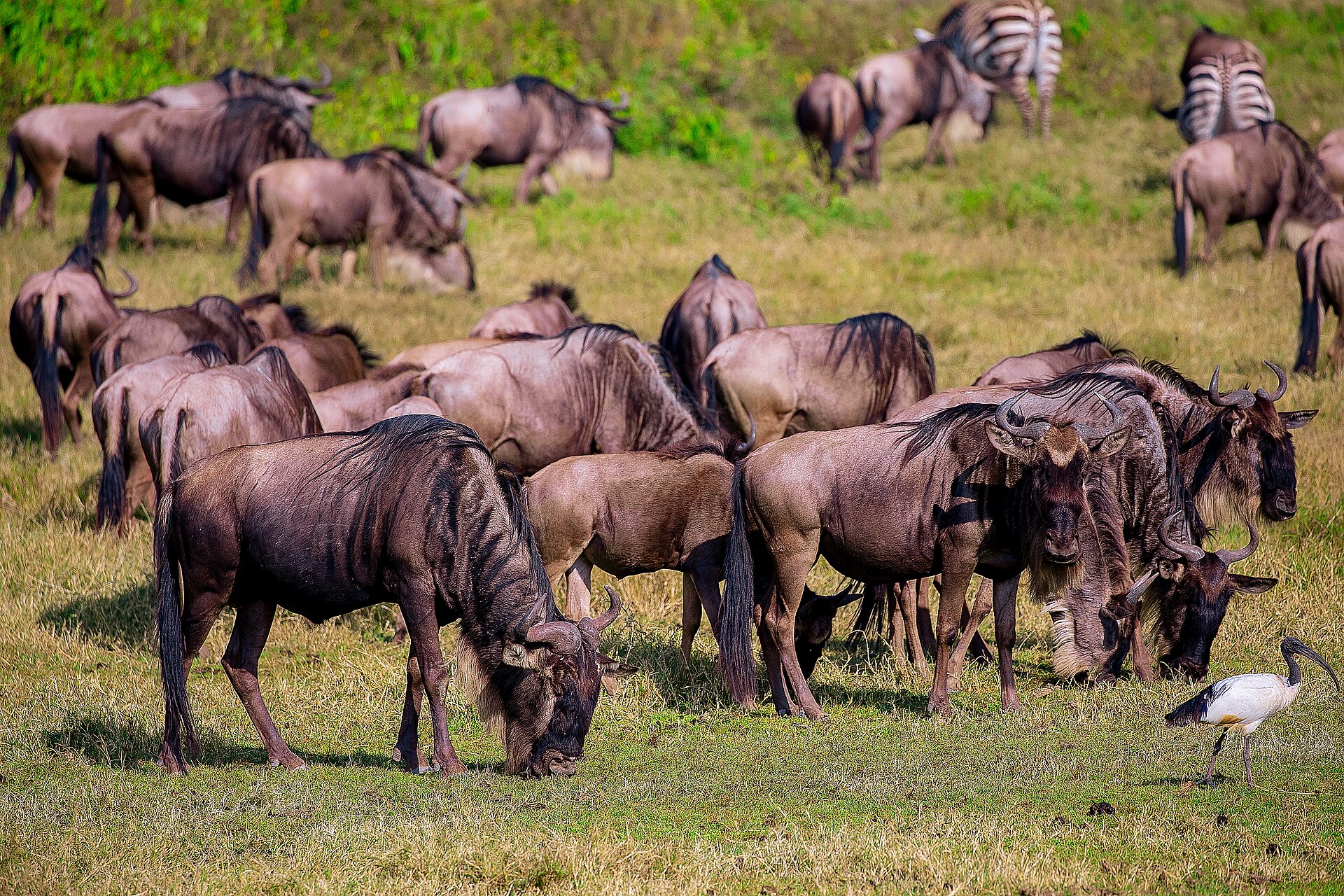
An antelope 1.15 to 1.45 meters at the shoulder, front-heavy, with high shoulders, a low rump and a massive black head. The coat is dark gray with a bluish sheen, striped with darker bands on the neck and flanks, and the mane, beard and tail are black. The Serengeti subspecies has a white beard. Both sexes have smooth, hooked horns, like a slimmer version of the buffalo's. From a distance, you recognize a wildebeest herd by its single-file lines and its gangly, head-down gait.
Blue wildebeest in pictures
How does the wildebeest live?
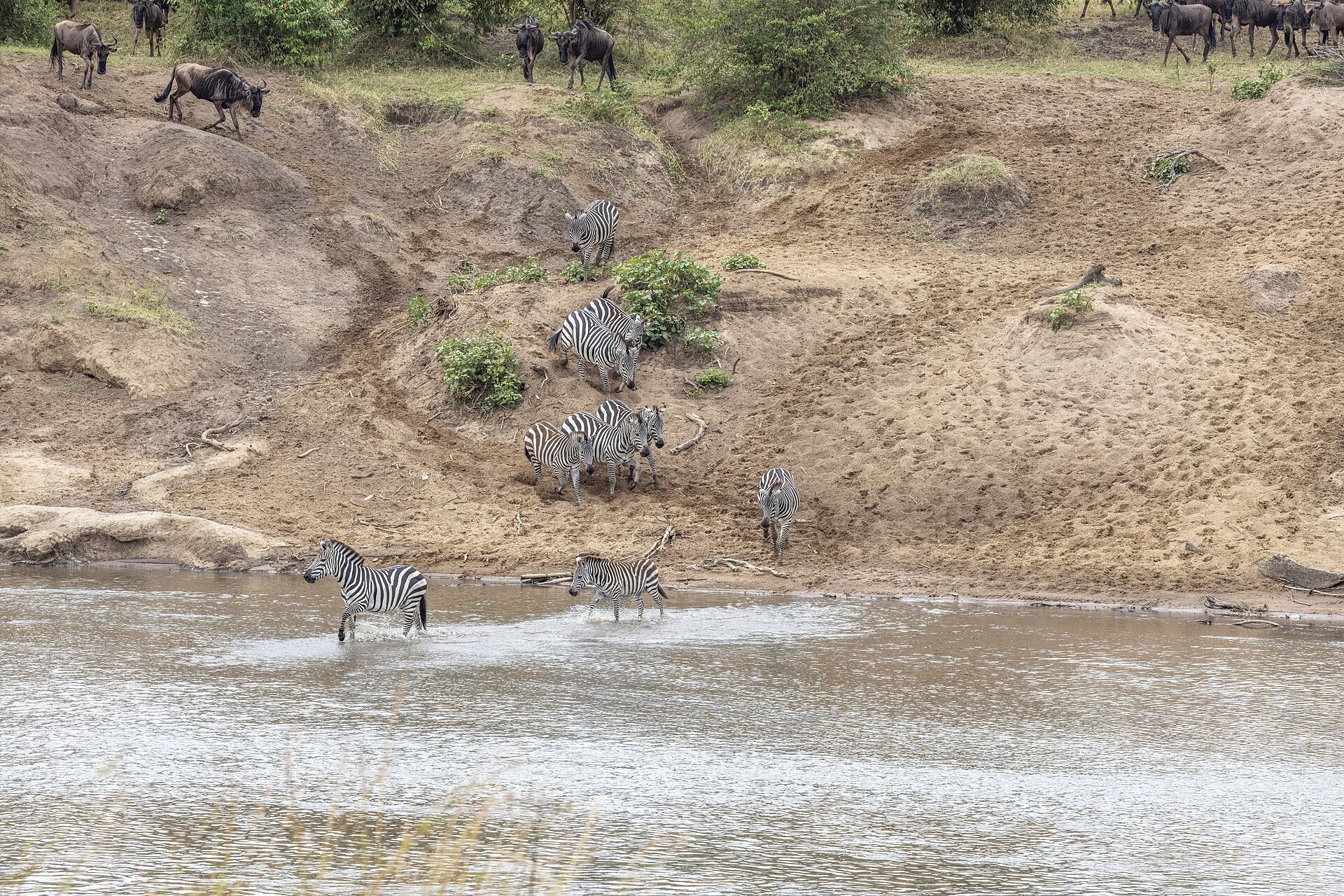
The wildebeest lives in herds and follows the short grass and the rain. In the Serengeti, 1.5 million animals travel a loop of about 800 km each year, together with zebras and gazelles. The females all give birth at the same time, from January to March, on the southern plains: hundreds of thousands of calves in a few weeks, more than the predators can handle. The river crossings, first the Grumeti and then the Mara, cost thousands of animals, drowned or taken by crocodiles. Outside the Serengeti, resident populations live in Ngorongoro Crater, in Tarangire and on the plains of Nyerere.
Where and when can you see wildebeest on safari?
In Tanzania, you will see wildebeest almost everywhere. Several thousand live year-round in Ngorongoro Crater, and Tarangire receives them by the thousands from June to October. In the Serengeti, the migration is at Ndutu and on the southern plains from December to March, and the calves are born there from January to March. From April to June, it moves north through the Western Corridor, crossing the Grumeti River until July. From July to October, it is in the north, on the Mara River, and you sometimes wait hours for a crossing.
In Kenya, the Masai Mara receives the migration during the same period, and the herds cross the river there too. In Amboseli, wildebeest stay on the plains around the dry lake in every season.
In South Africa, they live year-round around Satara, on the plains of central Kruger. In Madikwe, you see them on every game drive. Wildebeest ignore 4x4s, so you can photograph them up close. Walking in single file along a track, they file past the stopped vehicle.
Is the wildebeest endangered?
The blue wildebeest is not endangered. The IUCN lists it as Least Concern, with about 1.5 million animals, most of them in the Serengeti ecosystem. The threats target the migration corridors. Fences, roads, crops and grazing land cut across the seasonal routes, and isolated populations have disappeared where their ranges were closed off. The future of the Serengeti migration depends on the land outside the parks, in Tanzania and in Kenya alike, and on herds moving freely between the two countries.
Our tip
Pick the month before you pick the camp. The herds are at Ndutu from December to March, in the center and west from April to June, and in the north on the Mara River from July to October. Ngorongoro Crater keeps a resident herd if your trip falls at the wrong time.