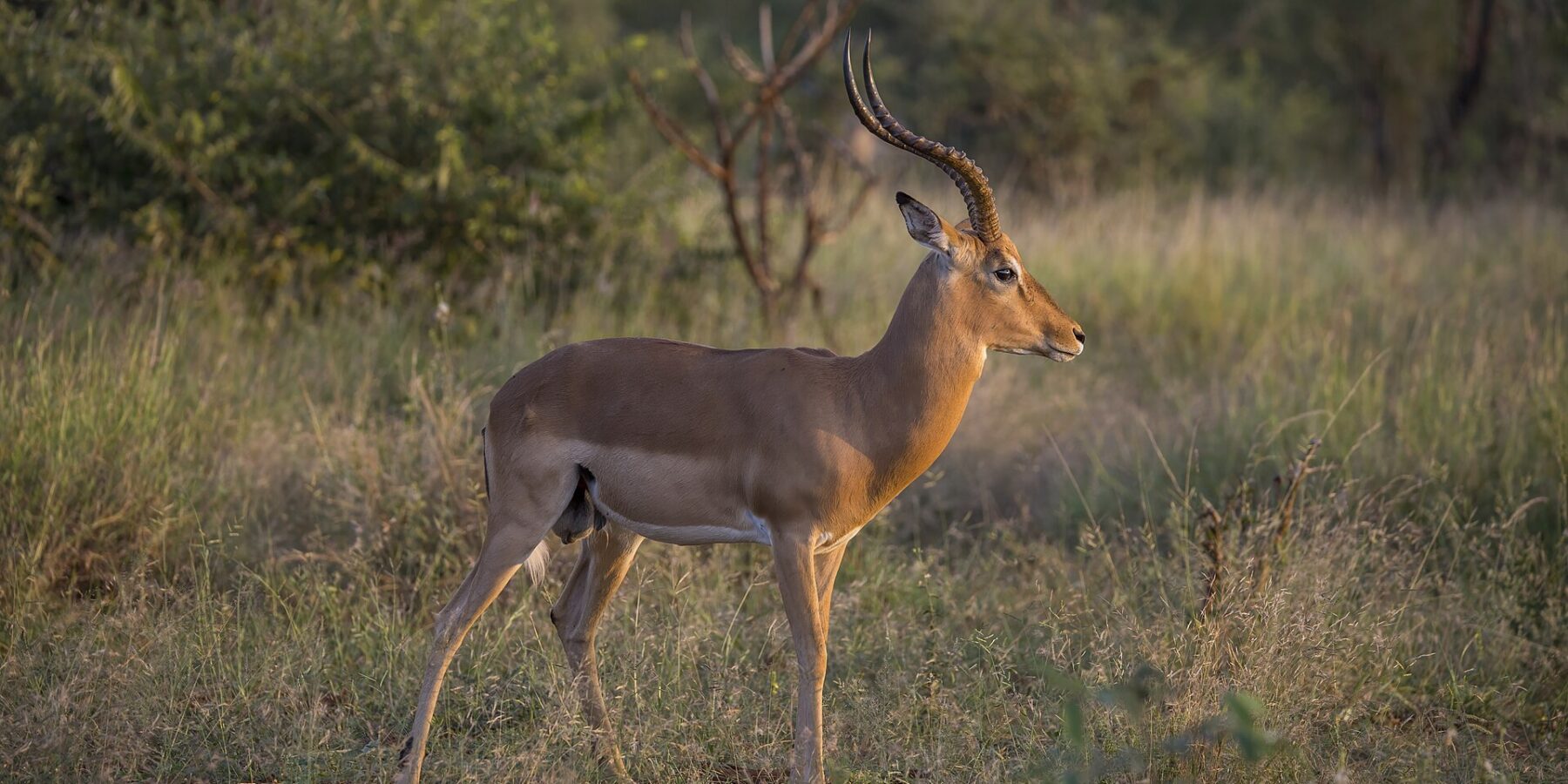
Dozens of impalas stand along every track in Kruger, and you will soon stop counting: with about two million in Africa, this russet antelope is the animal you will see most often. Still, watch one leap, up to 3 m high, and see the males clash in May, during the rut.
Where to see the impala on safari?
 South AfricaGame reserve
Hluhluwe-iMfolozi Park
KwaZulu-NatalPeak season all year round: everywhere
 South AfricaNational park
Kruger National Park
Northeastern South AfricaPeak season all year round: everywhere, the most numerous antelope in the park
 South AfricaGame reserve
Madikwe Game Reserve
Northwestern South AfricaPeak season all year round: everywhere
 South AfricaNational park
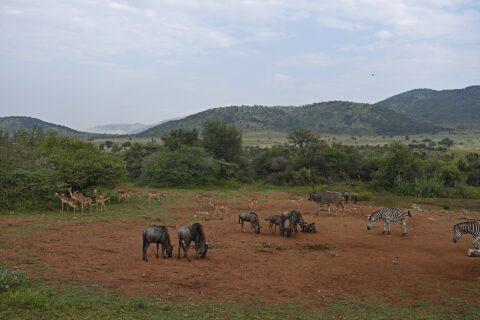
Pilanesberg National Park
Northwestern South AfricaPeak season all year round: everywhere, right up to the Pilanesberg Centre
 South AfricaPrivate reserve
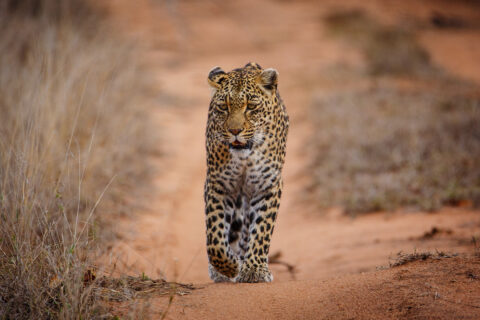
Sabi Sand Game Reserve
Northeastern South AfricaPeak season all year round: everywhere, births in November and December
How do you identify an impala?
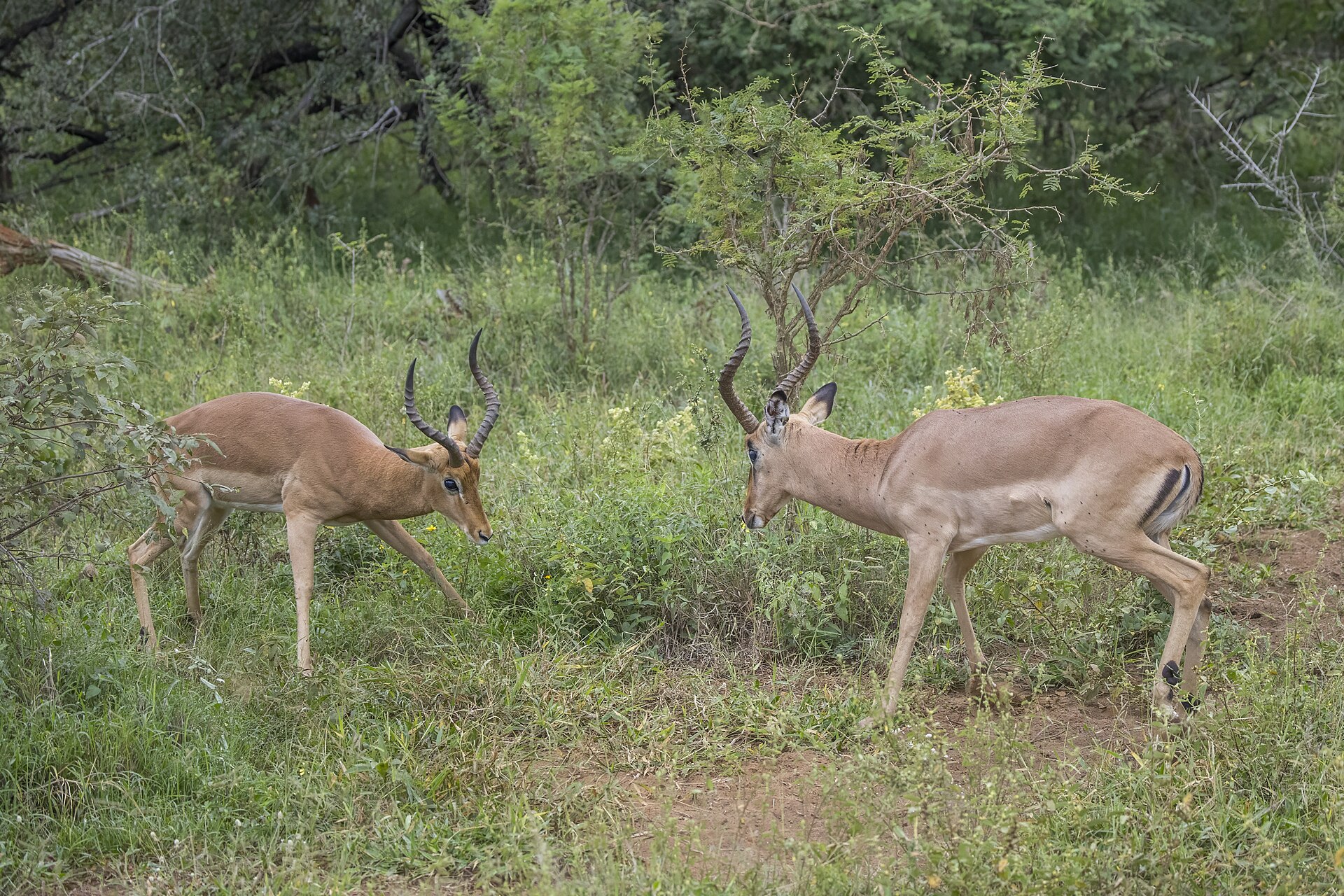
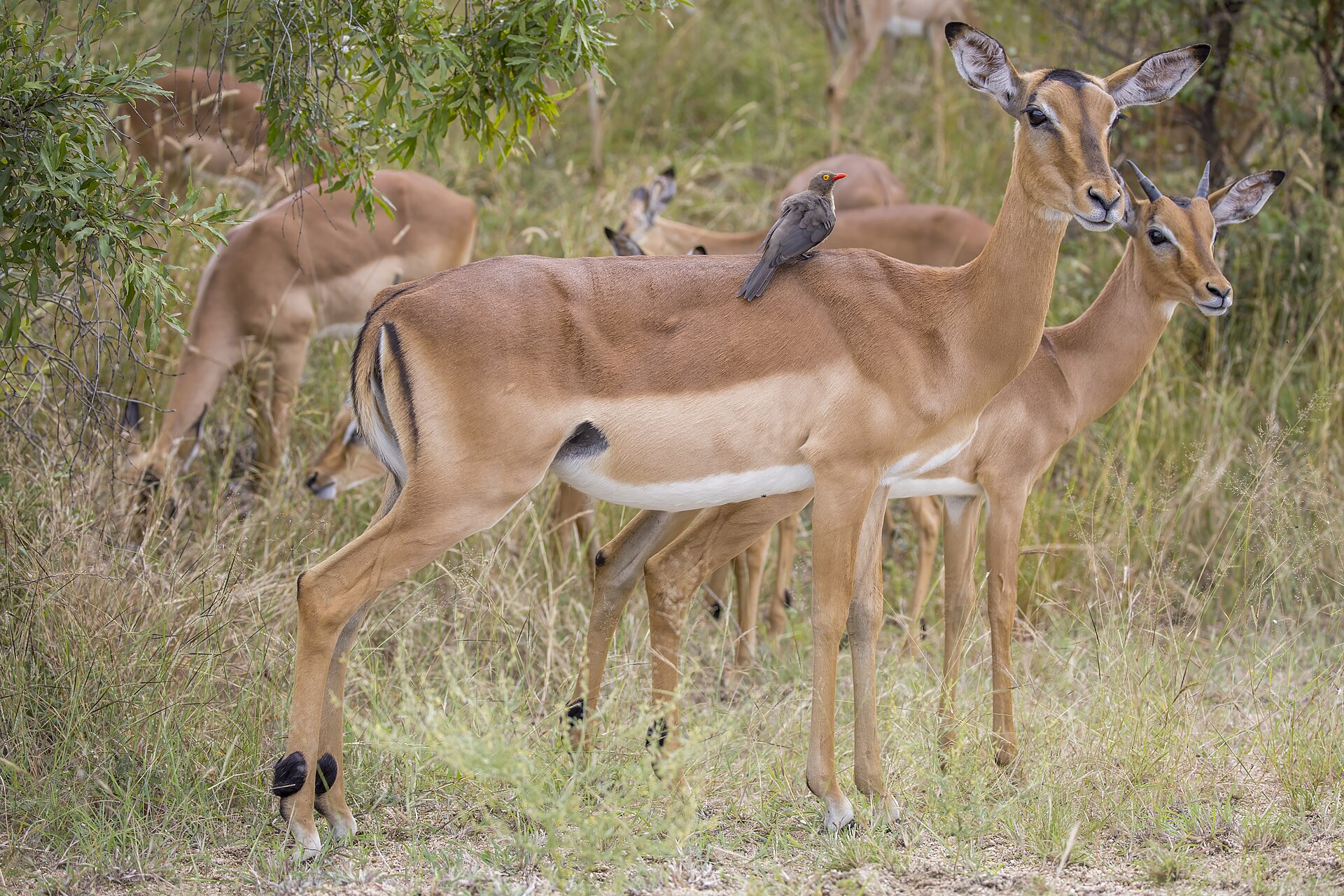
The impala is a medium-sized antelope: 75 to 92 cm at the shoulder and 53 to 76 kg for a male, 70 to 85 cm and 40 to 53 kg for a female. The coat is two-toned, with a russet back and paler, tawny flanks sharply set off from the white belly. On the rear, two vertical black stripes frame the tail, which has a black stripe of its own, and draw an M when the animal turns its back to you. The ears are tipped with black, and a tuft of black hair marks the back of each hind leg, just above the hoof. Only males have horns: slender, ringed, curved like a lyre and 45 to 92 cm long.
Impala in pictures
How do impalas live?
The impala both grazes and browses: grass in the rainy season, and leaves, shoots and acacia pods in the dry season, which lets it stay put all year without migrating. Females and young form herds, and young males form bachelor groups. During the rut, in May in southern Africa, adult males defend a territory and a harem for three weeks, with plenty of roaring and fighting. After six to seven months of gestation, females give birth to a single lamb, nearly all at the same time, in November and December, with the first rains. Impalas groom each other and let oxpeckers pick off their ticks.
Where and when can you see impalas on safari?
You will find them in every bush park in South Africa, at any time of day. Kruger is full of them, especially in the south and center, where herds graze along the roads and under the acacias. Sabi Sand, Pilanesberg, Madikwe and Hluhluwe-iMfolozi have them everywhere. The best times are the noisy May rut and the births in November and December, when lambs appear by the hundreds and predators prowl around the herds.
Are impalas endangered?
The IUCN lists the impala as Least Concern, with about two million animals in East and southern Africa, and its numbers are holding steady in most reserves. The black-faced subspecies, far rarer, lives in Namibia and Angola. The impala feeds almost every predator on the savanna, from leopards to wild dogs, and stays abundant because it breeds quickly.
Our tip
Stop for impalas anyway, because they are the favorite prey of leopards, wild dogs and cheetahs: a herd snorting and staring at a bush often shows you where a predator is hiding. In May, the males roar and clash horn to horn, and the first lambs arrive in November.