Tanzania is the most complete safari destination in East Africa, with the Big Five in a single week. In the Serengeti, one and a half million wildebeest circle with their predators, and 25,000 animals live year-round in Ngorongoro Crater. In the south, at Nyerere, you add boat trips and walks to your 4x4 game drives.
Why go on safari in Tanzania?
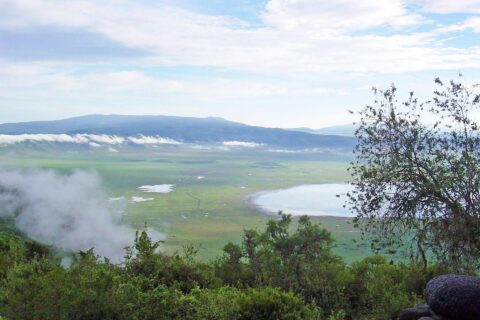
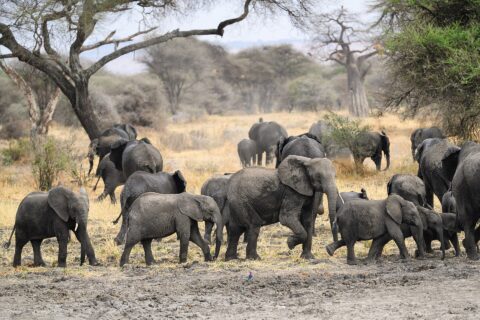
No other country shows you as many animals on a single trip. The Great Migration spends most of the year on the Tanzanian side, and the calving from January to March happens at Ndutu, in the southern Serengeti. Ngorongoro Crater has no equal: 25,000 large animals on 260 km², black rhinos included, all visible in a single morning. Ruaha alone holds 10% of Africa's lions. Together with Nyerere, it gives the south an area twice the size of the Serengeti, where you pass more elephants than vehicles.
Where to go on safari in Tanzania?
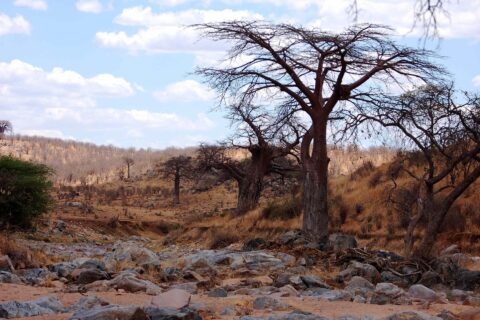
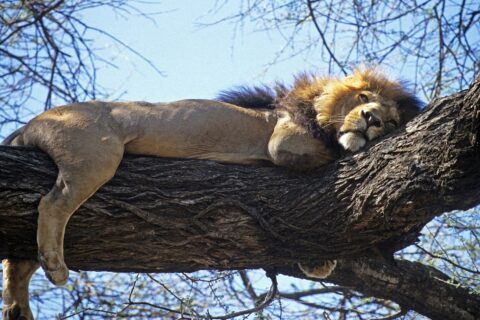
Two circuits divide the country, and you rarely combine them on the same trip. The north, starting from Arusha, strings four parks along one road. Tarangire opens with its elephants under the baobabs, and Lake Manyara follows with its lions in the trees. Next comes Ngorongoro and its crater, then the Serengeti, where the migration decides everything. Allow 6 to 8 days for all four, with the Serengeti taking half the time.
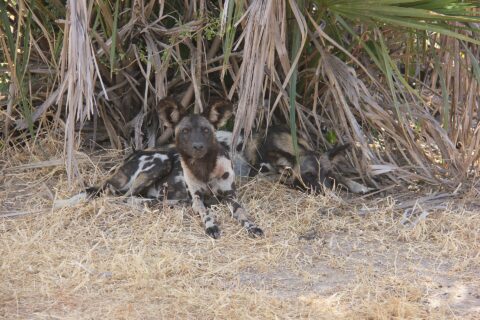
The south, starting from Dar es Salaam, is reached by plane, and you have the tracks almost to yourself. Nyerere, formerly Selous, puts the Rufiji River at the center of your stay: by boat, on foot with a ranger, and on the trail of wild dogs. Ruaha, farther west, packs lions and elephants along a river that dries up, with antelopes you won't find in the north. Do your first safari in the north. The south comes next, and a flight links Nyerere to Ruaha.
When is the best time to go on safari in Tanzania?
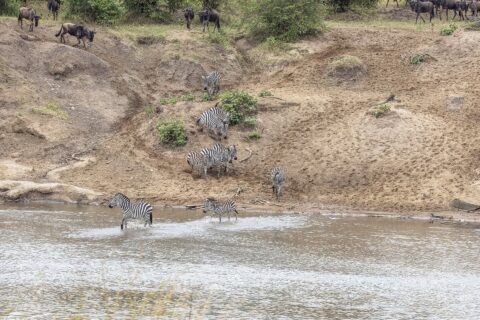
The rule is simple: the dry season, June to October, works for the whole country. The grass is short, the tracks are hard, and the animals stay close to water. In the south, the Ruaha River shrinks to a few pools in October, and the whole park comes to drink there. The big sightings have their months. The wildebeest cross the Mara River, in the northern Serengeti, from July to October. They calve at Ndutu from January to March, with the predators all around. Tarangire's elephants gather along the river from June to October. Lake Manyara's flamingos depend on the water level, which is higher after the rains. The long rains, March to May, make the tracks difficult. They also empty the parks, and entry fees in TANAPA parks drop from March 15 to May 15.
How much does a safari in Tanzania cost?
A safari in Tanzania comes down to four costs. Park fees come first, charged per person and per 24-hour period, with the 18% VAT included in the prices given here. The 4x4 with a driver-guide comes next, rented by the day with fuel included and shared by four or six people. The lodge or camp ranges from a public campsite, US$35.40 a night, to luxury camps. The park adds a fee for each night on top. The plane comes last, to reach the south or to skip a day on the road back from the Serengeti: US$287 from Arusha to Seronera. For Ngorongoro, add the descent into the crater, charged at US$295 per vehicle and split among the passengers.
What do you need before a safari in Tanzania?
A visa is required. You apply online before you leave, or get one on arrival in Dar es Salaam, Zanzibar and Kilimanjaro, for US$50. Your passport must be valid for six months after arrival. Local travel insurance, US$44 per adult, is also mandatory. Yellow fever vaccination is only required if you arrive from a country where the disease circulates, but the vaccination card is often checked at the airport. Malaria is present in every area below 1,800 m, which means every park except the Ngorongoro Crater rim. Preventive treatment comes on top of repellent and a mosquito net. In the parks, you stay in the vehicle, at least 25 meters from the animals. Travel advisories warn against the Mozambique border and the Mtwara region, both far from the parks, and against driving at night.
 TanzaniaNational park