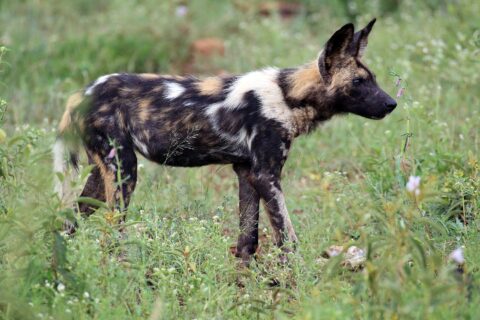
 South AfricaGame reserve
Madikwe Game Reserve
Northwestern South AfricaBig Five 5/5From May to September
Malaria-free
In Madikwe, you follow a pack of wild dogs hunting right beside your 4x4, in a 750 km² reserve on the Botswana border.
Language
Currency
South Africa2 parks
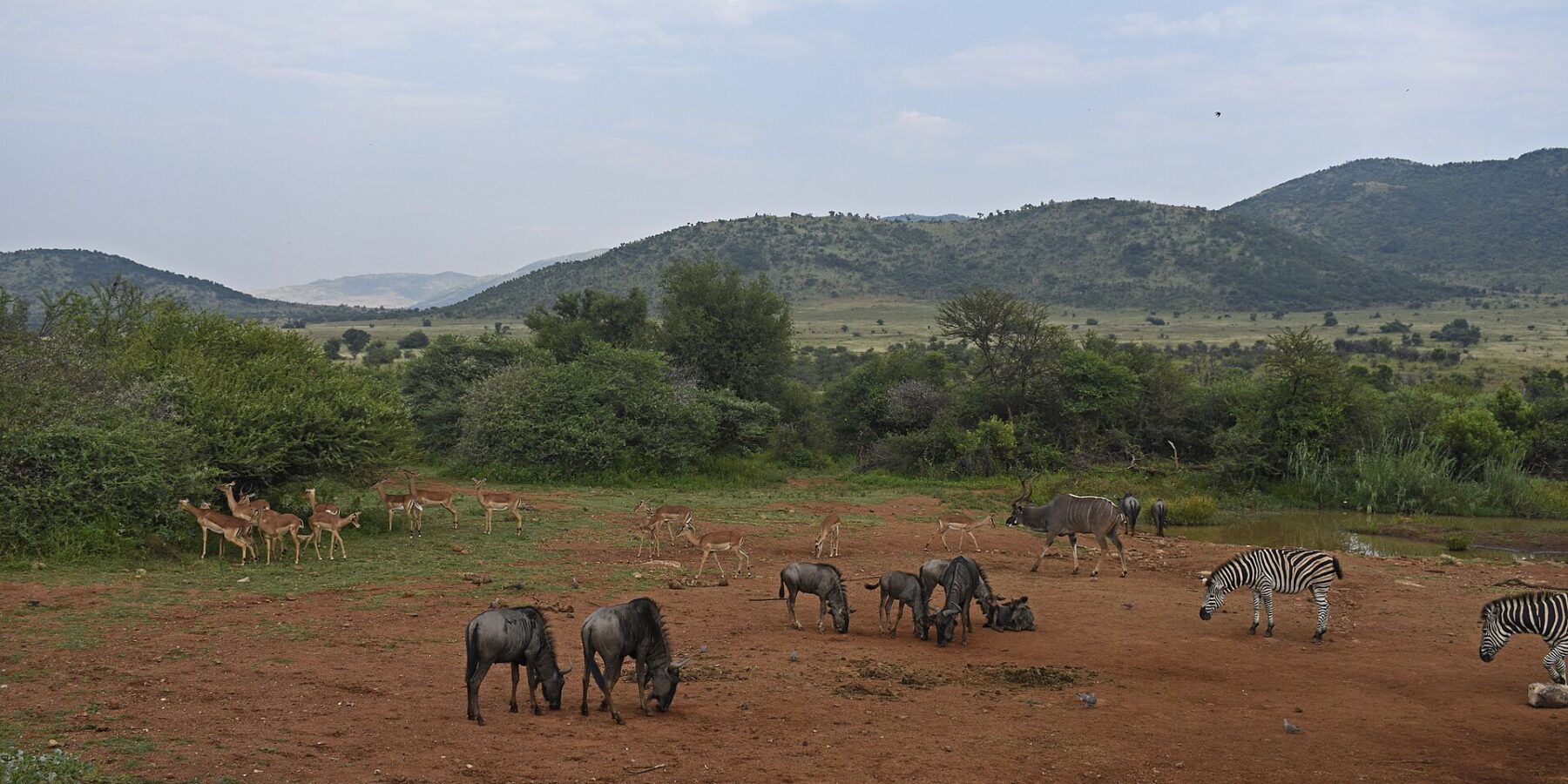
In northwestern South Africa, you go on a malaria-free Big Five safari three hours from Johannesburg. You drive through Pilanesberg inside the crater of a 1.25-billion-year-old volcano, and Madikwe, on the Botswana border, takes you from a lodge on the trail of wild dogs.
The dry winter, from May to September, thins the bush and gathers the animals at waterholes, with cold nights and mild days. Summer, from October to April, is hot and stormy and the tall grass hides the animals, but the births and the birds arrive. There is no malaria risk in any season.
Pilanesberg costs R748 per international adult per day, plus R168 per car, and a guided drive R885 to R1,555. Madikwe is paid at the lodge, game drives and meals included, with R180 at the gate per stay and a fee of R520 per adult per night on top.
Pilanesberg is three hours by road from Johannesburg and two from Pretoria, via the N4 and Rustenburg, with no public transport. Madikwe takes four and a half hours via the N4 and Zeerust, or an hour's flight with Federal Air from Johannesburg to the reserve's airstrips, where the lodge meets you.
South AfricaGame reserveIn Madikwe, you follow a pack of wild dogs hunting right beside your 4x4, in a 750 km² reserve on the Botswana border.
 South AfricaNational park
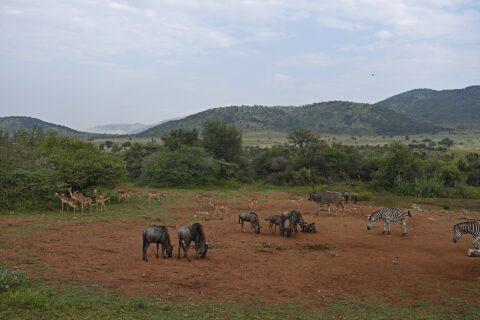
In Pilanesberg, you go on a Big Five safari inside the crater of a 1.25-billion-year-old volcano, three hours' drive from Johannesburg.
North West, the province northwest of Johannesburg, offers malaria-free Big Five safaris less than half a day's drive from the airport. Pilanesberg fills the crater of an extinct volcano, 572 km² three hours away by road, and you drive it yourself, from gate to gate, with Sun City right on its southern edge. Madikwe, 750 km² on the Botswana border, is lodge-only, four and a half hours by road or an hour by plane, and its wild dogs are the most sought-after sighting. Both received their animals by truck, in two major reintroduction programs: Operation Genesis at Pilanesberg in 1979 and Operation Phoenix at Madikwe from 1992.
Pilanesberg for budget and freedom: R748 per adult and R168 per car at the gate, lodges and camps at every entrance, and the option of a single day trip from Johannesburg. Madikwe for the quality of the sightings, with no day visitors, 4x4s that leave the tracks, guides who follow the wild dogs and lions from one day to the next, and an all-inclusive lodge price, plus a fee of R520 per adult per night. With children, both work, since there is no malaria, and Pilanesberg adds hot-air ballooning and the attractions of Sun City next door.
Elephants and white rhinos are the easiest to see in both reserves, on the valley-floor grasslands at Pilanesberg and at the lodge waterholes at Madikwe, where the elephant population exceeds 1,600. You see lions in both, wild dogs mostly at Madikwe, and cheetahs and brown hyenas from time to time. Pilanesberg has more than 10,000 animals of 22 introduced species, including zebras, wildebeest, giraffes, kudus and the hippos of Mankwe Dam, along with more than 360 bird species. Leopards live in the hills of both reserves and remain the rarest sighting.
The dry winter, from May to September, is when you see the animals best. The bush thins out, waterholes become scarce and the animals gather at them. Nights drop to around 3°C at Madikwe and morning drives happen under a blanket, but the days are mild and the skies clear. Summer, from October to April, brings storms, days around 32°C and tall grass that hides the animals, with births and migratory birds in return. There is no malaria here, which makes these two reserves easy choices for a first family safari, summer included.
Hotels, apartments and rooms around Madikwe Game Reserve, the starting point for safaris in Madikwe, with current prices.