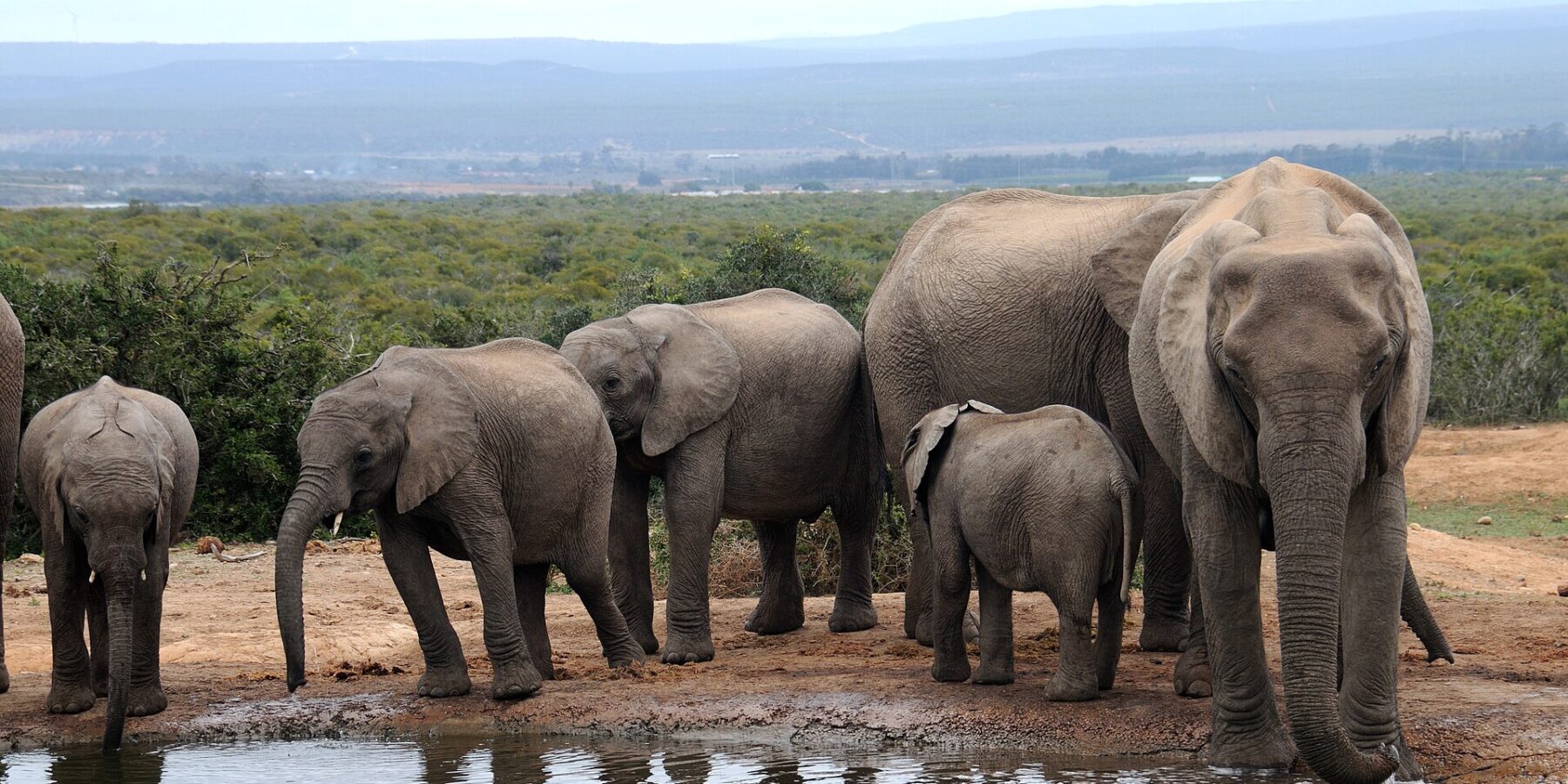
In the Eastern Cape, you end the Garden Route with a malaria-free safari, an hour from Gqeberha. Addo shows more than 600 elephants at Hapoor waterhole and the Big Five in its thicket, and its marine section adds penguins, the world's largest Cape gannet colony and the whales of Algoa Bay.
Season
You can visit Addo malaria-free at any time of year. Winter, from June to September, is dry and cool, with elephants in numbers at the waterholes and southern right whales in the bay until November. Summer is hot, and the South African holidays in December fill the camp.
Budget
Addo's entry fee is R565 per international adult per day and R283 per child, and the SANParks Wild Card, R4,680 a year, covers it too. The FlySafair flight from Johannesburg to Gqeberha starts at R753 one way, and a rental car is all you need, since the main loops are paved.
Getting there
Gqeberha has daily flights from Johannesburg, taking 1 hour 35 to 1 hour 45 minutes, and from Cape Town. Addo's main camp is 72 km and an hour away via the N2 and R335, and Matyholweni Gate 40 km away, near Colchester, followed by 36 km of road inside the park. From the Garden Route, allow a few hours from Plettenberg Bay.
Where can you go on safari at the end of the Garden Route?
The Eastern Cape is the province where the Garden Route ends, halfway between Cape Town and Durban, and its big park is Addo, an hour by road from Gqeberha and its airport. The park covers 1,640 km² of low thicket, free of malaria, with more than 600 elephants taking turns at the waterholes, the Big Five, and a 1,200 km² marine section in Algoa Bay, home to penguins, Cape gannets, whales and the great white shark. If you are driving down the coast from Cape Town, Addo is the last stop before your flight home, and an easy safari to fit into a two-week trip.
How do you plan a visit to Addo?
Two days are enough, with a night at the main camp, where an underground hide looks onto a waterhole lit after the roads close, or in one of the lodges in Addo village and the Sundays River Valley. You drive yourself on paved loops at 40 km/h, and a registered guide can ride in your car for the day. Guided drives in an open 4x4 leave the camp in the morning, at sunset and at night, and two-hour horseback rides set out at 8:30 a.m. and 2 p.m. For the marine section, boats leave Gqeberha for St Croix and Bird islands, and southern right whales can be seen from June to November.
What wildlife can you see in Addo?
Elephants dominate, more than 600 animals descended from the eleven survivors of 1931, and Hapoor waterhole draws dozens of them in the heat of the day. The 400 buffalo come out mostly at night, the lions reintroduced in 2003 are few, and the black rhinos, more than 48 of them, stay hidden in the thicket. Zebras, greater kudus, red hartebeest, warthogs and ostriches roam the plains, and the flightless dung beetle, whose largest population in the world lives in the park, rolls its dung balls along the roads. Offshore, Bird Island holds more than 160,000 Cape gannets, the largest colony in the world, and St Croix and Bird islands together hold nearly 30% of South Africa's African penguins.
When is the best time to visit Addo?
You can visit Addo without malaria treatment at any time, in a temperate climate. Winter, from June to September, is dry and cool, with elephants in numbers at the waterholes and whales in the bay. Summer, from December to February, is hot, and the South African holidays fill the camp. The rain, spread across the year, does not affect the paved roads. The best time of day is midday for the elephants, which come down to drink when it is hot, then the evening at the camp hide.
Where to stay in the Eastern Cape?
Hotels, apartments and rooms around Addo, the starting point for safaris in Addo, with current prices.
 South AfricaNational park