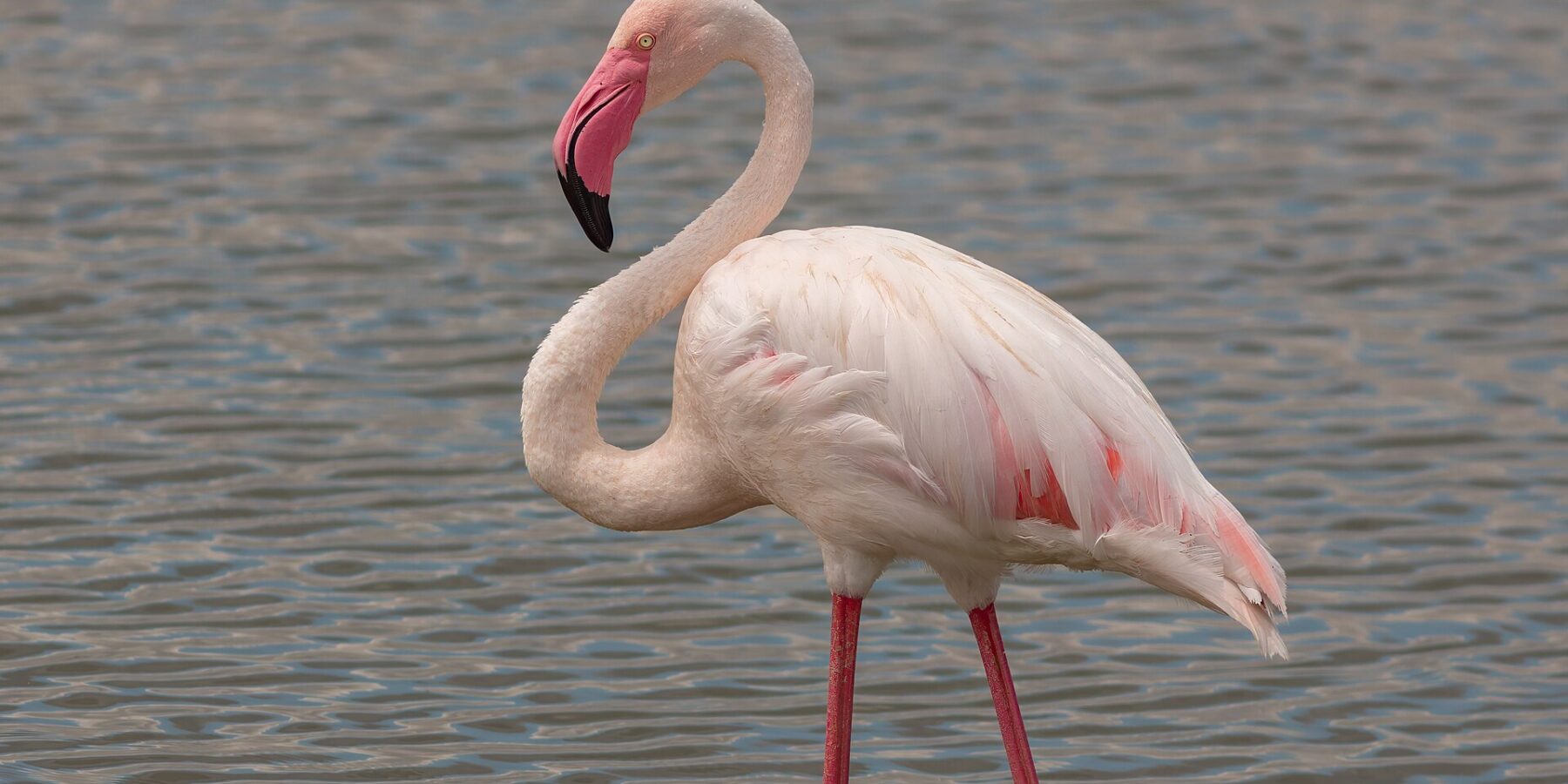
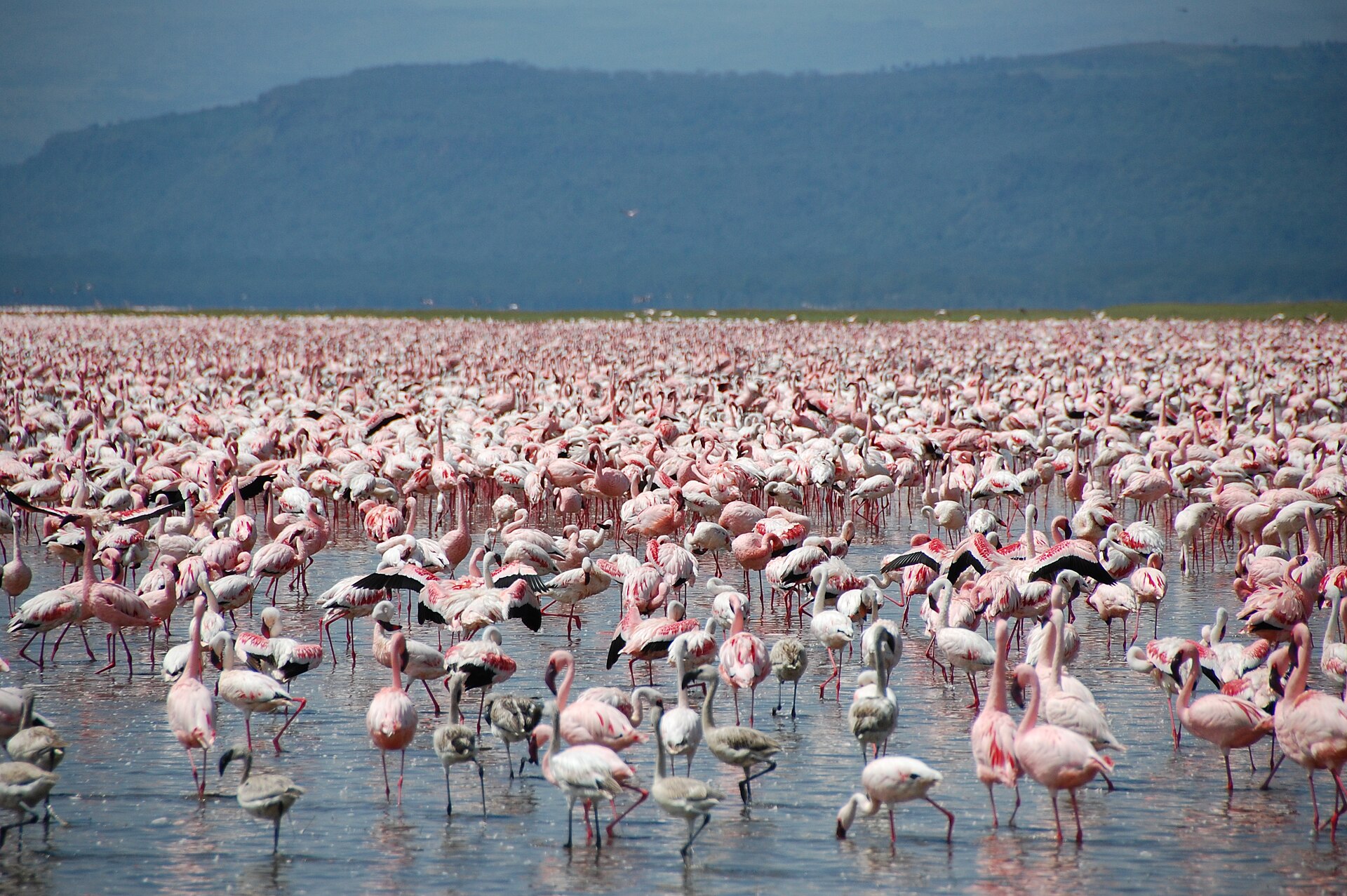
In Kenya, the greater flamingo lives on the soda lakes of the Rift Valley, Nakuru above all, where it mingles with the far more numerous lesser flamingos. Lake Amboseli also draws them after the rains, and Lake Bogoria takes over when Nakuru empties. Taller and paler than the lesser flamingo, it filters the mud with its legs in the water.
Where to see the greater flamingo on safari?
 Kenya
How do you identify a greater flamingo?
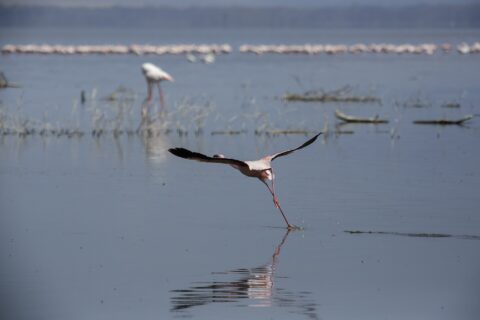
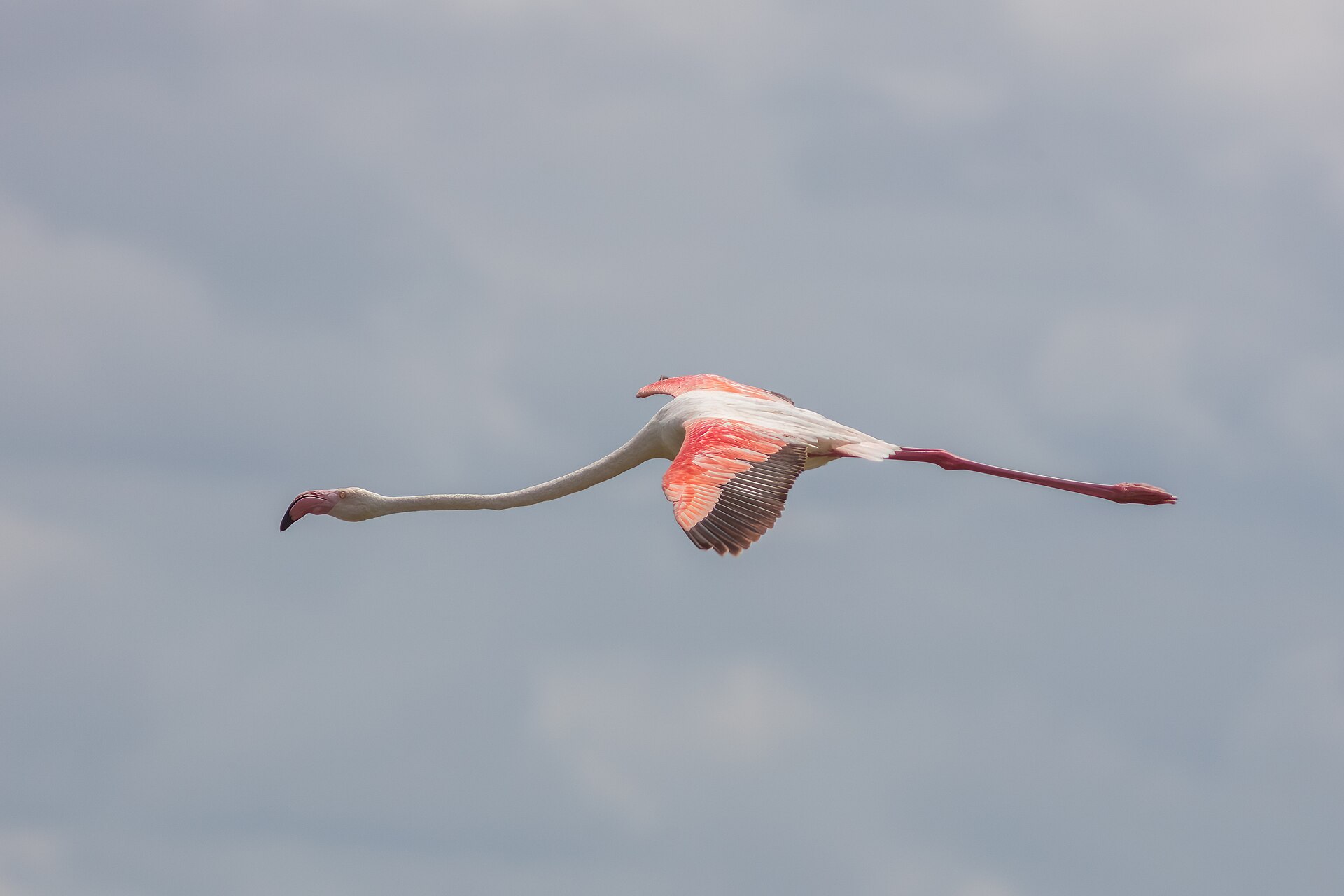
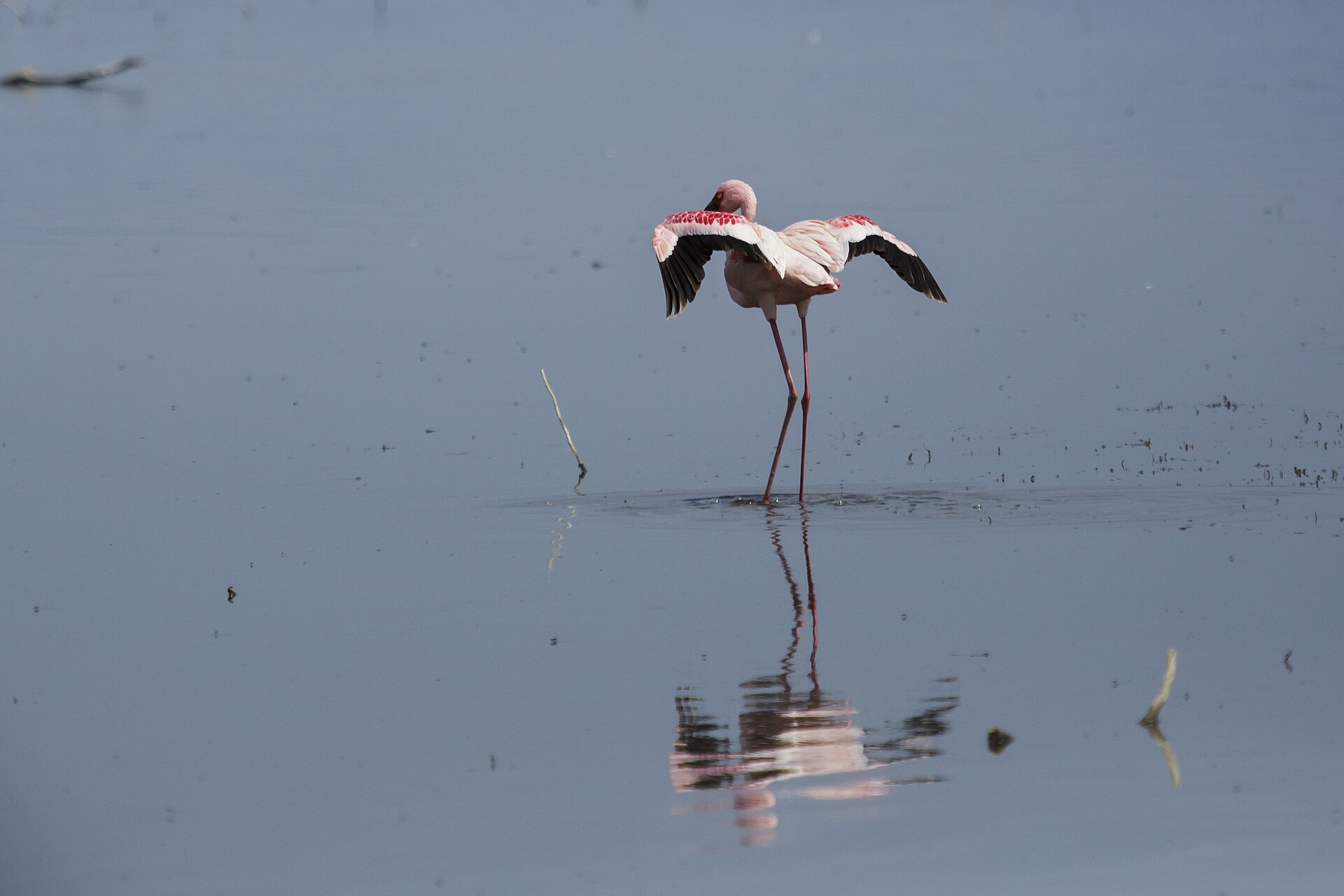
Two flamingos live on the lakes of Kenya, and you often see them side by side. The greater flamingo is the larger one, 120 to 140 cm tall, with white plumage tinged with pink. Its bright red wings edged with black show in flight, and its pale pink bill ends in a sharp black tip. The lesser flamingo, which forms the great pink masses of Nakuru and Bogoria, measures 80 to 90 cm. Its pink is deeper, and its dark red bill looks almost entirely dark. The young of both species are gray-brown for their first few years.
Greater flamingo in pictures
How does the greater flamingo live?
It feeds with its head upside down and its bill in the mud, filtering out small crustaceans and larvae. The pigments in this food give its plumage its color. The lesser flamingo, by contrast, mainly filters the blue-green algae of the soda lakes. That is why it gathers at Nakuru and Bogoria, and follows the water levels. Both species nest in colonies on mud islets and incubate a single egg for a month, the lesser flamingo almost only at Lake Natron, in Tanzania. A flamingo lives for several decades and moves from lake to lake with the seasons.
Where and when can you see greater flamingos on safari?
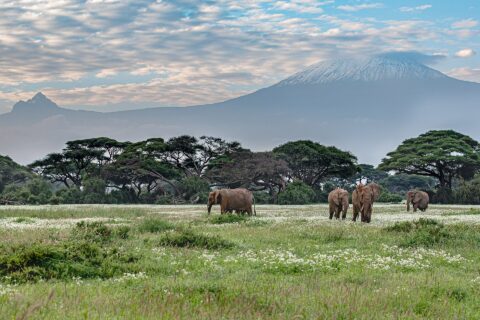
Lake Nakuru remains the easiest place, three hours from Nairobi, with the two species mixed together on the south shore and a view over the whole lake from Baboon Cliff. Their numbers depend on the lake level, which has risen since 2013, and range from a few hundred to several tens of thousands depending on the month. Lake Bogoria, farther north, and Lake Elmenteita, close by, take over when Nakuru is too full. In Amboseli, the dry lake fills after the long rains and then draws greater flamingos at the foot of Kilimanjaro. Wherever you go, the morning brings the softest light and the stillest water.
Is the greater flamingo endangered?
The IUCN lists the greater flamingo as Least Concern, with about 500,000 birds worldwide, including colonies in the French Camargue, in Spain and in East Africa. The lesser flamingo, far more numerous with about two million birds, is nevertheless listed as Near Threatened. It depends on a few soda lakes to feed, and on a single one, Natron, to breed in East Africa. The rising level of the Rift lakes since 2010, which dilutes their algae, and plans for soda ash plants on their shores are its two threats.
Our tip
Bring binoculars and go up to Baboon Cliff, at Lake Nakuru, to pick out the pink line before driving down to the south shore. The two species mix: size and bill color tell them apart, and the lake level decides how many birds you see.